Argentine food for the Mexican traveller: contrasts, surprises and a practical guide
By Constance Abad — Founder and director of Qwerty Travel
Mexico and Argentina are two countries where eating carries enormous cultural weight. In both, the table is far more than food: it is conversation, shared time, identity. That creates an immediate sense of recognition when someone from Mexico arrives in Argentina. It also creates something unexpected: two cultures with so much in common around the table turn out, on close comparison, to differ strikingly.
The timings are different. Fire is used differently. The beef cuts have their own names, which do not match. Chilli plays a far smaller role. Dulce de leche and cajeta share a principle but not a flavour. Pizza takes another form. And an asado is not simply a barbecue: it is a ritual with its own sequence and its own pace.
This article is a practical guide to understanding those differences before you arrive. Not to avoid them, since they are among the most interesting parts of the trip, but to enjoy them with more context. If you want to see how we build food into the design of the whole trip, you can read our article on Argentine food and the foodie tour.
1. The main contrasts at a glance
Before going into detail, this table sums up the most significant changes you will find at the table on arriving in Argentina from Mexico.
| Aspect | In Mexico | In Argentina | What changes in practice |
|---|---|---|---|
| Dinner time | Usually between 19:00 and 21:00 | Usually from 20:00–22:00 onwards | Restaurants in Buenos Aires can be quiet before 20:00 |
| Main meal | The midday meal tends to be the largest | Lunch and dinner carry similar weight, with dinner tending to be more social and longer | The set lunch exists, but many food experiences happen in the evening |
| Chilli | A central element in many dishes | Plays a far smaller role in traditional Argentine cooking | Argentine food is generally not spicy. The emphasis falls elsewhere |
| Dulce de leche | Mexican cajeta is the benchmark: goat's milk, intense flavour | Dulce de leche: cow's milk, present at breakfast, afternoon merienda and in desserts. Different flavour profiles | They are related preparations with distinct characters. Argentine dulce de leche is everywhere |
| The parrilla | A common technique but less ritualised | A social ritual with its own sequence, timing and lead figure (the asador) | At many parrillas the cuts arrive progressively, not all at once |
| Wine | Present but not dominant in everyday meals | Commonly accompanies both lunch and dinner | Ordering a glass of wine at a neighbourhood restaurant on a weekday is perfectly normal |
2. The first thing you will notice: the timings
The difference in meal times is the most immediate contrast and the one that most affects how the day is planned. In Mexico, the midday meal tends to be the main one. In Argentina, lunch and dinner carry similar weight, and dinner starts considerably later.
Meal times are the most immediate contrast
In Buenos Aires, a restaurant that opens at 20:00 can stay quiet until 21:00 or later. Locals tend to book for 21:30 or 22:00. In many places the kitchen keeps working well into the night. The sobremesa, the stretch of conversation after the meal, is not an optional custom: it is part of the meal. In Argentina you ask for the bill when you want the sobremesa to end. Nobody will bring it before you request it.
For anyone used to eating earlier, the first couple of days may take some adjusting. It is usually worth it: the late Argentine dinner also tends to be the longest and the most relaxed.
Breakfast in Buenos Aires has its own rhythm too: mid-morning coffee with medialunas is part of daily life. Medialunas are soft, slightly sweet pastries, unlike any Mexican equivalent. Argentine breakfast is generally light and does not carry the weight it has in other cultures.
3. Beef and the asado: the ritual hardest to explain from outside
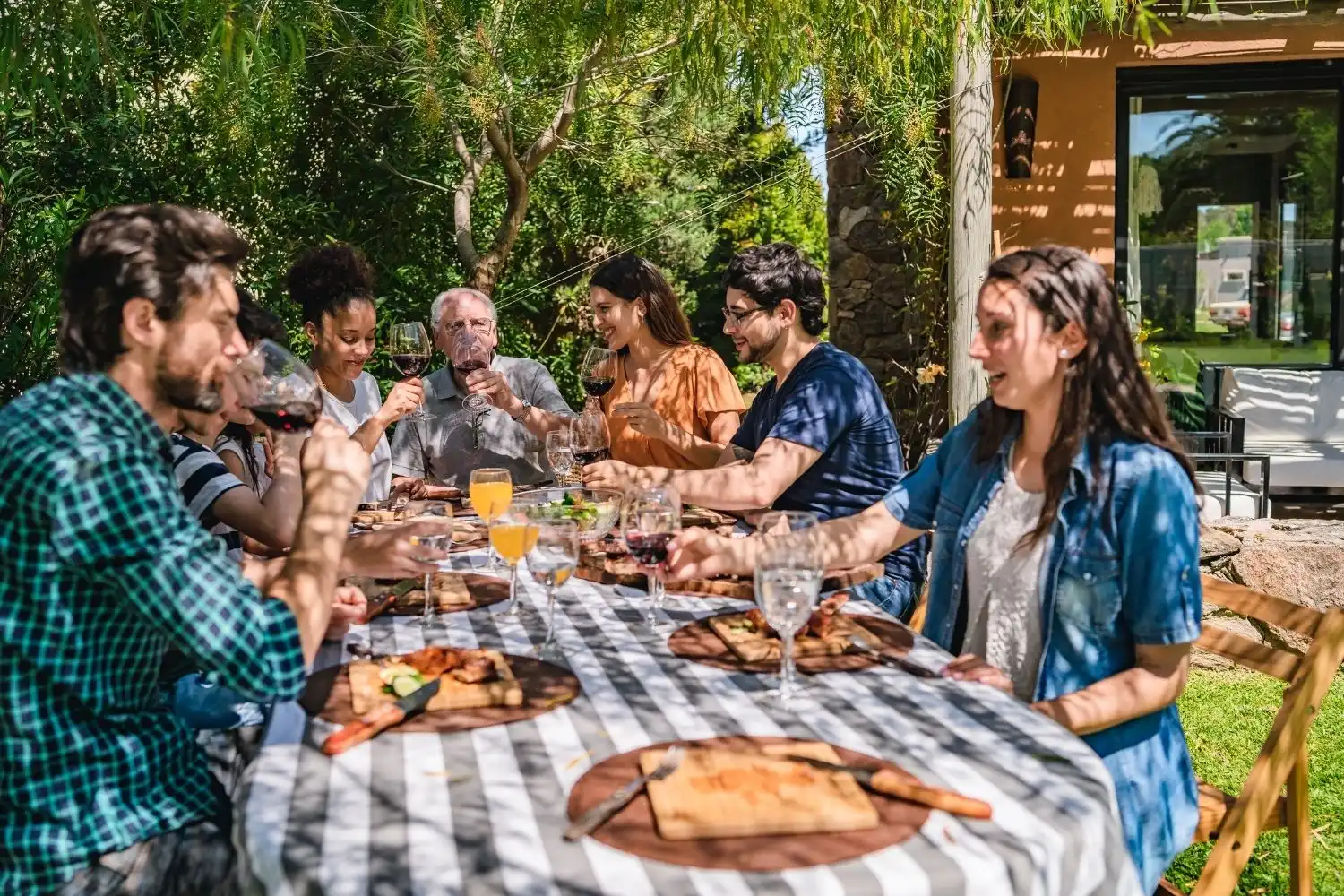
An Argentine asado is not the equivalent of a Mexican parrillada, even though both involve meat and fire. The difference lies not only in technique but in cultural dimension. In Argentina, making an asado is a social act with its own dynamic: one person handles the fire, the asador, and sets the pace of everything that reaches the table.
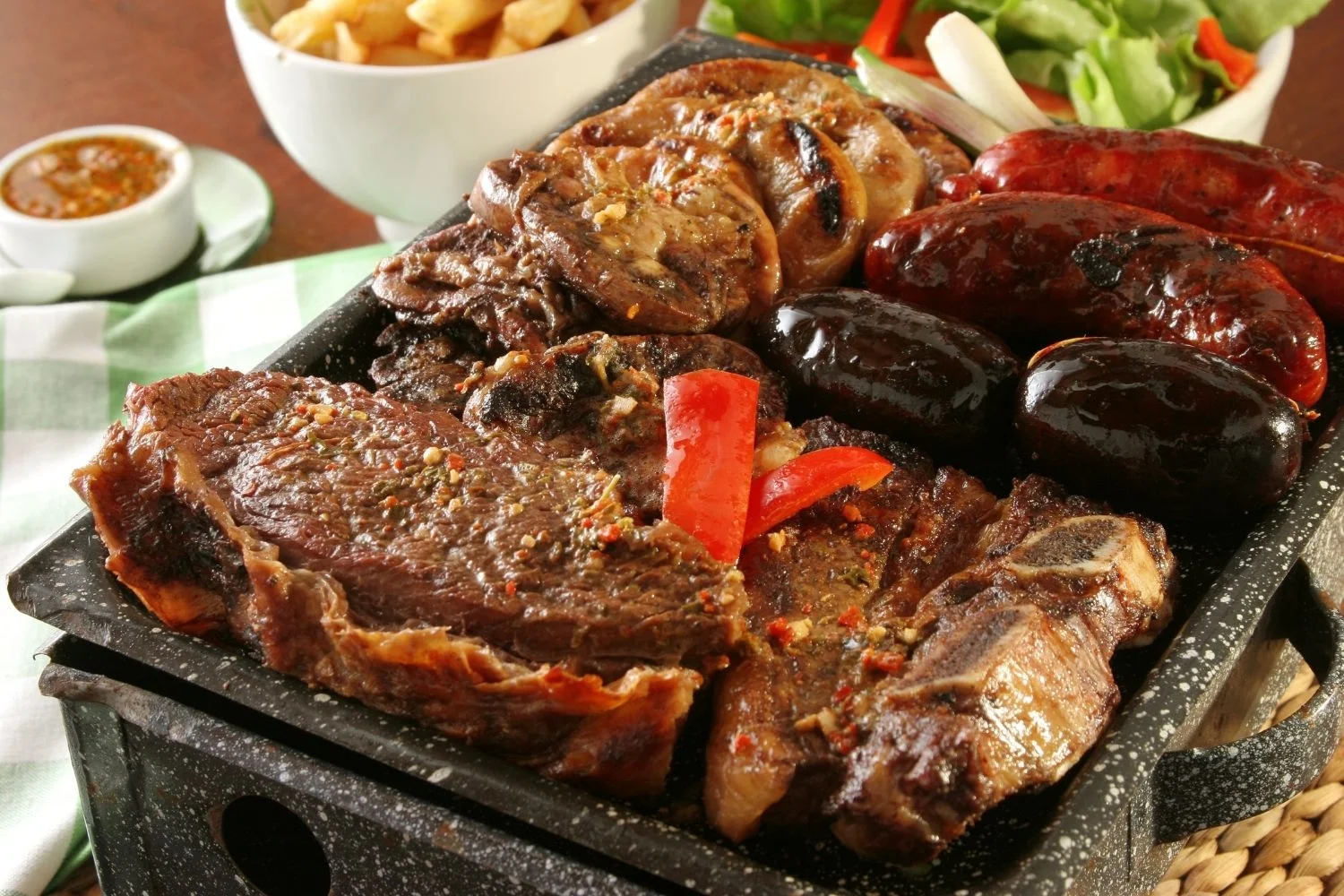
At many parrillas the cuts are served progressively: first the achuras (chorizos, blood sausage, chinchulines), then the main cuts. The meat arrives when it arrives, and that pace is part of the experience. Slow fire and long cooking are what produce the texture and flavour that define the Argentine asado.
The vocabulary of the cuts
The names of beef cuts in Argentina do not match those used in Mexico. Butchery systems vary between countries, so the references below are indicative. If you are unsure about a specific cut, ask the waiter.
| Cut | Approximate reference to understand the cut | What to expect on the plate |
|---|---|---|
| Asado de tira | Ribs cut crosswise | Intense flavour, some bone, juicy. Usually arrives among the first pieces |
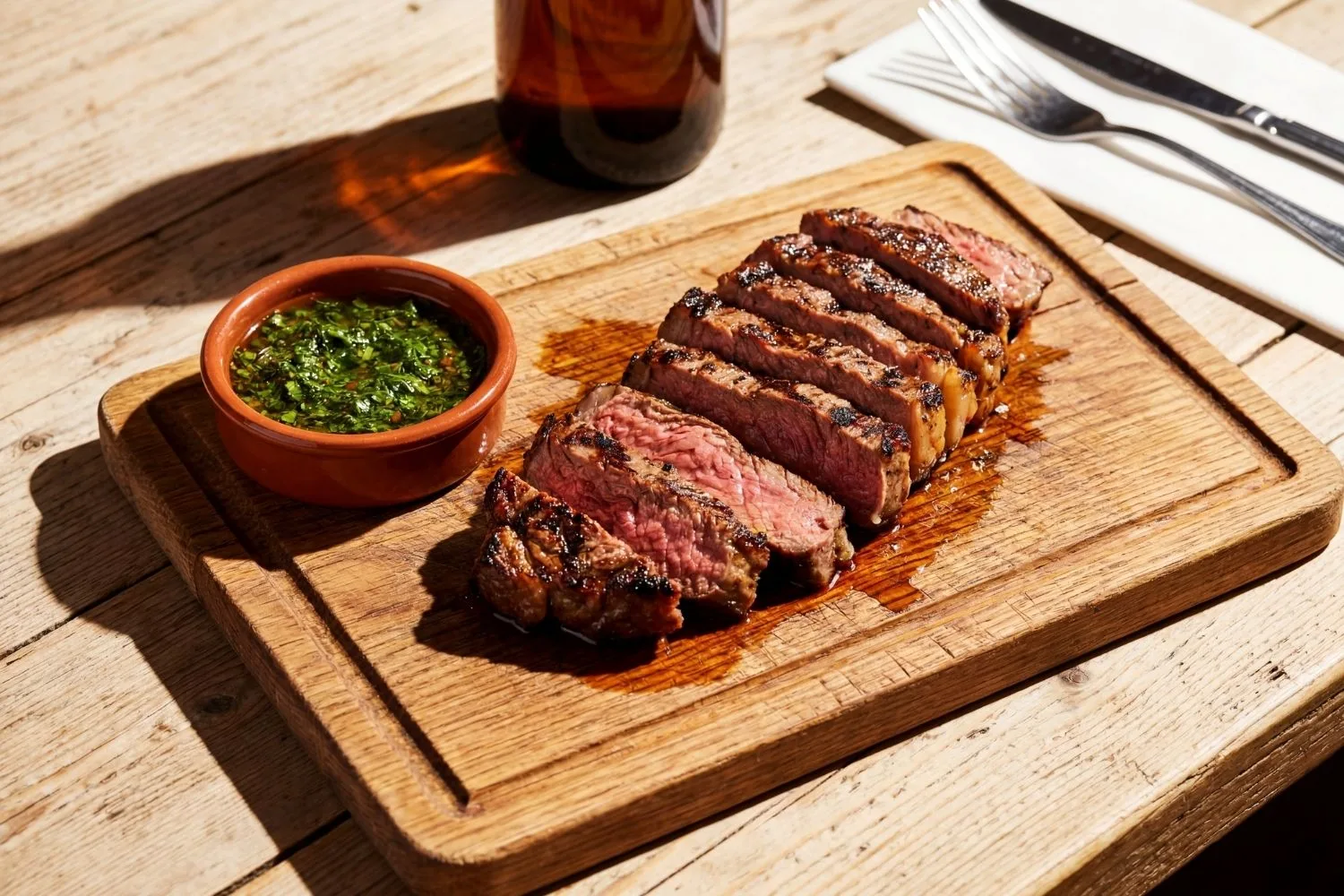
| Vacío | A flank cut with long fibres | Tasty and nicely juicy. Popularly served with chimichurri |
| Entraña | A diaphragm cut with long fibres | Very popular, pronounced flavour. Arrives well browned outside and juicy inside |
| Ojo de bife | The central rib cut (similar to ribeye) | A prized cut with fat marbling. Intense flavour, best ordered jugoso |
| Lomo | Fillet / tenderloin | The most tender. Milder flavour. An option for those who prefer more delicate textures |
| Colita de cuadril | Part of the hindquarter, next to the rump | A cut with an outer fat cap. Very popular in Argentina. Not the same as picanha: ask the waiter |
| Matambre | A very long cut from the flank of the animal | Can be served grilled, cold or stuffed (matambre a la pizza). Very versatile |
Note: Butchery systems and cut names vary between Argentina and Mexico, so the references above are indicative. If you are unsure about a particular cut, ask the waiter.
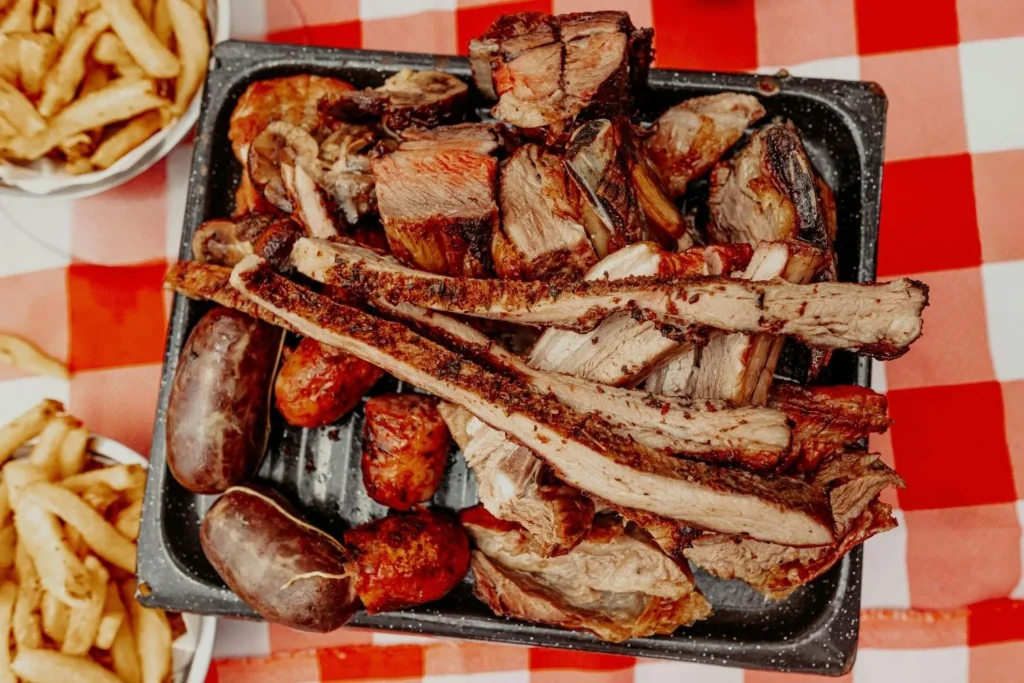
How to order your steak done
| Term in Argentina | Description | Rough equivalent |
|---|---|---|
| Vuelta y vuelta | Very briefly seared. Centre practically raw | Close to blue or very rare |
| Jugoso | Pink centre. The meat keeps its juices | Close to medium rare |
| A punto | Slightly pink centre | Close to medium |
| Bien cocido | No pink inside | Close to well done |
If you have a specific preference, explain it when you order: the reading of “jugoso” or “a punto” can vary slightly between parrillas and cooks. A simple description, such as “a bit pink inside” or “cooked through”, usually works better than relying on the term alone
4. The same name, a completely different product
Some products carry the same name in Argentina as in Mexico, or something very close, but are quite different experiences in practice. Knowing them in advance helps you arrive with better calibrated expectations.
| Product | In Mexico | In Argentina | The contrast |
|---|---|---|---|
| Empanadas | The name exists, with its own distinct variants | Found across the country with major variation by province. Baked or fried, with very different fillings | Same name, very different eating experiences |
| Pizza | Thinner base, in various styles | Buenos Aires pizza has styles of its own: pizza al molde, with a thicker base and generous mozzarella. Fugazzeta carries only onion and cheese, with no tomato sauce | Buenos Aires pizza has an identity of its own. Do not expect the pizza you know |
| Milanesa | Present as a local breaded meat variant | A hugely popular everyday dish. It can be napolitana (with sauce and melted cheese) or a caballo (topped with a fried egg) | In Argentina the milanesa holds a particular cultural place: it is comfort food with high standing |
| Dulce de leche | Traditional Mexican cajeta is usually made with goat's milk | Argentine dulce de leche is made mainly with cow's milk. Found at breakfast and in desserts, alfajores and ice cream | Same principle, different flavour and texture profiles. Argentine dulce de leche is far more ubiquitous |
The empanada deserves a special mention: in Argentina it is central to everyday eating, with pronounced regional variation. Trying empanadas across different provinces is a way of travelling Argentine culinary diversity without leaving the plate.
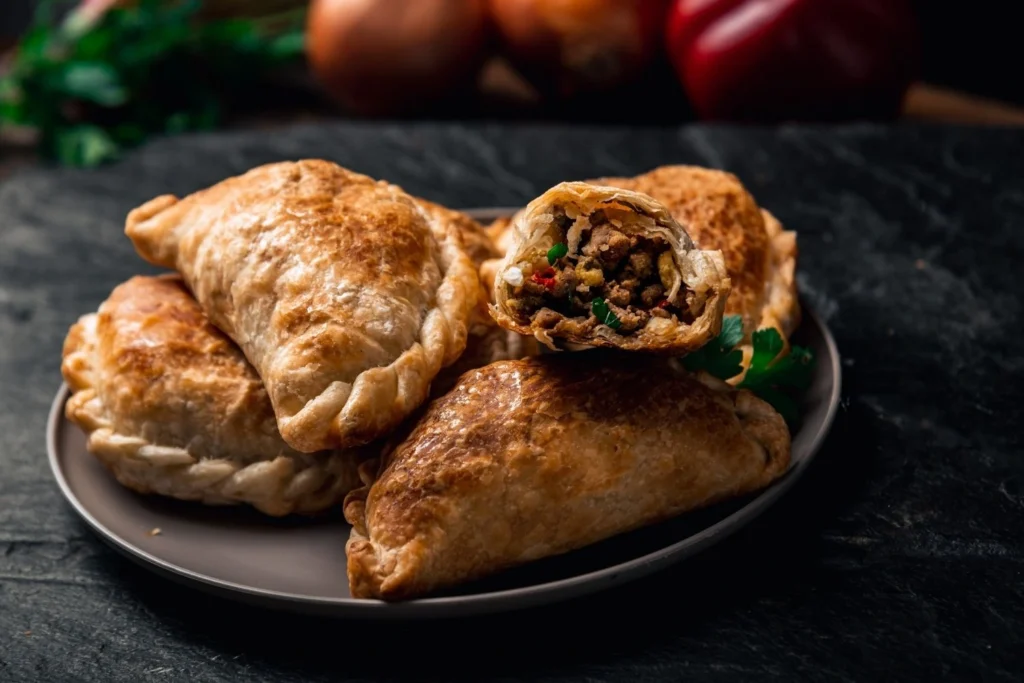
5. Dulce de leche: everywhere, and not the same as cajeta
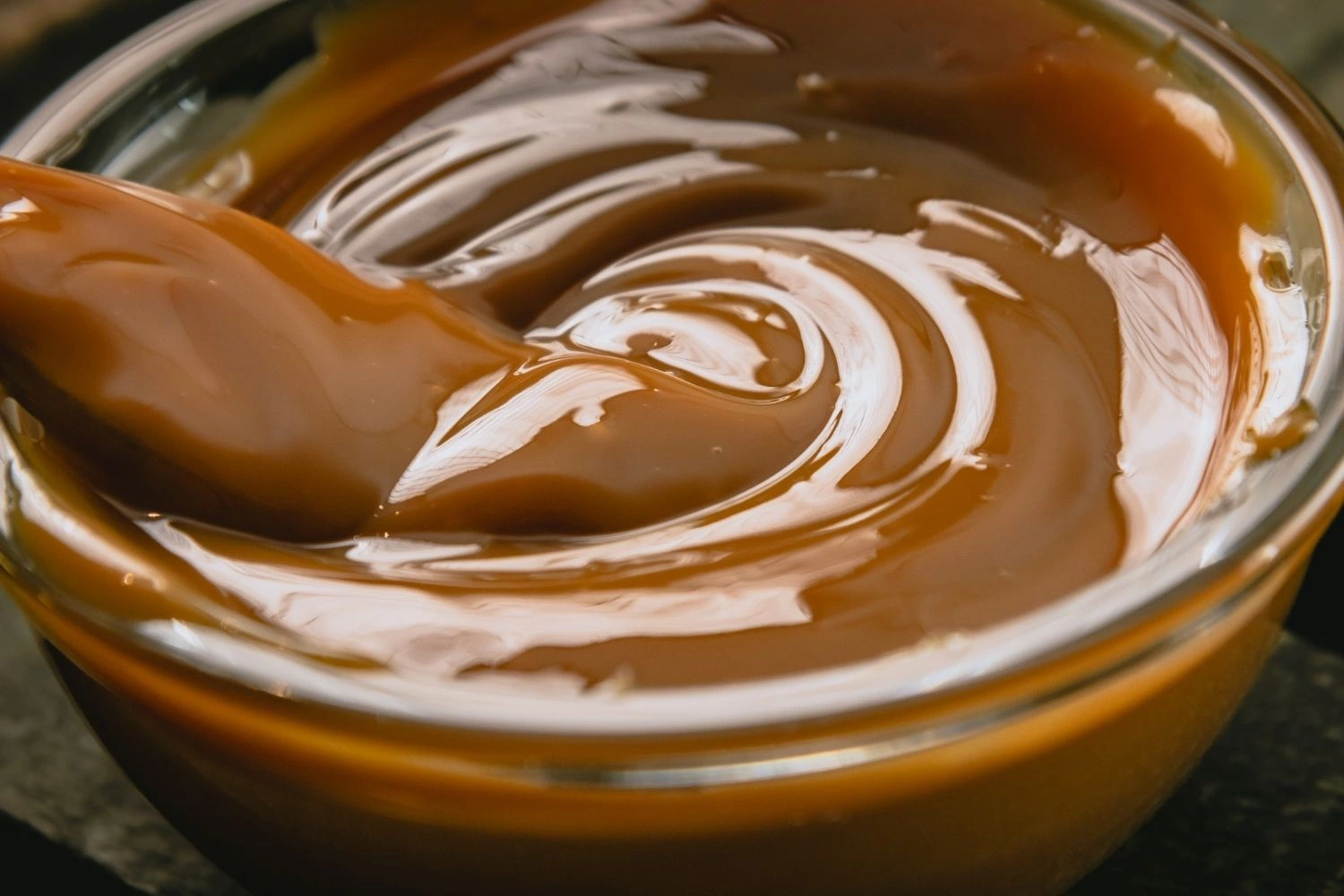
Traditional Mexican cajeta is usually made with goat’s milk, while Argentine dulce de leche is made mainly with cow’s milk. That gives them different flavour and texture profiles. They are related preparations, but each is its own eating experience.
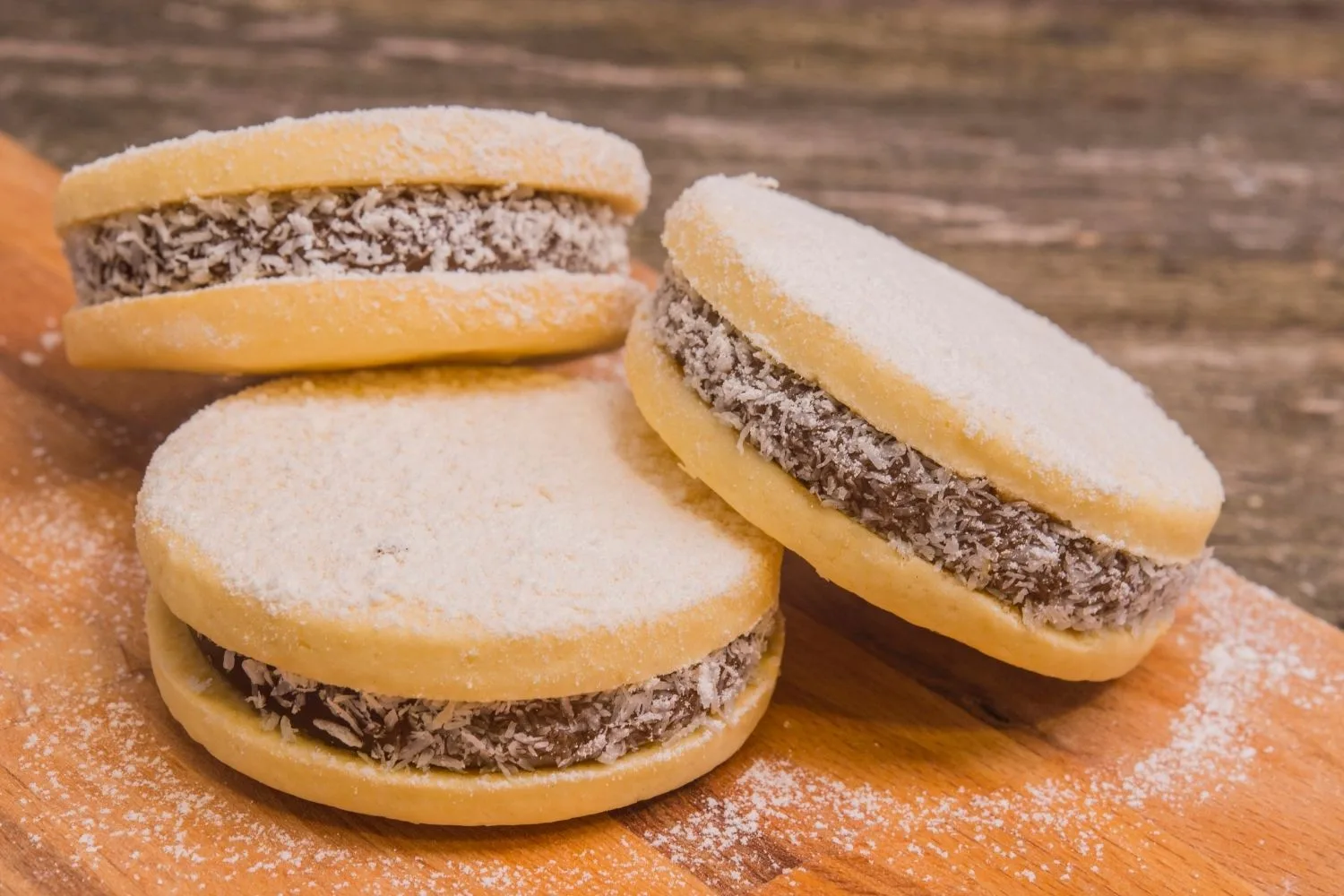
The most striking difference is how present it is: in Argentina, dulce de leche turns up on toast at breakfast, in medialunas, as the filling of alfajores (two biscuit halves joined by a filling, very often dulce de leche, and one of the country’s most emblematic sweets), in desserts and in ice cream. Its place in everyday Argentine cooking is very prominent.
6. The absence of heat: a change of register
Coming from Mexican cooking, you will probably notice that traditional Argentine food uses far less chilli. The emphasis falls elsewhere: on the produce, the meat, the cooking methods, the doughs and the particularities of each region.
That does not mean Argentine cooking is simple. It means the depth of flavour comes from somewhere else: the slow fire of the asado, the quality of the beef, the ageing of the cheese, the fermentation of craft beer. It is a different repertoire of flavours, not a lesser one.
Chimichurri, the usual sauce served with beef, is made with garlic, parsley, oil and spices. It has an intense flavour but no heat. If you are after heat, you will find it in Buenos Aires at international restaurants, but do not expect it at a traditional parrilla.
7. Wine at the centre of the table
Argentina is one of the world’s leading wine producers and the leading producer and exporter of Malbec. Mendoza accounts for more than 80% of the country’s wine production, according to figures from the Government of Mendoza (Dossier Economía Vendimia 2025). The city of Mendoza is also one of the Great Wine Capitals.
What stands out for someone arriving from Mexico is not the production figure: it is how far wine is woven into daily life. Wine accompanies lunch and dinner as a matter of course. Ordering a glass of Malbec at a neighbourhood restaurant on a weekday draws no attention at all.
Malbec is the internationally best known variety. But Torrontés, an aromatic white from the north and especially from Cafayate, is one of the most interesting discoveries of a first trip. Patagonian wines come from growing areas with climatic conditions different from Mendoza’s and bring another profile to the culinary journey.
8. Mate: the ritual that raises the most questions
Mate does not work like a drink you normally order in a restaurant: it belongs above all to everyday, social settings. It is an infusion of yerba mate in a vessel of the same name, drunk through a metal straw called a bombilla. The mate ritual is one of the strongest cultural markers of Argentina, Uruguay and southern Brazil.
What surprises first-time observers most is the dynamic: one person prepares the mate and passes it to the next, who drinks it all and hands it back. The same vessel circulates around the group. You do not say thank you when you hand it back, because that signals you do not want any more. It is a silent exchange with its own rules.
As a traveller, you may well be offered it at some point in an informal setting. If you want to try it, accept. If you would rather not, that is perfectly acceptable too. Understanding what mate is makes the trip richer, even if you never drink it.
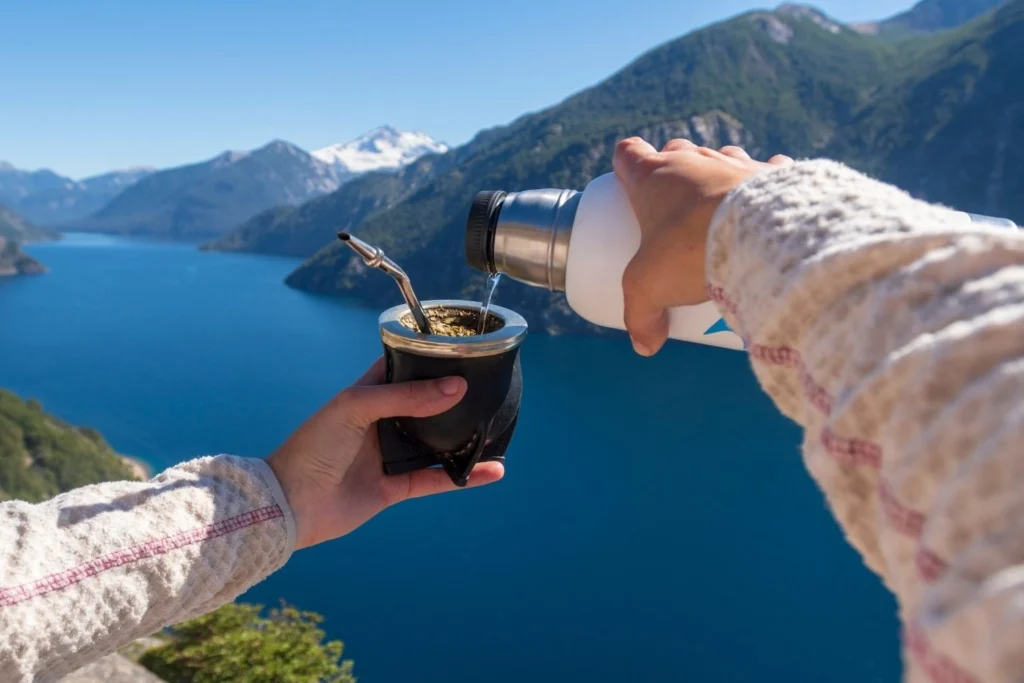
9. How to navigate a parrilla: a practical guide
An Argentine parrilla has a rhythm of its own. Knowing it in advance makes the experience run more smoothly.
Before the main cuts:
- Provoleta is grilled provolone cheese. It comes before the meat and is a good indicator of the quality of the fire and of the restaurant.
- Argentine chorizo is a thick, uncured pork sausage cooked on the grill. It is eaten in bread as a choripán or on its own. It is not the same as Mexican chorizo.
- Morcilla is blood cooked with spices. It has a strong flavour of its own. If you have never tried it, the parrilla is a good place to start.
When ordering the cuts:
- Name the cut and the doneness. “Una entraña jugosa” or “un ojo de bife a punto” is enough.
- At many parrillas the cuts arrive progressively. Ordering everything at once is unusual.
- At many parrillas the sides, such as salads or chips, are ordered separately.
- Chimichurri, a sauce of parsley, garlic, oil and spices, usually accompanies the meat. It has an intense flavour but no heat.
10. The food changes as the trip goes on
One of the most interesting things about Argentine food is how much it changes from one region to another. A trip through Argentina does not have a single cuisine: it has several, each with its own identity matching the destinations on the itinerary.
| Destination | Characteristic food experiences |
|---|---|
| Buenos Aires | Parrillas, Buenos Aires pizza, historic cafés, bodegones, chef-led cooking, markets |
| Bariloche | Artisan chocolate, craft beer, lake trout, mountain cooking |
| El Calafate | Spit-roast Patagonian lamb, estancias, cooking tied to the land |
| Ushuaia | King crab from the Beagle Channel, cold-water fish and shellfish |
| Northern Argentina | Regional empanadas, locro, humitas, high-altitude wines (Torrontés from Cafayate) |
This regional diversity is also why we build food into the itinerary from the start: each destination has its own produce and its own experiences, found nowhere else on the route. To see how this fits into the trip as a whole, you can also read our destination articles.
→ Buenos Aires for the Mexican traveller
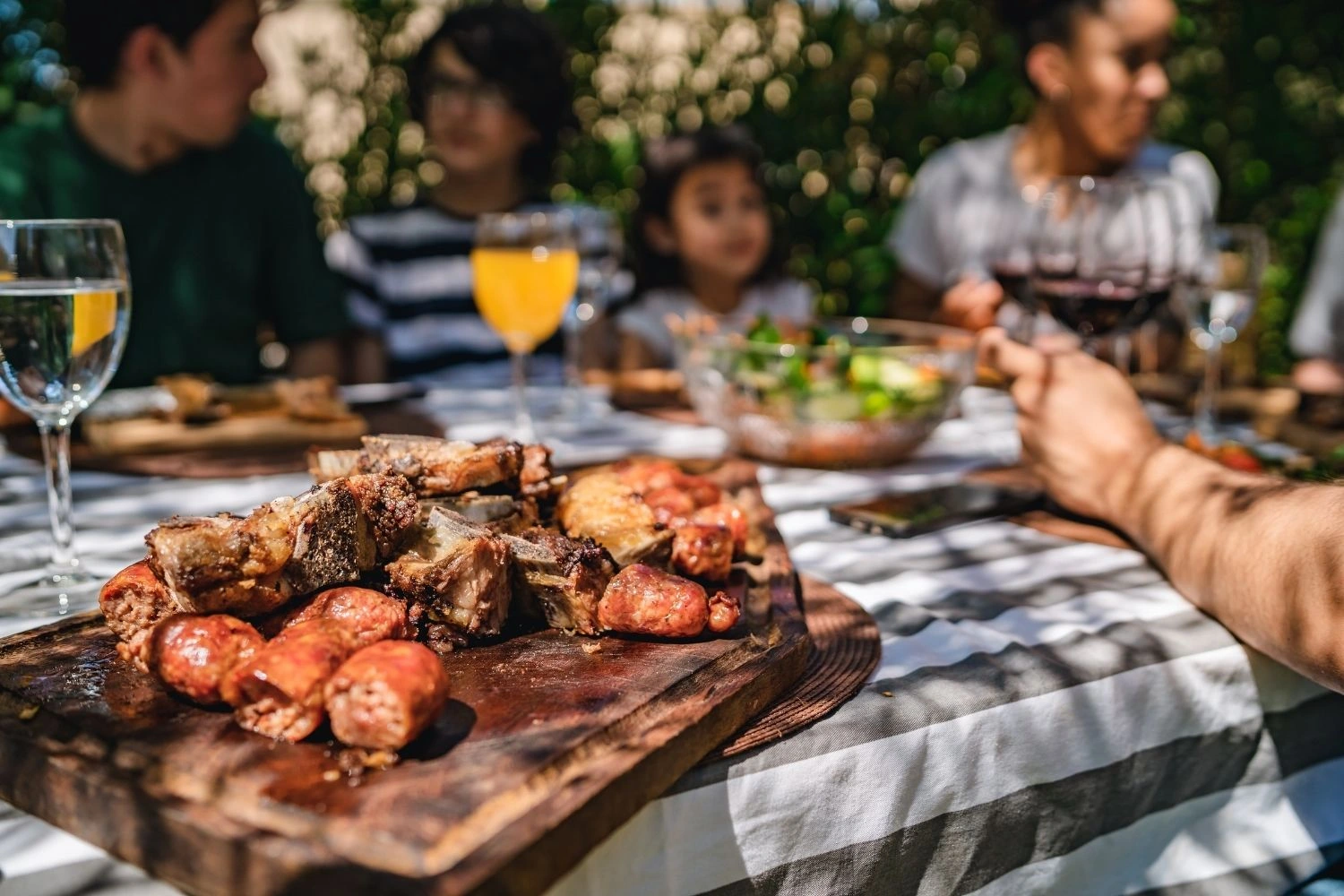
11. What people remember most on returning
After years accompanying families on their trips through Argentina, certain food moments come up again and again in conversations afterwards. It is not always the best known restaurant or the winery most cited in guidebooks:
- An asado at a Patagonian estancia that began at two in the afternoon and ended at six, the landscape behind and time suspended.
- The first dulce de leche alfajor, from any kiosk in Buenos Aires, which turned out to be nothing like what they expected.
- The sobremesa after the first dinner in Buenos Aires, when nobody had plans left for the evening and nobody wanted to leave either.
- The king crab in Ushuaia, which arrived at the table without ceremony and turned out to be one of the most memorable things of the trip.
- The locro in northern Argentina, which nobody knew would matter so much until it was in front of them.
The contrasts between Argentine and Mexican food are not obstacles. They are the most interesting part of the trip for anyone who arrives with curiosity rather than fixed expectations.
About the author
Constance Abad — Founder and director of Qwerty Travel
She has spent more than fifteen years designing tailor-made trips through Argentina for families and travellers from Mexico, Europe and Latin America. Food is a regular part of how she designs her itineraries: not as an add-on, but as part of how each destination is experienced. She has designed routes for more than four hundred families across destinations including Buenos Aires, Mendoza, Bariloche, El Calafate and Ushuaia.
[Editorial note: confirm the exact years of experience with Constance Abad before publication]
LinkedIn: linkedin.com/in/constance-abad
Frequently asked questions
The most immediate contrast is the timing: dinners from 21:00 onwards and a sobremesa that naturally runs long. Then, the far smaller presence of chilli heat compared with Mexican food. And later, discovering products that were not part of the picture beforehand: dulce de leche at breakfast, provoleta before the asado, Torrontés in the north, king crab in Ushuaia.
Generally, no. Traditional Argentine cooking uses far less chilli than Mexican cooking. Chimichurri, the usual sauce served with beef, contains garlic, parsley and spices, but no heat. In northern Argentina there is somewhat more Andean influence in the cooking. In Buenos Aires, international restaurants do offer spicy options.
They are a filled pastry, baked or fried, with pronounced regional variation: the fillings, the spices and the sealing technique change from province to province. They are not the equivalent of any specific Mexican preparation. They have their own identity within Argentine food and vary significantly depending on where you try them.
Vacío and entraña are good cuts for a first experience: tasty and representative of the Argentine asado. For something more premium, ojo de bife is a highly prized option. When ordering, say how you want it: jugoso (a little pink), a punto or bien cocido. If in doubt, describe it in your own words and the waiter can guide you.
Lunch is usually between 13:00 and 15:00. Dinner starts from 20:00 onwards, with locals generally booking for 20:30 or 22:00. In Argentina you ask for the bill when you want to finish: nobody will bring it before you request it. The sobremesa is a natural part of the meal.
Traditional Mexican cajeta is usually made with goat's milk, while Argentine dulce de leche is made mainly with cow's milk. That produces different flavour and texture profiles. Argentine dulce de leche has a very high profile in everyday food: it appears at breakfast and in alfajores, desserts and ice cream.
The terms are: jugoso (pink centre), a punto (slightly pink) and bien cocido (no pink). If you have a specific preference, explain it in your own words when ordering, since the reading can vary slightly between parrillas.
Mate is an infusion of yerba mate drunk from a vessel of the same name through a metal straw called a bombilla. It does not work as a drink you order in restaurants: it belongs above all to everyday, social settings. One person prepares the mate and passes it to the next, who drinks it all and hands it back. You do not say thank you when handing it back: that means you do not want any more.
We design your trip to Argentina from Mexico with food built in
If food is part of how you travel, we build it in from the first draft of the itinerary: selecting experiences by destination, booking far enough ahead and setting out what to expect at each stage.
First consultation with no obligation: we tell you exactly what you will see, and what you will eat, given your dates and your travel profile.
www.qwerty-travel.com · info@qwerty-travel.com