By Constance Abad — Founder and director of Qwerty Travel
When you start planning a first trip to Argentina, El Calafate tends to reach the itinerary early. The Perito Moreno Glacier has that effect: few things on the continent create an image so immediate and so hard to resist. Ushuaia stirs a different kind of desire: reaching the far south, one of the great symbols of the End of the World.
Including both destinations means days, flights and logistics that do not fit every route. The question that should guide the decision is not only whether they are worth it, since both are, but what each one adds and whether it makes sense to fit them into the time available. This article answers exactly that: how the two destinations differ, how many nights to give each one, how to connect them from Buenos Aires and when it is better to prioritise one over the other.
Incluir ambos destinos implica días, vuelos y una logística que no siempre encaja en todas las rutas. La pregunta que debería guiar la decisión no es únicamente si merecen la pena —los dos la merecen—, sino qué aporta cada uno y si tiene sentido incluirlos en el tiempo disponible. Este artículo responde exactamente a eso: las diferencias entre los dos destinos, cuántas noches dedicar a cada uno, cómo conectarlos desde Buenos Aires y cuándo conviene priorizar uno sobre el otro.
Before deciding whether to include both or prioritise one, it helps to understand the kind of experience each destination offers. They are not interchangeable. They are different experiences that complement each other well when there are enough days to do them justice.
| Aspect | El Calafate | Ushuaia |
|---|---|---|
| Main experience | Glaciers and lake landscape | Mountains, forest, sea and southern landscape |
| Signature sight | Perito Moreno Glacier | Beagle Channel and Tierra del Fuego National Park |
| Pace of the visit | Contemplative, with moments of striking visual impact | More variety of activities and different landscapes |
| Physical demand | Low on the main visits. Suits different mobility levels and requires no trekking experience | Adaptable. From panoramic routes to trekking |
| Recommended nights | 3 nights (baseline) | 2–3 nights |
| Priority on a first route | High — rarely left out of any Patagonian itinerary | Medium-high — worth adding if there are enough days |
El Calafate is the Patagonia of glaciers. Everything revolves around ice, water and the scale of the lake landscape. Ushuaia is southern Patagonia: mountains, forest, sea and the feeling of having reached one of the edges of southernmost South America. Visiting only one leaves you with a certain kind of memory; visiting both gives a far wider view of the range of landscapes in southern Patagonia.
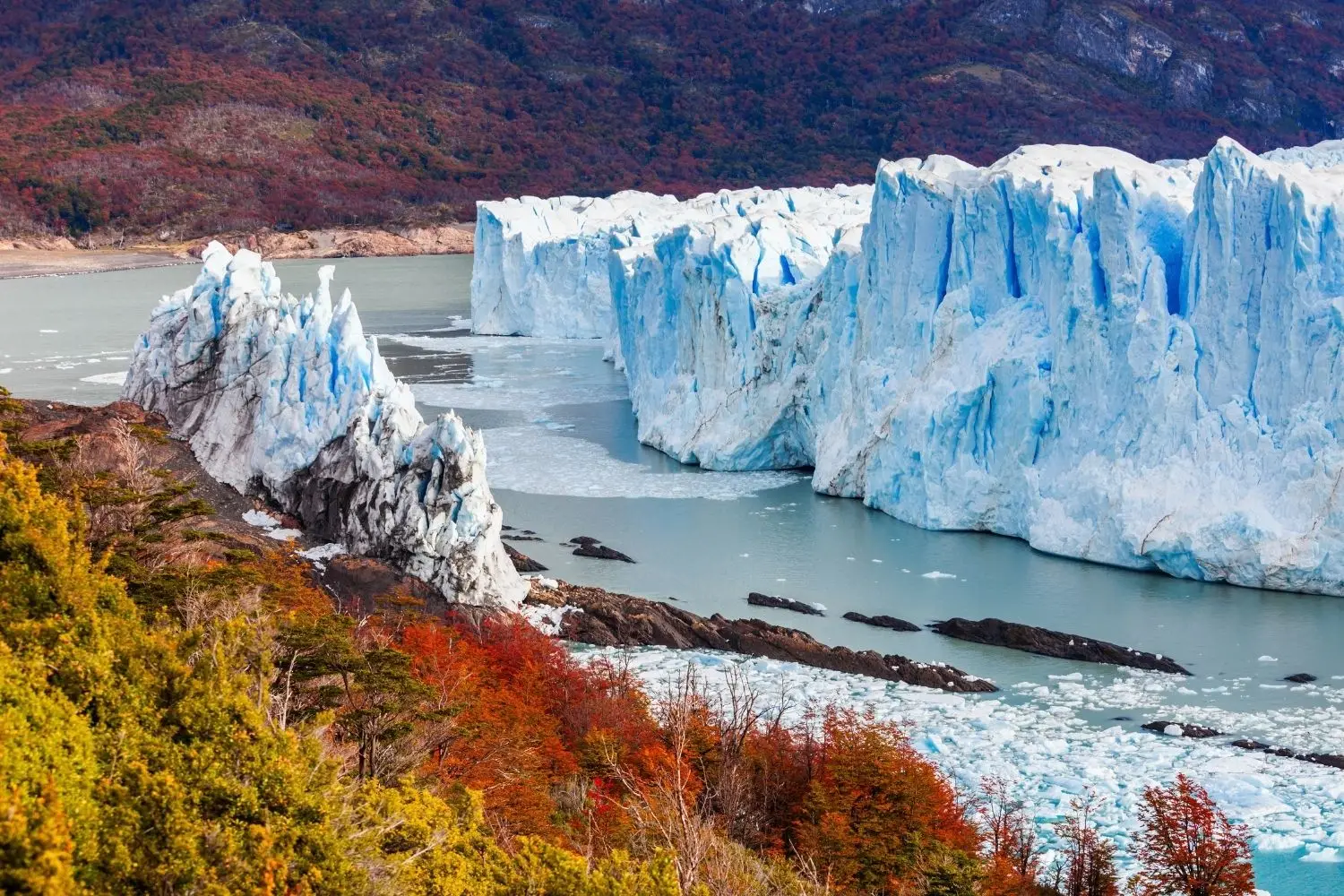
The town of El Calafate plays a very specific role in the trip: it is the base for reaching Los Glaciares National Park, declared a UNESCO World Heritage Site in 1981, the first in Argentina to receive that status. The park covers more than 726,000 hectares and holds some of the largest glaciers outside the polar regions. The main reason to fly there lies outside the town.
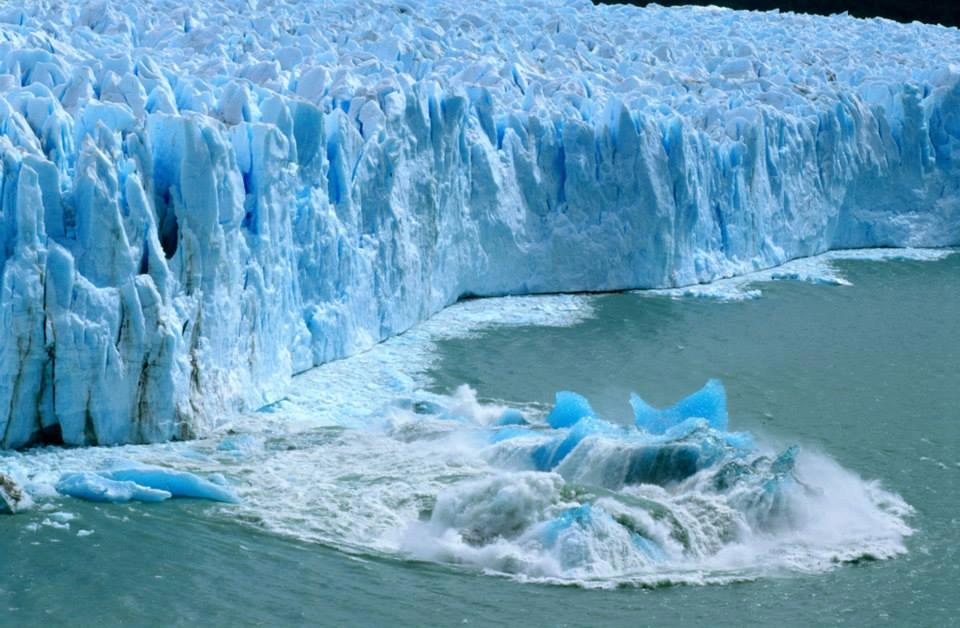
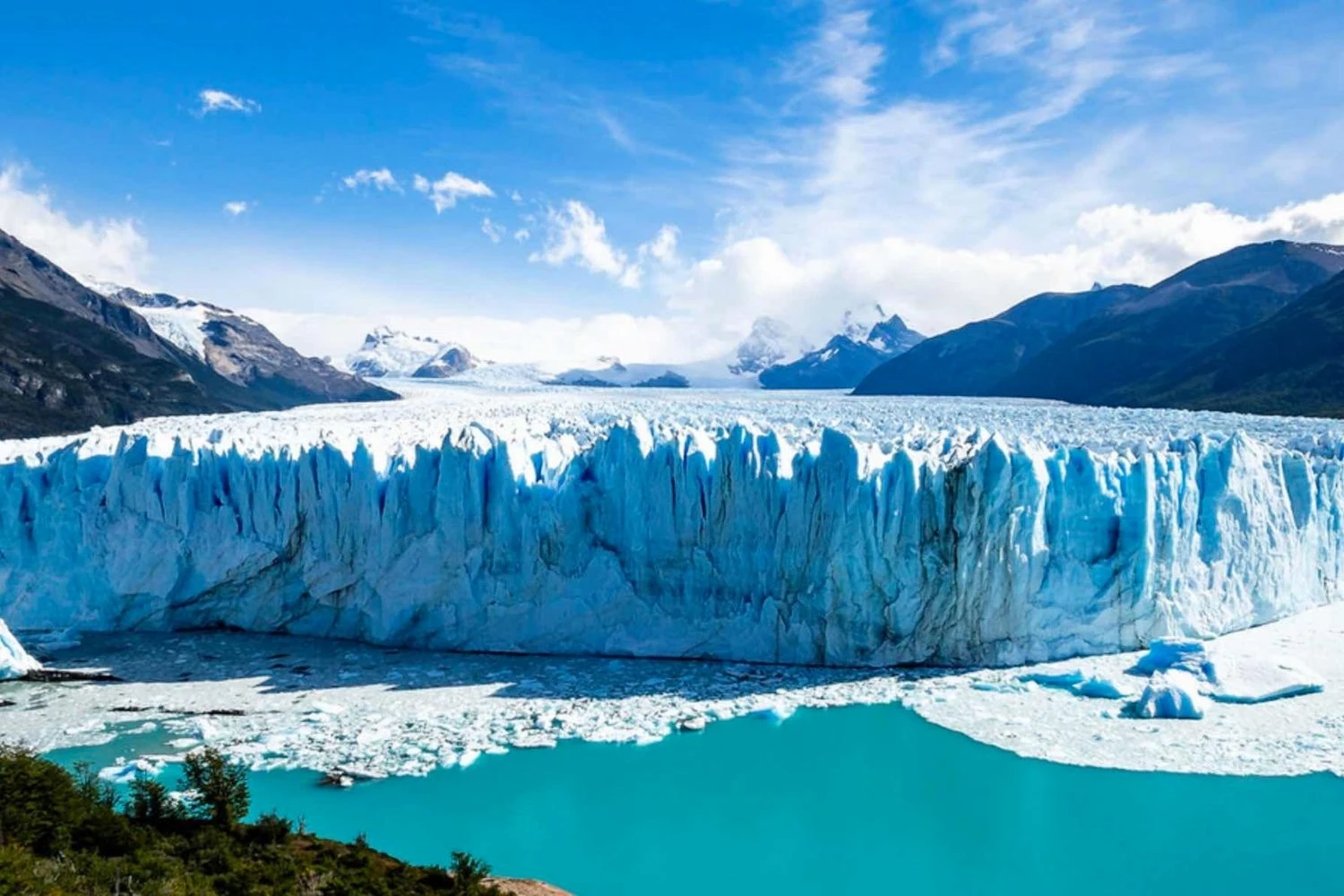
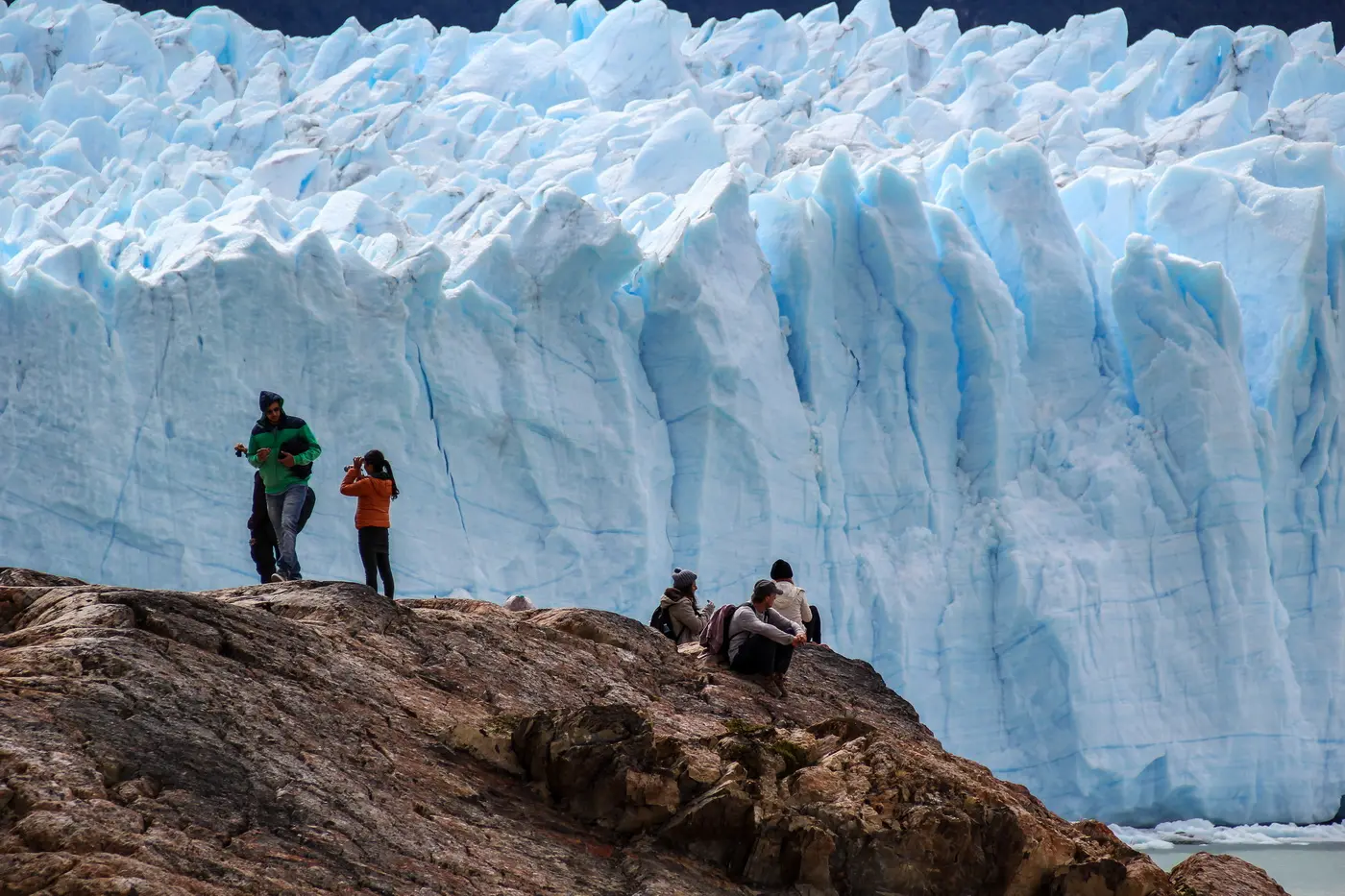
Perito Moreno has a front roughly 5 kilometres wide, standing between 60 and 70 metres above Lake Argentino. Blocks of ice break off that front regularly and fall into the lake, and you usually hear them before you see them. The impact is not only visual: it is the sound, the cold air coming off the ice and a scale no photograph manages to convey.
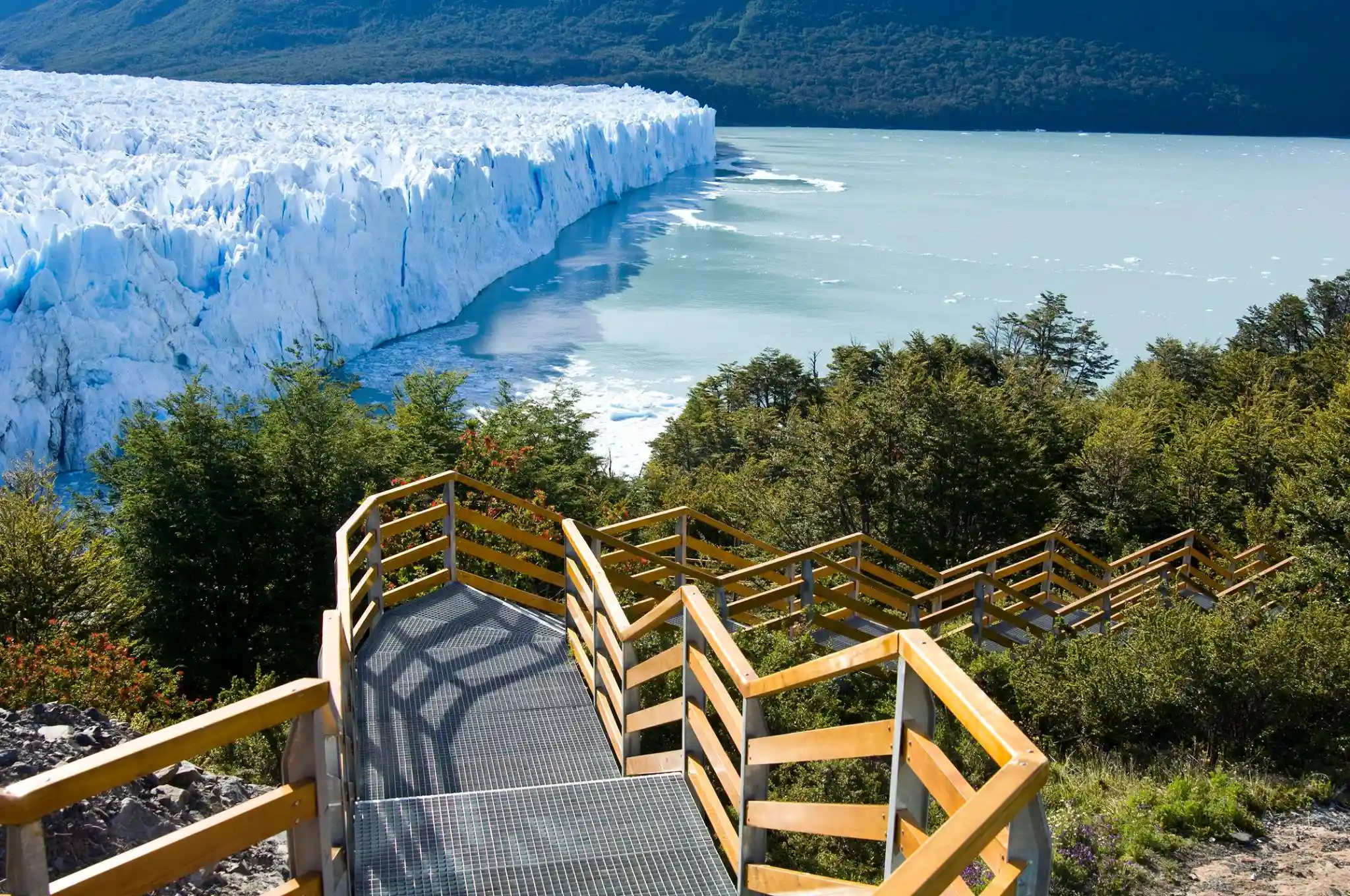
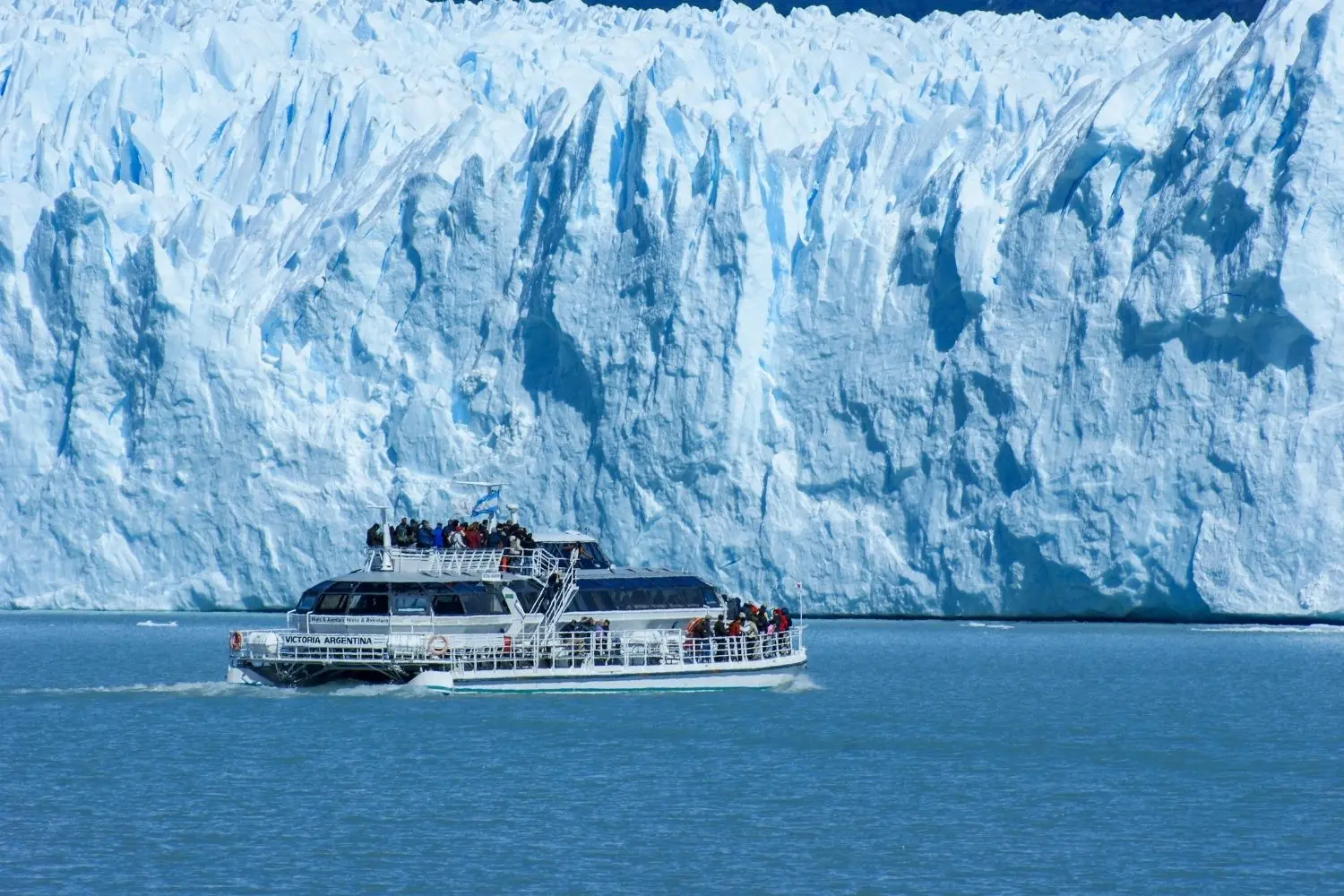
The visit takes place from paved walkways set at different heights facing the glacier. You do not need to trek on the ice to experience Perito Moreno: the walkway experience is physically undemanding, suits different mobility levels and calls for no previous trekking experience. For those who want to go further, there are ice trekking excursions and boat trips to the foot of the glacier front.
All of this makes Perito Moreno one of the Patagonian destinations that works best for multigenerational family trips: different generations share the same moment, each at their own pace.
El Calafate is not just one excursion. Depending on the days available and the season, there are further experiences worth weighing up. Boat trips on Lake Argentino reach other glaciers in the park (Upsala and Spegazzini) seen from the water and on a different scale. Patagonian estancias offer a direct connection with the land and with local food.
El Chaltén, some 220 kilometres from El Calafate, is Argentina’s national trekking capital and deserves a mention of its own: the views of Fitz Roy are extraordinary. Day trips from El Calafate do exist, but anyone who wants to enjoy El Chaltén properly and walk its main trails should plan it as a stage of its own within the itinerary.
The answer depends on the pace of the trip, the profile of the group and the rest of the route. As a working rule at Qwerty, three nights give the best balance for most itineraries.
| Nights in El Calafate | What it actually allows |
|---|---|
| 2 nights | Workable if the goal is essentially Perito Moreno and then moving on. Very tight: if the weather turns, there is no room to absorb it |
| 3 nights (baseline recommendation) | Unhurried arrival · Full day at Perito Moreno · A second experience or boat trip · Room for weather. The most balanced option for most itineraries |
| 4 nights | Relaxed pace · Additional experiences · Option of a Patagonian estancia · A fuller boat trip · More room for weather |
One important warning: weather in Patagonia can change and disrupt excursions. An itinerary with no slack for weather is an itinerary that breaks at the first setback. Three nights absorb a change in conditions without losing Perito Moreno.
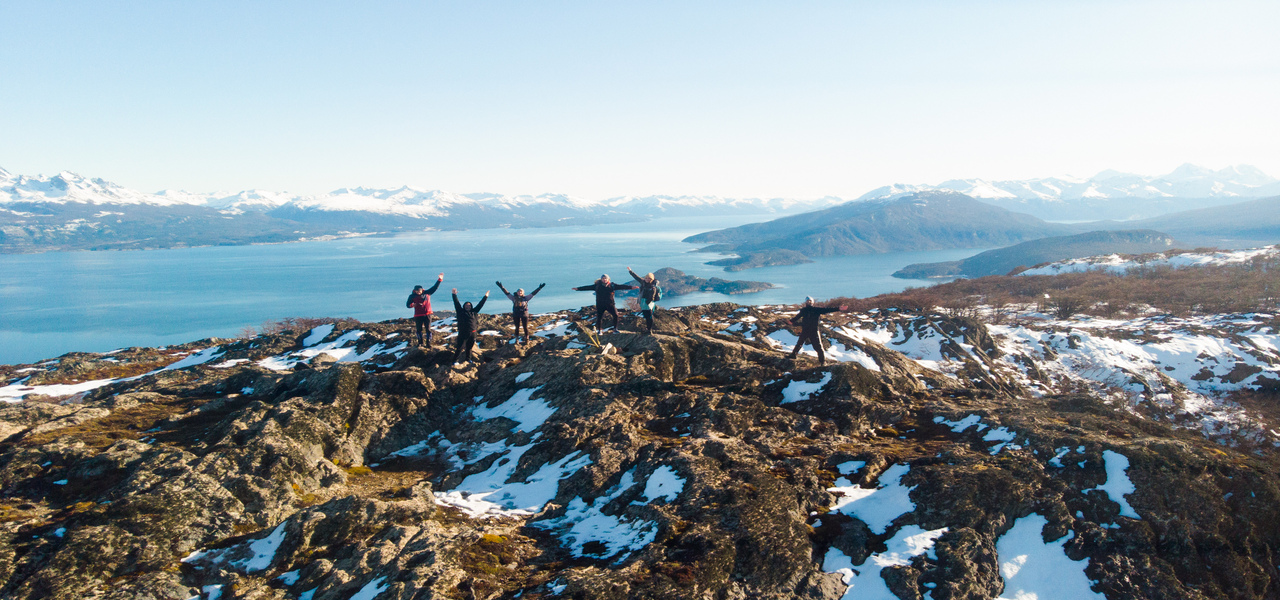
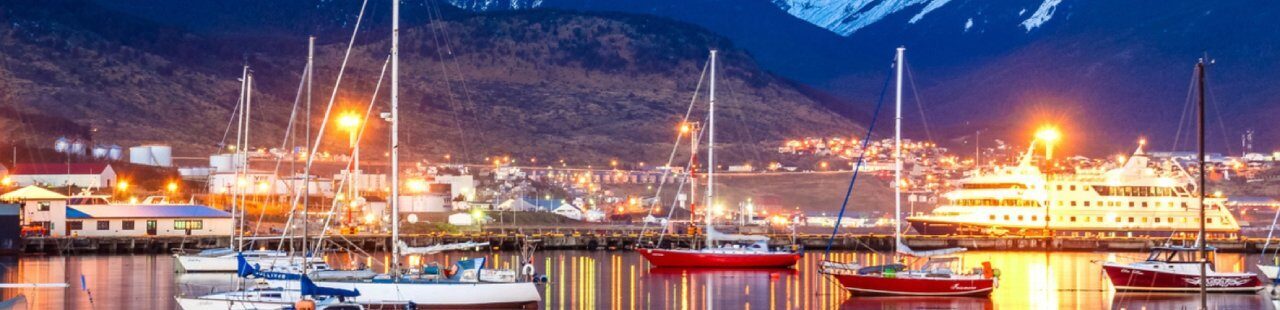
Ushuaia is known internationally as the city at the End of the World and is one of the main gateways to the far south of South America. But reducing the destination to that label would mean missing what it actually offers. Ushuaia combines sea landscapes, mountains, sub-Antarctic forest, boat trips and an atmosphere found nowhere else on the continent.
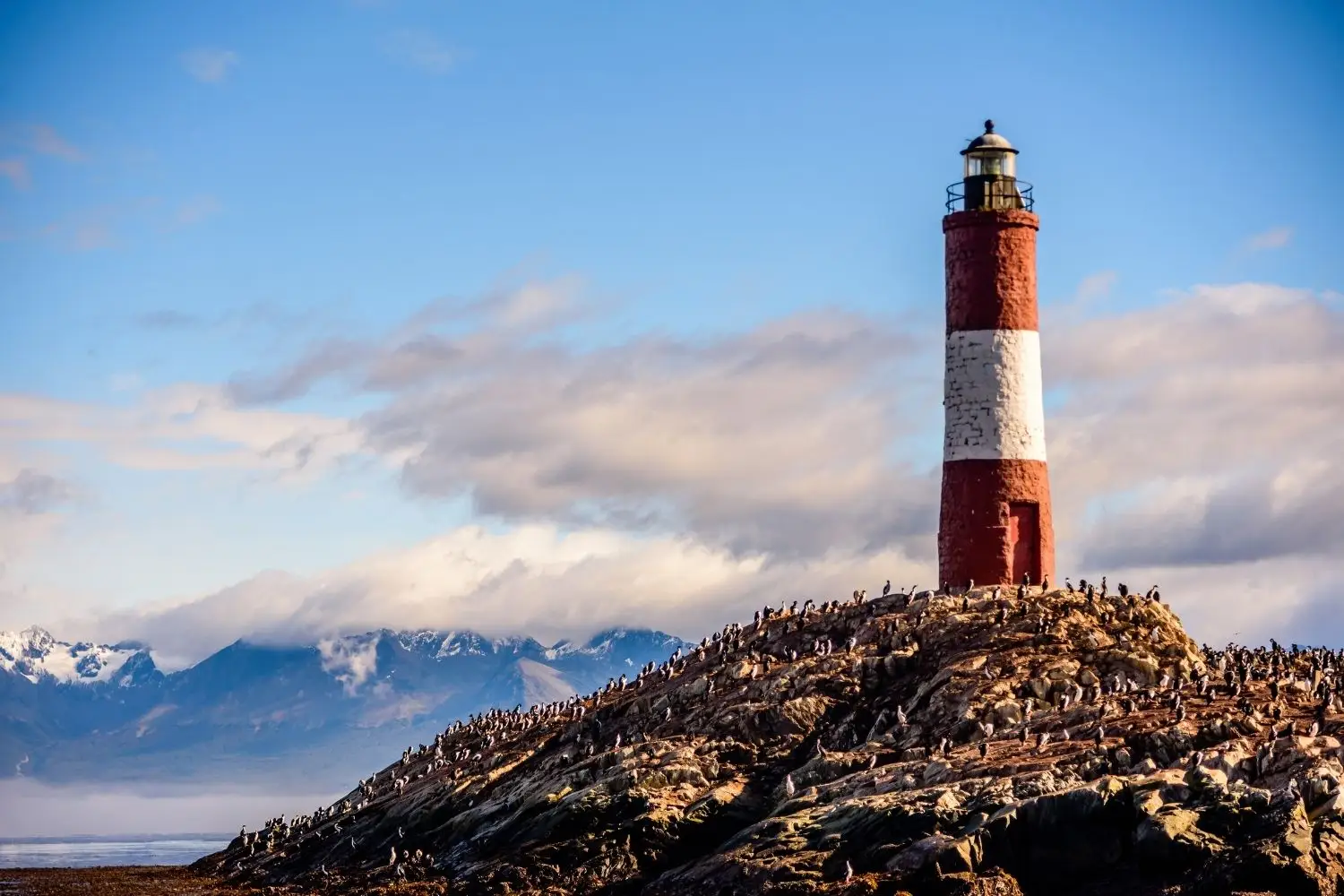
The channel that brought Darwin to these waters in the nineteenth century is still one of the most powerful ways to understand Ushuaia. From the water you see snow-covered mountains, the islands and the town with the range behind it: a completely different perspective from the land. Depending on the type of trip and the season, you may see wildlife such as sea lions, penguins or seabirds. Specific sightings should never be promised, because they depend on the time of year and the conditions on the day.
Tierra del Fuego National Park, created in 1960, is the southernmost national park in Argentina. It takes in lenga and ñire forest, mountains, bays and its own stretch of Beagle Channel coastline. Its trails vary in intensity: from easy panoramic walks to more demanding hikes. You do not need to turn Ushuaia into an adventure trip to enjoy the park: panoramic excursions by vehicle and the shorter trails let you experience the sub-Antarctic forest at a moderate level of activity.
There is something in Ushuaia that can only be described as a feeling. The sign announcing the end of the world as you leave town is not just a geographical note: it is physical confirmation of having reached one of the southernmost inhabited points on the planet. That explains why some families want to include Ushuaia even when it means an extra flight and extra days. It is not a destination justified by data alone. It is justified by the experience of being there.
| Nights in Ushuaia | What it actually allows |
|---|---|
| 2 nights | A first taste: one main excursion (Beagle Channel or Tierra del Fuego) plus a little of the town. Very tight |
| 3 nights (baseline recommendation) | Tierra del Fuego + Beagle Channel + town and food + reasonable room for weather |
| 4 nights | Additional activities · More relaxed pace · More room for changing weather |
As in El Calafate, the key is slack. A two-night stay with a delayed flight can turn into a night and a half, not enough to take the destination in calmly. Three nights give real margin.
This is one of the questions we are asked most often, and the honest answer is that there is no universal one. It depends on the kind of experience you are after, the time available and how each destination fits into the rest of the itinerary.
Choose El Calafate if…
Add or prioritise Ushuaia if…
We do not always recommend adding Ushuaia. On a first trip to Patagonia with limited time, El Calafate takes priority. Perito Moreno is the kind of experience that justifies the journey on its own: enormous visual impact, adaptable to different profiles and very hard to forget. Ushuaia brings something completely different (the emotional dimension of the far south) and that difference deserves time of its own. Squeezing it into two nights on an already tight route can be worse than saving it for a second trip.
Connectivity data verified in August 2026. The airlines and frequencies shown reflect the connectivity available when this guide was updated. Air operations in Patagonia are partly seasonal and routes can change; check them for your specific travel dates before designing the connection.
| Route | Main airlines | Approx. duration | Arrival airport |
|---|---|---|---|
| Buenos Aires (AEP) → El Calafate | Aerolíneas Argentinas, Flybondi, JetSMART | ~3 h 20 min | FTE (Comandante Armando Tola) |
| Buenos Aires (AEP/EZE) → Ushuaia | Aerolíneas Argentinas, JetSMART, Flybondi | ~3 h 30–40 min | USH (Malvinas Argentinas) |
| El Calafate → Ushuaia (direct) | Aerolíneas Argentinas, Flybondi | ~1 h 20 min | USH (Malvinas Argentinas) |
There is one fact many travellers do not know, and it changes how the route is designed: there is a direct flight between El Calafate (FTE) and Ushuaia (USH), operated by Aerolíneas Argentinas and Flybondi, taking around one hour and twenty minutes. It means that, if the days allow, you can visit both destinations without returning to Buenos Aires in between.
Many domestic flights operate from Aeroparque (AEP), although some routes and frequencies may also depart from Ezeiza (EZE). If the trip starts with an international flight from Mexico arriving at Ezeiza, checking which airport the domestic flight leaves from is essential before designing the stopover. The transfer between Ezeiza and Aeroparque can vary considerably with traffic, so a connection between the two airports needs enough margin.
A three-hour flight does not cost three hours of the itinerary. To the flying time you have to add the transfer to the airport, the recommended check-in margin, check-in and boarding, waiting on arrival, baggage collection and the transfer to the hotel. What looks like a quick connection on paper can take up much of the real travel day.
This is why adding Ushuaia to an already tight route can make the trip worse. The day you fly to Ushuaia is not a day of activities in Ushuaia: it is a travel day. Every extra flight carries a real logistical cost that needs weighing before deciding.
In the itineraries we design, these are the structures that work best for fitting these destinations into a full route through Argentina. They are not a universal rule: they reflect how we work, putting pace and experience ahead of stacking up destinations.
| Total days in Argentina | Patagonian route | Who it works for |
|---|---|---|
| 10 days | Buenos Aires + El Calafate | A first visit with limited time. Perito Moreno takes priority over any other destination |
| 12–15 days | Buenos Aires + Bariloche + El Calafate | The most balanced combination for a first route |
| 16–18 days | Buenos Aires + Bariloche + El Calafate + Ushuaia | Full southern Patagonia at a good pace |
| 20 days or more | All of the above + possible extension into Chilean Patagonia | A long trip or a second visit to Argentina |
If the aim is specifically to combine El Calafate and Ushuaia without Bariloche, the usual structure is Buenos Aires → El Calafate → Ushuaia → Buenos Aires, using the direct flight between the two Patagonian destinations. With more days, adding Bariloche at the start makes it possible to travel Patagonia from north to south coherently.
The sequence depends on the flights available for your specific dates, the fares, the schedules and how it fits the rest of the itinerary. There is no universal rule saying one must come before the other.
What is a design principle at Qwerty: we do not build the route on geographical logic alone, but on the connectivity actually available for the travel dates. In some weeks the flights between Buenos Aires, El Calafate and Ushuaia allow a very well connected sequence; in others the same sequence requires an overnight stay in Buenos Aires between the two destinations. That is why we look at the schedules before deciding the order, not the other way round.
There is no single best time. The answer depends on the kind of experience you want in each destination. As a general frame, the southern spring, summer and early autumn (October to March) is the window most used to combine both destinations, but each month has its own character.
| Month | El Calafate | Ushuaia | Who it suits best |
|---|---|---|---|
| Oct–Nov | Start of the season. Long days, fewer tourists | Spring flowers, cool bright days | Those who want fewer crowds and pleasant conditions |
| Dec–Feb | High season: maximum daylight, more tourists, milder temperatures | Very long days, more activity, mild temperatures | First visits, families, full experiences |
| March | Southern autumn: warm colours, fewer people | Autumn with the first snow on the high mountains | Those who want quiet and autumn landscapes |
| Apr–Sep | Winter: cold, some access roads under snow, fewer services | Snow, winter sports, a very different atmosphere | Travellers after a different, wintry experience |
For most families travelling from Mexico, November to February offers long daylight hours and wide availability of activities in both destinations. January is peak season: more tourists, higher demand for hotels and higher flight prices. For those who prefer fewer crowds, October-November or March are good alternatives.
Patagonia does not necessarily mean demanding trekking. Both El Calafate and Ushuaia have experiences that adapt to multigenerational groups, as long as the itinerary is designed with that in mind from the start.
In El Calafate, the Perito Moreno walkways suit different mobility levels. In Ushuaia, Beagle Channel boat trips and the panoramic routes of Tierra del Fuego National Park let you experience the destination at different levels of activity. The key is not the destinations themselves, but how the days inside them are designed: a realistic pace for the group, transfers and excursions that fit their timings, and well located hotels make the experience work for everyone.
When someone tells us they want to see El Calafate and Ushuaia, we do not simply book two flights and two hotels. We look at the total days available, the rest of Argentina they want to visit, the flight schedules for their specific dates, the profile of the group, the season and the margin for possible weather changes. Only then do we decide whether both fit, which to prioritise or which combination makes most sense.
Checking real air connectivity before committing to an itinerary is, for us, an essential first step: flights between Buenos Aires, El Calafate and Ushuaia change with the season, and designing the route without checking them first is one of the mistakes that most affects the quality of a trip.
About the author
Constance Abad — Founder and director of Qwerty Travel
She has spent more than fifteen years designing itineraries across Argentina and Patagonia, working directly with operators, guides and hotels in El Calafate, Ushuaia, Bariloche and Buenos Aires. She has designed routes for more than four hundred families with very different profiles. Every itinerary starts by understanding who is travelling and how much time they really have, before deciding which destinations to include.
LinkedIn: linkedin.com/in/constance-abad
We recommend at least 6 nights in total to combine both destinations: 3 nights in El Calafate and 3 in Ushuaia. Five nights (3 and 2) are possible, but any margin for the unexpected disappears. Added to the rest of the route through Argentina and the international flights, combining El Calafate and Ushuaia usually means a trip of at least twelve to fourteen days from Mexico. If Bariloche is included as well, the itinerary moves closer to sixteen or eighteen days.
For a first visit to Patagonia, El Calafate takes priority: the Perito Moreno Glacier is one of the most striking and most accessible experiences on the continent. Ushuaia adds a completely different dimension (the far south) and deserves time of its own. If you have to pick one, El Calafate. If there are enough days, both.
Yes. Aerolíneas Argentinas, Flybondi and JetSMART operate direct flights from Buenos Aires (Aeroparque, AEP) to El Calafate (FTE), taking around 3 hours and 20 minutes. Some frequencies may also depart from Ezeiza (EZE). It is worth checking availability and schedules for your specific travel dates.
There is a direct flight between El Calafate (FTE) and Ushuaia (USH), operated by Aerolíneas Argentinas and Flybondi, taking around 1 hour and 20 minutes. This connection makes it possible to combine the two destinations without returning to Buenos Aires. Availability can be seasonal; check the schedules for your specific dates before designing the itinerary.
A full day is enough for the main visit. That covers walking the walkways, taking it in from different viewpoints and watching the ice calve. If you want to add a boat trip to the foot of the glacier or ice trekking, set aside a second day. That is why we recommend 3 nights in El Calafate: one to arrive, one for Perito Moreno and one for the second experience.
Yes. The main Perito Moreno visits take place from walkways that suit different mobility levels. There are Beagle Channel boat trips suitable for families with children, although the conditions of each operator and excursion should be checked. Tierra del Fuego National Park has adaptable trails. The key is to design the days at a realistic pace for the group and not overload them.
No. The main Perito Moreno experience takes place from the paved walkways, with low physical demand. Ice trekking is an optional activity for those who want to go beyond the standard visit.
The most balanced window for a first visit is November to February (southern spring and summer): long days, full access to the parks and generally milder temperatures. January is high season, with heavier crowds. October-November and March are good alternatives with fewer tourists.
Tell us how many days you have, who is travelling and what kind of experience you are after. We analyse the connectivity actually available for your dates, check the flight schedules and build the itinerary that fits best with your full route through Argentina.
First consultation with no obligation: we propose which destinations and experiences fit best given your dates and your travel profile.
www.qwerty-travel.com · info@qwerty-travel.com