How many days do you actually need to visit Iguazú Falls?
By Constance Abad — Founder and director of Qwerty Travel
Most travellers who include Iguazú in a broader South America trip ask the same question: how many days do you actually need? The short answer is two nights. The useful answer is a little more precise: it depends on how you arrive, whether you want to see both sides, and the pace of the rest of your trip.
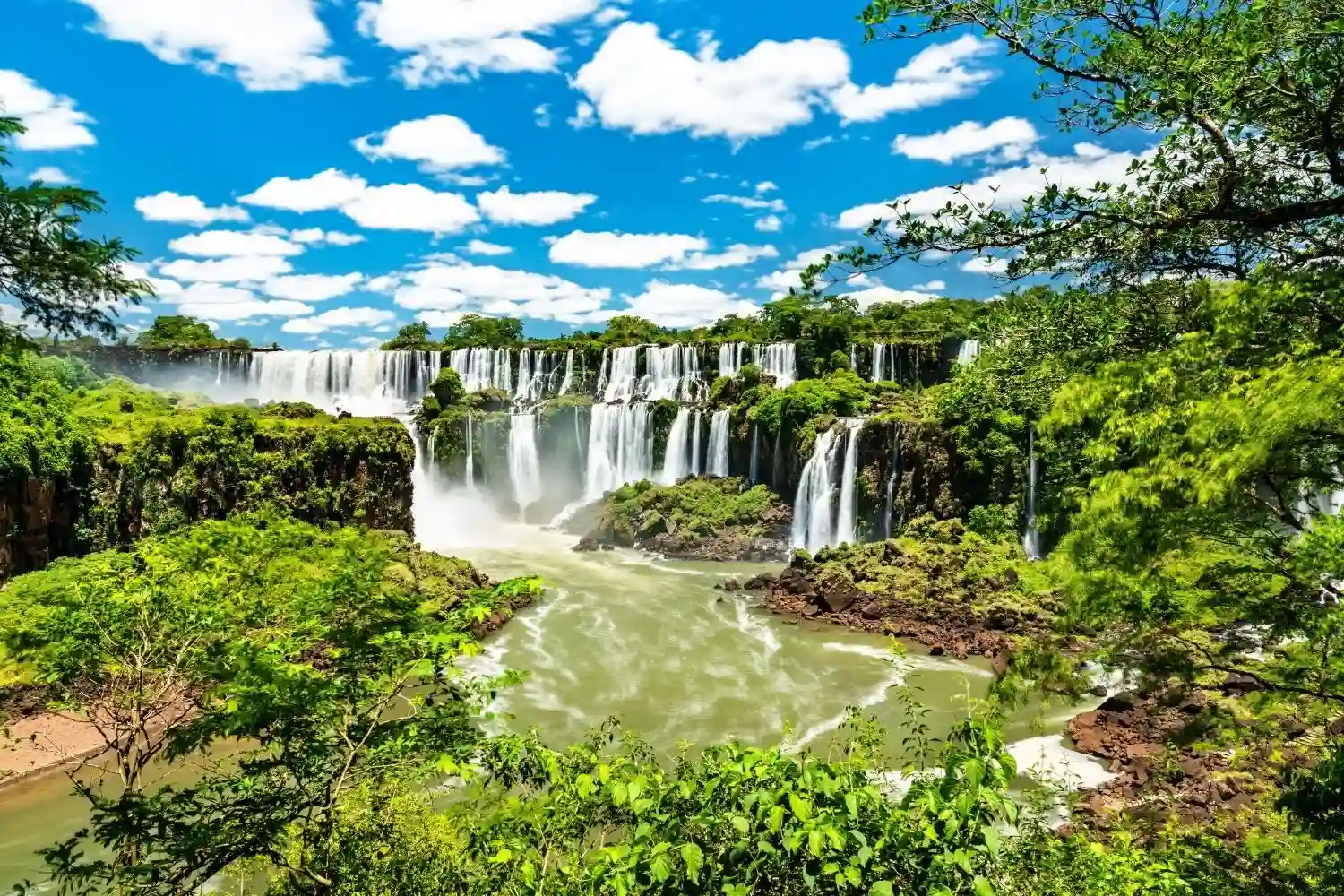
Iguazú Falls is one of the world’s largest freshwater systems: 275 individual falls across a 2.7-kilometre front, reaching heights of up to 82 metres, surrounded by 67,620 hectares of subtropical jungle declared a UNESCO World Heritage Site in 1984 and one of the new seven natural wonders of the world since 2011. It is a destination that is not fully understood when visited in a rush, and one of the few places in South America where travellers consistently wish they had booked more time.
Two sides, two completely different experiences
The most common question when planning Iguazú is not how many days to spend there. It’s which side is better. Our usual answer is that that’s not the right question.
The Argentine and Brazilian sides don’t compete with each other: they complement each other. Visiting one without the other means seeing part of something that only makes complete sense when observed from both angles.
| Lado argentino | Lado brasileño | |
|---|---|---|
| Tipo de experiencia | Inmersiva. El viajero recorre pasarelas que se adentran en el sistema de cataratas y permiten vivir el paisaje desde muy cerca. | Panorámica. La visita ofrece una visión global del conjunto de las cataratas desde la orilla brasileña. |
| Circuitos principales | Circuito Superior, Circuito Inferior y Garganta del Diablo. | Un recorrido lineal de aproximadamente 1,2 km con varios miradores panorámicos. |
| Tiempo recomendado | Entre 4 y 6 horas para recorrer el parque con tranquilidad. | Entre 2 y 3 horas. |
| Lo que aporta | Proximidad al agua, sonido de las cataratas, detalle de cada salto y sensación de formar parte del paisaje. | Permite comprender la escala completa del sistema, con una amplia vista de los 275 saltos de agua. |
| Punto más destacado | La Garganta del Diablo, el salto más espectacular, con una caída de hasta 82 metros y una pasarela que conduce prácticamente hasta el borde. | Mirador panorámico frente a la Garganta del Diablo, uno de los mejores puntos para apreciar la magnitud del conjunto. |
| Logística | Acceso desde Puerto Iguazú (Argentina). El Parque Nacional Iguazú abre habitualmente a las 8:00 h (consultar horarios según temporada). | Acceso desde Foz do Iguaçu (Brasil). Si se parte desde Argentina, es necesario realizar el cruce fronterizo. |
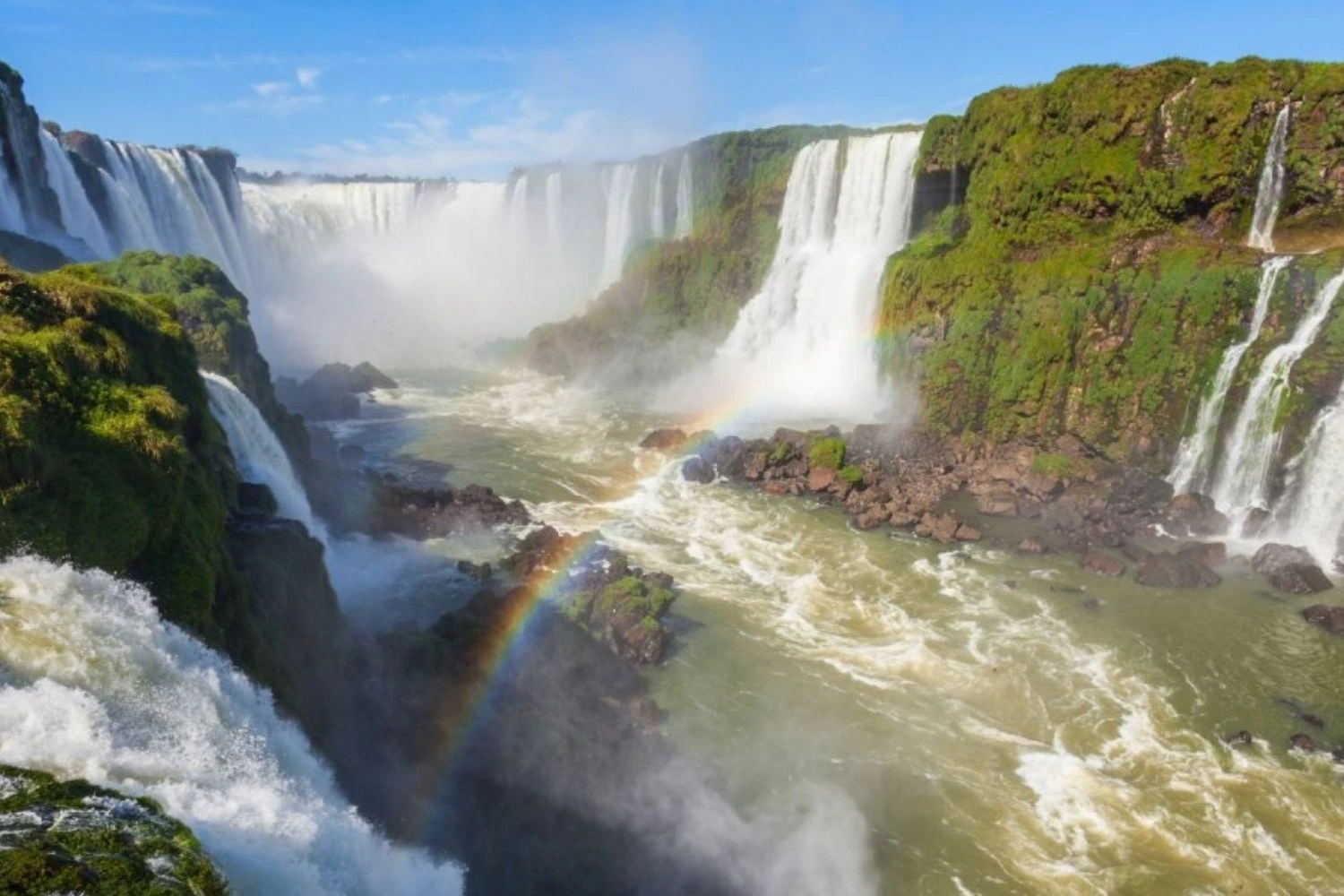
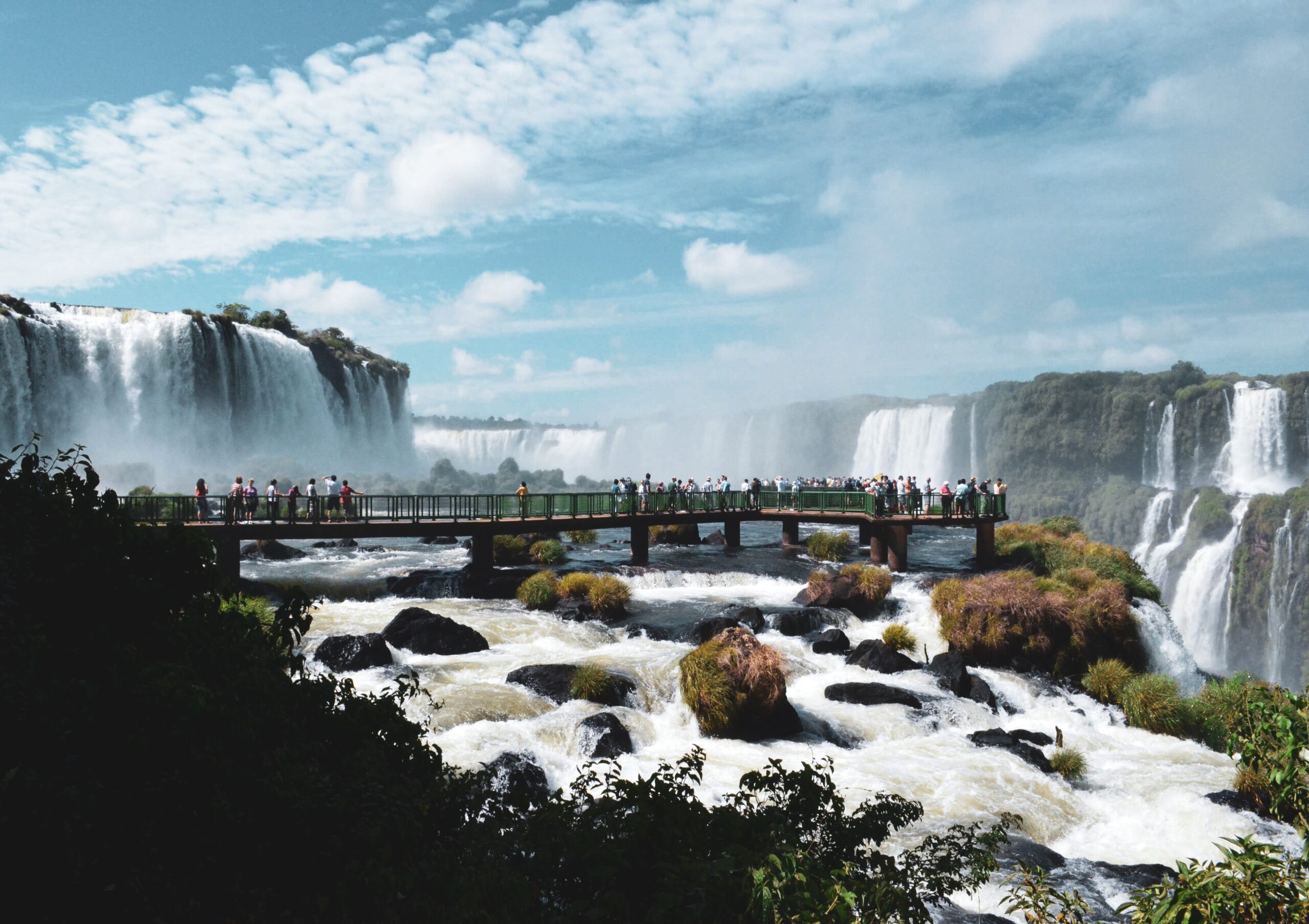
Devil’s Throat (Garganta del Diablo) is the reference point of the entire visit: the tallest fall in the system, dropping up to 82 metres. From the Argentine side, you reach it along a walkway that extends out into the water, allowing you to hear and feel the full force of it at close range. From the Brazilian side, you see it head-on, with the entire curtain of water in your field of vision. They are two physically distinct experiences of the same place.
The border crossing between Argentina and Brazil is made by bus or taxi from Puerto Iguazú to Foz do Iguaçu, via the Tancredo Neves International Bridge. With proper planning, the whole process usually takes no more than 45 to 60 minutes, though it can run longer in high season. It needs to be factored into the day you visit the Brazilian side.
How many days we recommend, by trip type
Not every traveller needs the same amount of time at Iguazú. Someone on a fast-paced South America route has different needs from a family, a couple on honeymoon or someone with more flexibility. As a working reference, we use this logic:
| Tiempo en destino | Qué permite hacer realmente | Perfil más habitual |
|---|---|---|
| 1 día | Visitar un único lado de las cataratas (argentino o brasileño) con un tiempo muy ajustado. | Viajeros en tránsito o con un itinerario muy concentrado. |
| 2 noches | Recorrer el lado argentino y el brasileño con una buena organización. Es la opción más equilibrada para la mayoría de rutas por Sudamérica. | Viajeros que realizan un itinerario multi-país. |
| 3 noches | Visitar ambos parques con calma, disponer de margen por si el clima cambia e incorporar alguna experiencia complementaria. | Familias, viajes premium o itinerarios con un ritmo más pausado. |
| 4 noches o más | Convertir Iguazú en el destino principal y explorar la región con mayor profundidad. | Viajeros interesados en naturaleza o en descubrir el noreste argentino. |
For most travellers doing a multi-country route, two nights is the most balanced option. It allows you to arrive without pressure, spend a full day on each side and continue your trip without the stage feeling squeezed. Three nights improve the experience for families, premium trips or itineraries that have already accumulated several days of high intensity.
The time of year changes the falls
The water flow at Iguazú Falls varies significantly throughout the year, and this directly affects the experience. There is no objectively better season, but there are important differences worth knowing before you plan.
- From November to March, during the rainy season, the flow reaches its highest levels. The falls are more visually spectacular, but also louder, more humid, and some walkways may be partially closed due to the volume of water. Temperatures regularly exceed 30°C with high humidity.
- From April to October — the dry season — the flow decreases, the walkways are more accessible and the visit is physically more comfortable. Temperatures are milder, particularly between June and August. The landscape changes: with less water, more rock is visible and the jungle takes on greater visual prominence.
Both versions of Iguazú are extraordinary. But they are different experiences. For travellers combining Iguazú with Buenos Aires and Rio within a South America route, the window of April to June and August to October tends to offer the best balance between climate, water levels and visitor numbers.
Complementary experiences worth adding
Iguazú already has more than enough to fill a visit. Complementary experiences only make sense if the itinerary has room for them and they match the traveller’s profile. These are the ones we most commonly incorporate on trips with three nights or more.
The Parque das Aves (Bird Park), located next to the Brazilian park entrance in Foz do Iguaçu, is home to over 1,500 birds from native Atlantic Forest species. It can be visited on the same day as the Brazilian side and adds a very different dimension to the overall natural experience.
The night visit to Devil’s Throat (Argentine side) takes place on full-moon nights and offers a completely different perspective on the falls. The lit walkway experience and the sound of the water in the dark produce something very hard to compare with the daytime visit. We recommend this particularly for premium trips or for travellers who already know the falls and want to see them from another angle.
For those with more time, the Itaipú dam in Foz do Iguaçu is one of the largest hydroelectric complexes in the world, with an installed capacity of 14,000 MW. The visit includes an exterior panoramic tour and technical tours that allow you to grasp the scale of the project. It is an option better suited to travellers with an interest in engineering or the region’s energy geopolitics.
Boat excursions to the foot of the falls (Argentine side) allow you to get close to the water from below. They are a very physical experience, with waterproof clothing provided, and they work particularly well for travellers looking for excitement and direct contact with the natural environment. With children aged 5 or 6 and over, they tend to go down very well.
Where Iguazú fits within a broader South America route
Iguazú is not just one of South America’s great natural destinations. Within a multi-country route, it serves a contrast function that very few other stages can replace.
After Rio de Janeiro it completely changes the scale of the trip: from a city of 6.2 million people to subtropical jungle and monumental nature. After Buenos Aires it introduces a pure nature pause before continuing towards Peru or Chile.
In routes like South America in Full, where Iguazú appears between Rio de Janeiro and Buenos Aires, those two days serve a very specific purpose: they cut the urban rhythm of the trip and introduce a completely different sensory experience. The traveller arrives in Buenos Aires having already been through nature of the first order — and that changes how the city feels.
You can see how we integrate Iguazú within that route on our South America in Full page.
The most common mistake we see when planning Iguazú
The most frequent mistake is not choosing the wrong number of days. It’s not counting what surrounds the visit within the real calendar of the trip. Many itineraries calculate days at the destination without including the arrival and departure times: the incoming flight, the hotel transfer, the first afternoon of settling in, the outgoing flight, and the accumulated energy level if the traveller is already several days into a long route.
A stage that is too short can reduce Iguazú to a logistical interruption between two major cities, when in reality it should be one of the strongest moments of the entire trip. That’s why, when we design this part of a route, we always look at the trip as a whole: where the traveller is coming from, where they’re heading, how many flights they’ve already accumulated and what kind of pace they want to maintain.
About the author
Constance Abad — Founder and director of Qwerty Travel
She has spent over fifteen years designing tailor-made itineraries across South America, working with local operators and guides in Argentina, Brazil, Chile and Peru. She has organised more than four hundred routes combining Iguazú with Buenos Aires, Rio de Janeiro, Patagonia, Lima and Cusco, adapting every itinerary to the real pace and profile of each traveller.
LinkedIn: linkedin.com/in/constance-abad
Frequently asked questions about visiting Iguazú
For most travellers, two well-organised nights is the most balanced option. They allow you to visit the Argentine side on one day and the Brazilian side the next, without the experience feeling rushed. Three nights are advisable for family trips, premium itineraries or trips with a more relaxed pace.
Yes, but the experience will be partial. With just one day it's only comfortable to visit one side of the falls. It can be a valid option if time is very limited, but it is not what we recommend for a well-designed South America trip.
They are different and complementary experiences. The Argentine side is more immersive: the traveller walks through the Upper Circuit, the Lower Circuit and reaches Devil's Throat along a walkway. The Brazilian side is panoramic: it allows you to see the complete system in a single field of vision. If time allows, the ideal is to visit both.
The journey between Puerto Iguazú (Argentina) and Foz do Iguaçu (Brazil) is made by bus or taxi over the Tancredo Neves International Bridge. With normal organisation, the full process usually takes no more than 45 to 60 minutes, though it can run longer in high season. It's worth factoring this into the day you plan to visit the Brazilian side.
We usually recommend two nights as the base, and three nights as the premium option. Two nights allow you to visit both sides without rushing. Three nights add a climate buffer, room for complementary experiences and a calmer pace — particularly appreciated on family trips or longer journeys.
Yes, and it's relevant. In the rainy season (November–March) the flow is at its peak and the falls are more visually impressive, but there is also more heat, humidity and some walkways may be closed. In the dry season (April–October) the visit is physically more comfortable and the walkways are more accessible. Both seasons offer extraordinary experiences, but they are distinct ones.
Yes, especially if the trip combines Brazil and Argentina. Iguazú provides a natural contrast that no city can replace within a continental route. It is, alongside Machu Picchu and Patagonia, one of the three great natural highlights of any first major South America journey.
How many days do you need at Iguazú?
The answer depends on the rest of your trip. Tell us where you’re coming from, where you’re heading next and how much time you have, and we’ll tell you exactly how many nights at Iguazú make sense within your route.
First consultation, no commitment: we’ll tell you exactly what you will — and won’t — see based on your dates.
www.qwerty-travel.com · info@qwerty-travel.com