What we have learned organising Patagonia trips for Mexican families
By Constance Abad — Founder and director of Qwerty Travel
Every family arrives with a different trip in mind. Some know from the outset that they want the Perito Moreno Glacier. Others have been dreaming of Ushuaia for years. Some want snow in Bariloche.
Many want everything: Buenos Aires, Bariloche, El Calafate, Ushuaia and, if possible, Torres del Paine. The list is usually long. The days available are almost always a little shorter than the list would require.
After years organising this kind of trip, we have learned that the difference between an itinerary that looks perfect and one that actually works lies almost always in the details. Not in the number of destinations, but in how the time is spread out. Not in the hotel category, but in whether it is the right choice for the group that will use it. Not in how many excursions are included, but in the pace that lets the whole family enjoy them.
What follows is not a destination guide. It is a summary of what we have learned organising these trips. Some things that looked obvious when we started turned out, over time, to be more complex. And others we treated as secondary at first ended up being essential.
First lesson: when the whole family travels, the pace changes
One of the first things we learned is that an itinerary for a couple is not designed in the same way as one for eight people across three generations. It sounds obvious. But faced with a map and a list of destinations, it is easy to lose sight of the fact that the real group making the trip is what should shape every decision.
When three generations travel together, some people want to walk several kilometres, others prefer to take it in from a viewpoint, others need a rest mid-morning. Children take in each excursion differently from adults, and for older travellers an extra hour of transfer can matter far more than it appears when the itinerary is designed on paper.
Designing the pace around the group often means cutting the number of activities in a day. Not to make the trip less good, but because a well calibrated itinerary produces a better experience for everyone, without exception. We have seen families reach El Calafate so worn out by the previous days that they could barely enjoy Perito Moreno. And we have seen families arrive at the same place with time and energy, and experience it in a completely different way.
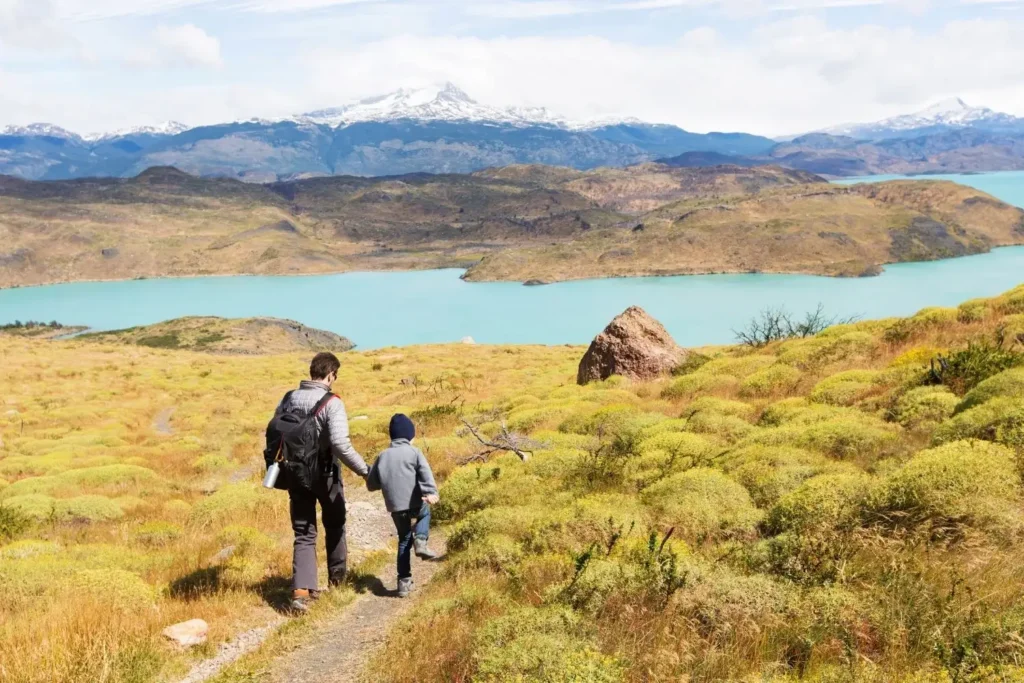
12–15 days work particularly well, but they will not cover everything
Two weeks are enough to build a great trip through Argentina and Patagonia. They allow Buenos Aires to be combined with two or three Patagonian destinations, with reasonable time at each stage and without transfers dominating the calendar. In our experience, 12 to 15 days is usually the balance point that works best.
But there is a temptation: on a map, adding Buenos Aires, Bariloche, El Calafate, Ushuaia, Torres del Paine and Iguazú can look perfectly feasible. In practice, every extra destination carries a logistical cost that does not show up in the itinerary until you are already travelling: another flight, a check-in and a check-out, transfer time to the airport, waiting, luggage, weather changes affecting connections. That accumulated cost is what turns an itinerary that looked complete into one that feels exhausting.
| Trip length | Recommended approach |
|---|---|
| 10 days | Buenos Aires + one Patagonian region. Tight pace, no room for the unexpected |
| 12–15 days | Buenos Aires + two main Patagonian destinations. The most common and best balanced length |
| 16–18 days | Room to add Ushuaia or an extension into Chile at a genuinely unhurried pace |
| 20 days or more | Argentine and Chilean Patagonia with enough time at each stage |
This table is a guide to how we work at Qwerty, not a universal rule. Every family and every trip has its own circumstances. What stays constant is the question we ask of every itinerary: if something goes wrong, does the trip have room to absorb it? If the answer is no, the itinerary is too tight.
A good hotel is not necessarily the most expensive one
On family trips, the choice of accommodation carries more weight than it first appears. Not only for comfort, but because the hotel is where the family rests, plans the day, stores luggage, has breakfast and returns after each excursion. In a group of several people and generations, that space matters a lot.
Experience has taught us that category and practicality are not the same thing. A very expensive five-star hotel in a poor location can create more daily friction than a good, well placed four-star with comfortable rooms, a good breakfast, a front desk that solves problems and easy access to the main sights. On trips like these, the decision is rarely made on price alone: location, service quality and the property’s ability to absorb the needs of a large family group all weigh heavily.
We select hotels by how they work within the specific trip we are designing, not simply by the number of stars. A spectacular boutique property forty minutes from the centre, or a luxury hotel with small rooms, can create everyday problems that repeat throughout the stay.
Private services change far more than the level of comfort
When someone hears “private services”, the immediate association is usually luxury. That is not how we think about it. On a family trip, private services are above all a tool for flexibility.
A private vehicle makes it possible to fit the schedule to the group’s real pace, handle luggage without depending on other travellers, stop unplanned when the landscape deserves it, or simplify a transfer when someone is tired. A private guide can tailor explanations to the different interests and ages in the group, shorten an excursion if someone needs it, or spend longer on whatever sparks the most curiosity.
When six, eight or ten people from different generations are travelling, that flexibility has concrete value. It is not abstract comfort: it is the difference between a day that works and a day where everything is harder than it needs to be. On these trips, private mainly means the ability to adapt. And that ability to adapt is especially useful in a destination where weather and logistics can force plans to be rearranged.
Food matters more than it seems when the trip is being designed
When we organise a family trip, food is rarely at the centre of the first conversation. Attention goes naturally to destinations, flights and hotels. And yet, over time, we have found that the table plays a role that goes beyond eating well.
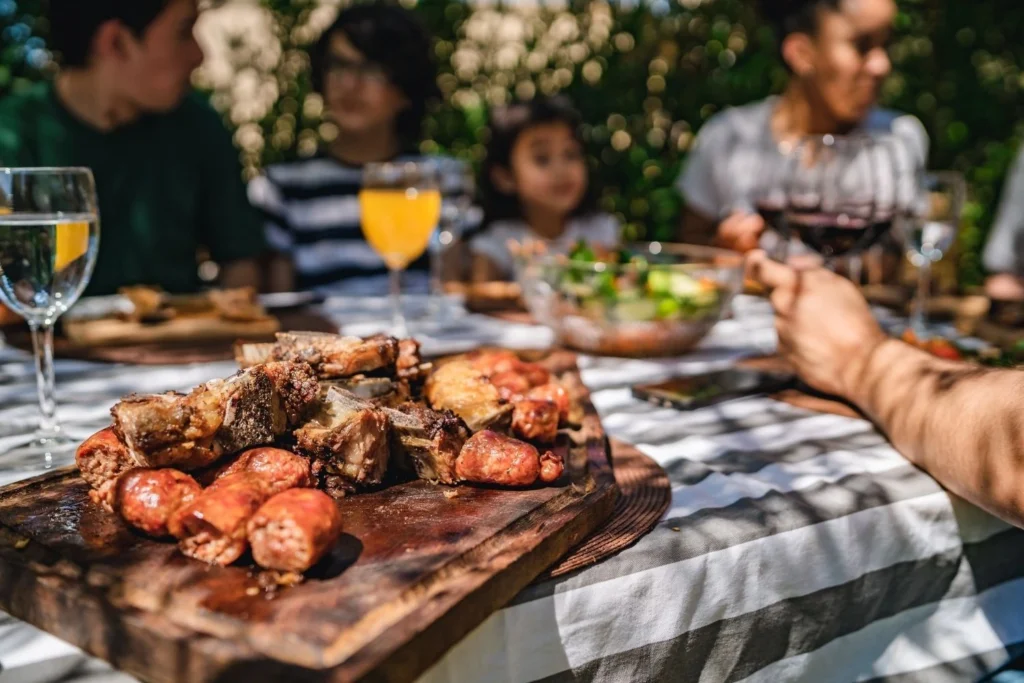
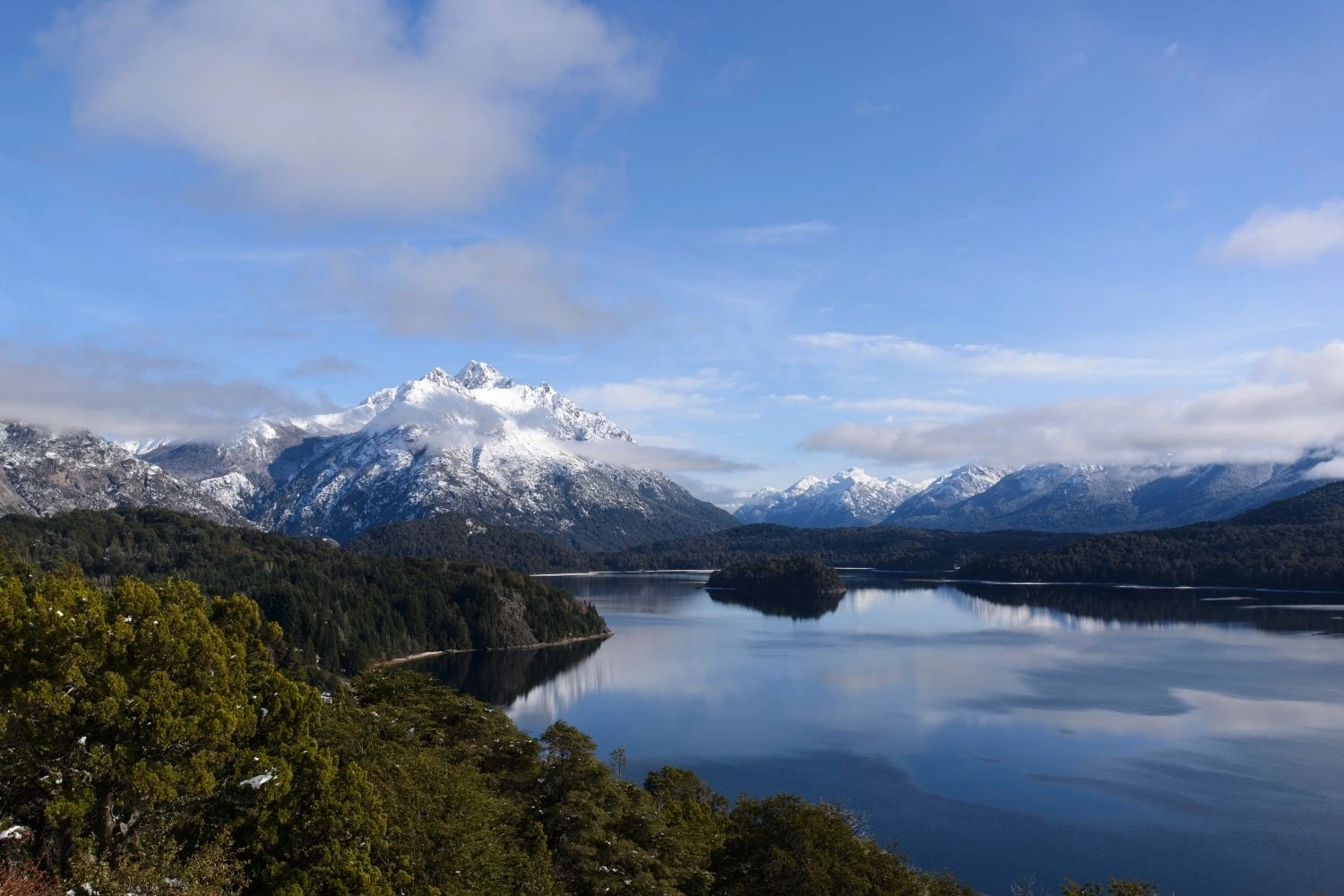
After a day of excursions, a meal is the moment the family comes together, slows down and shares the day. It is one of the most valuable spaces of the trip for multigenerational groups, because it works for every profile at once: the children rest, the grandparents enjoy themselves, the parents get a pause. A good dinner in Buenos Aires, lunch overlooking Lake Nahuel Huapi in Bariloche or an asado at a Patagonian estancia are remembered as vividly as any excursion.
Argentine food also brings a cultural dimension many families do not expect. Each region has its own identity: the Andean north has nothing in common with Buenos Aires, and Patagonia offers produce and dishes closely tied to the Patagonian land. On some trips, food ends up becoming one of the threads running through the route. If you want to go deeper into this, we cover it in more detail in our article on Argentine food and the idea of a foodie tour.
Reducing risk is part of designing the trip
Patagonia is a destination with changeable weather conditions, air connections sensitive to delays and distances that amplify any setback. That is not a reason to stay away. It is a reason to plan properly.
When a couple is travelling and a flight is delayed, reorganising is relatively simple. When eight people from different generations are travelling, with children, with older relatives and with several domestic flights chained together, the impact of a setback is different. Good organisation is not only about booking services: it is also about anticipating what happens when something does not go to plan.
In practice, that means designing itineraries with real margins between connections, not booking the first domestic flight of the morning when the group lands in the early hours, having a contact available during the trip if conditions change, and holding assistance insurance that covers the most common situations. This is not alarmism: it is part of what makes a trip work when the group is large and the circumstances are complex.
Some experiences work because every member of the family can take them in their own way
Not every destination in Patagonia works the same way when several generations travel together. Some call for a level of fitness that not everyone in the group will have. Others are open to any profile. Identifying which is which is part of the design work.
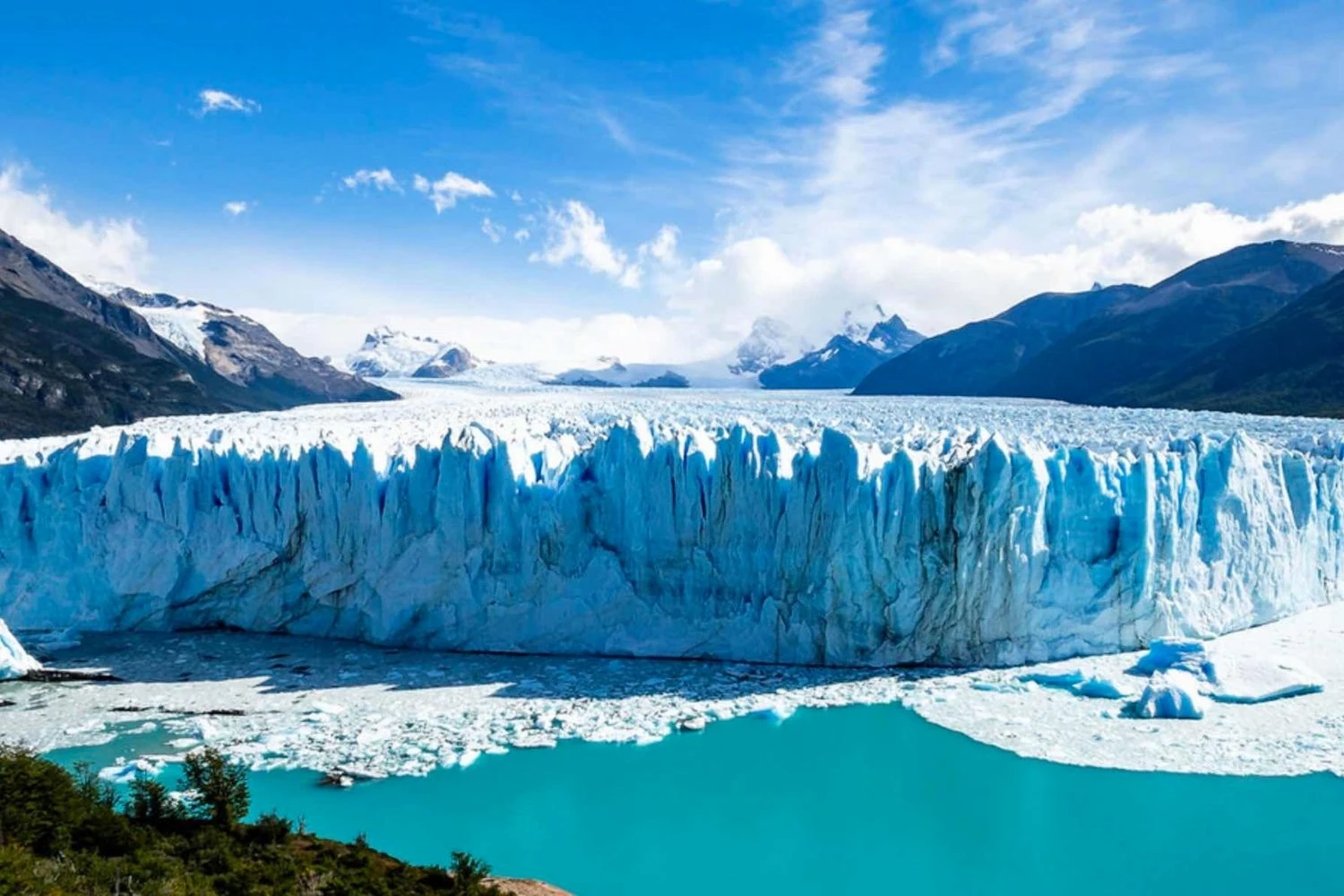
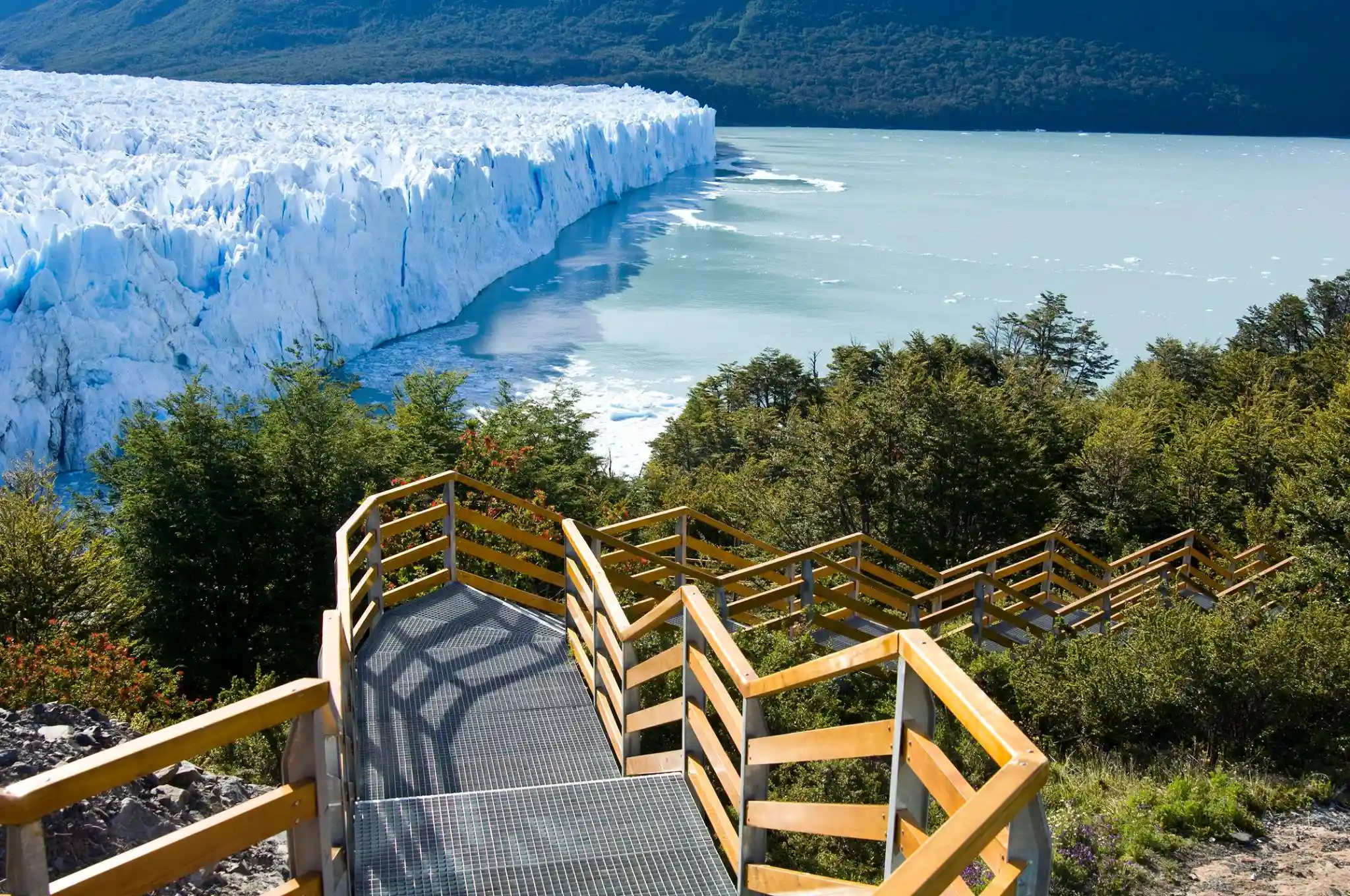
The Perito Moreno Glacier, for example, has an extraordinary visual impact, and its walkway system allows the route to be adapted to different mobility levels, so the glacier can be enjoyed without any physically demanding activity.
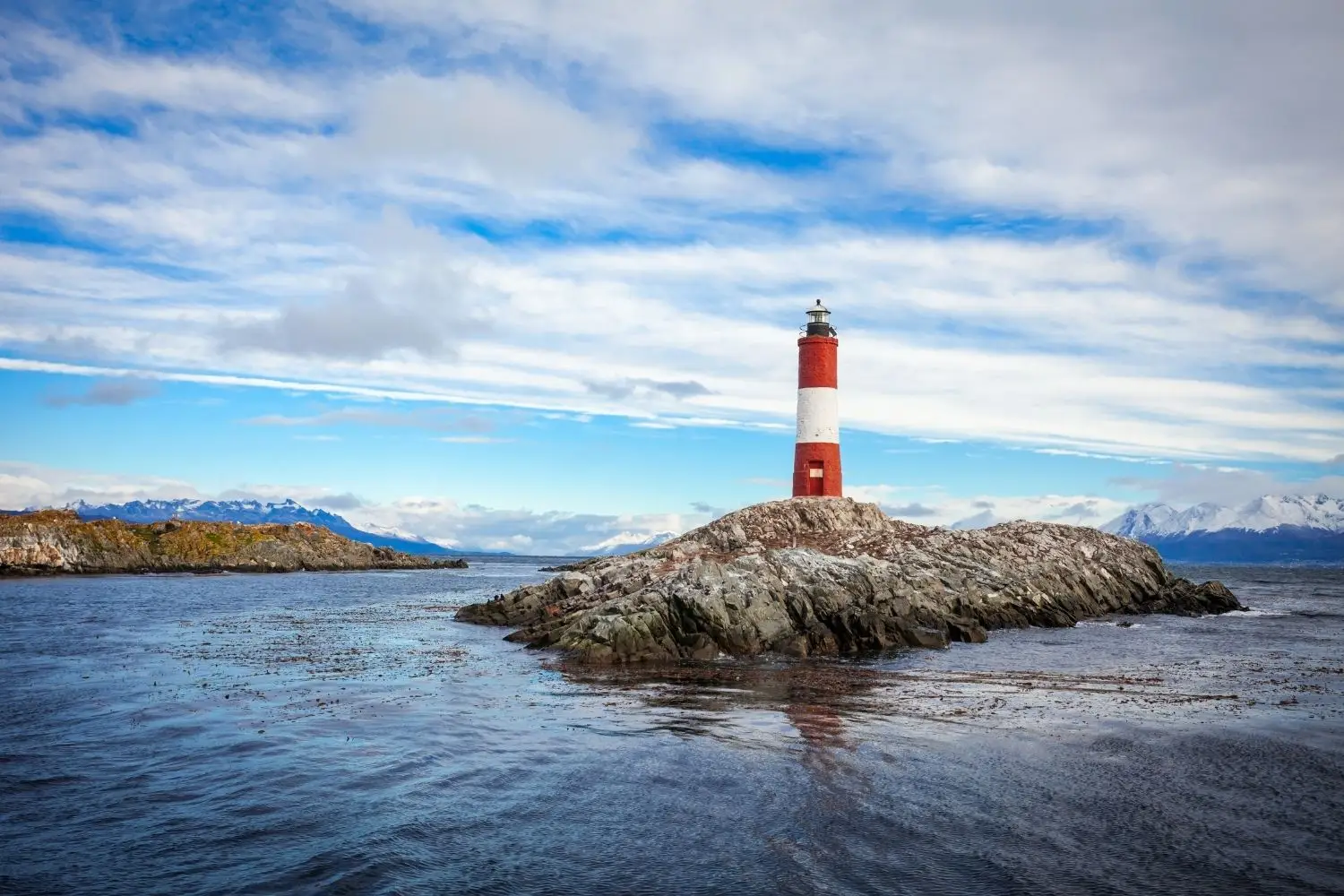
Those who want to can watch from the nearest viewpoints; those who prefer can walk every level. In Bariloche, some can hike while others enjoy a boat trip or an afternoon in town. The Beagle Channel boat trip in Ushuaia lets everyone take in the same landscape from on board, with no walking required.
These experiences work precisely because they do not force everyone to do the same thing at the same time. They are shared experiences in which each person can take part in their own way, and that makes them the richest moments of the trip for multigenerational families. It is one of the criteria we weigh most heavily when designing an itinerary.
As a guide, this is how we assess some of the most common destinations when the trip is a family one:
| Destination | Why it works for families | What to bear in mind |
|---|---|---|
| Bariloche | Allows activities at different levels of intensity to be combined | A very good option for groups with mixed ages |
| El Calafate | Perito Moreno offers great visual impact without demanding intense physical activity | Leave enough time to enjoy the glacier without rushing |
| Ushuaia | Boat trips and landscapes accessible to different profiles | Adds logistics and makes more sense when there are enough days |
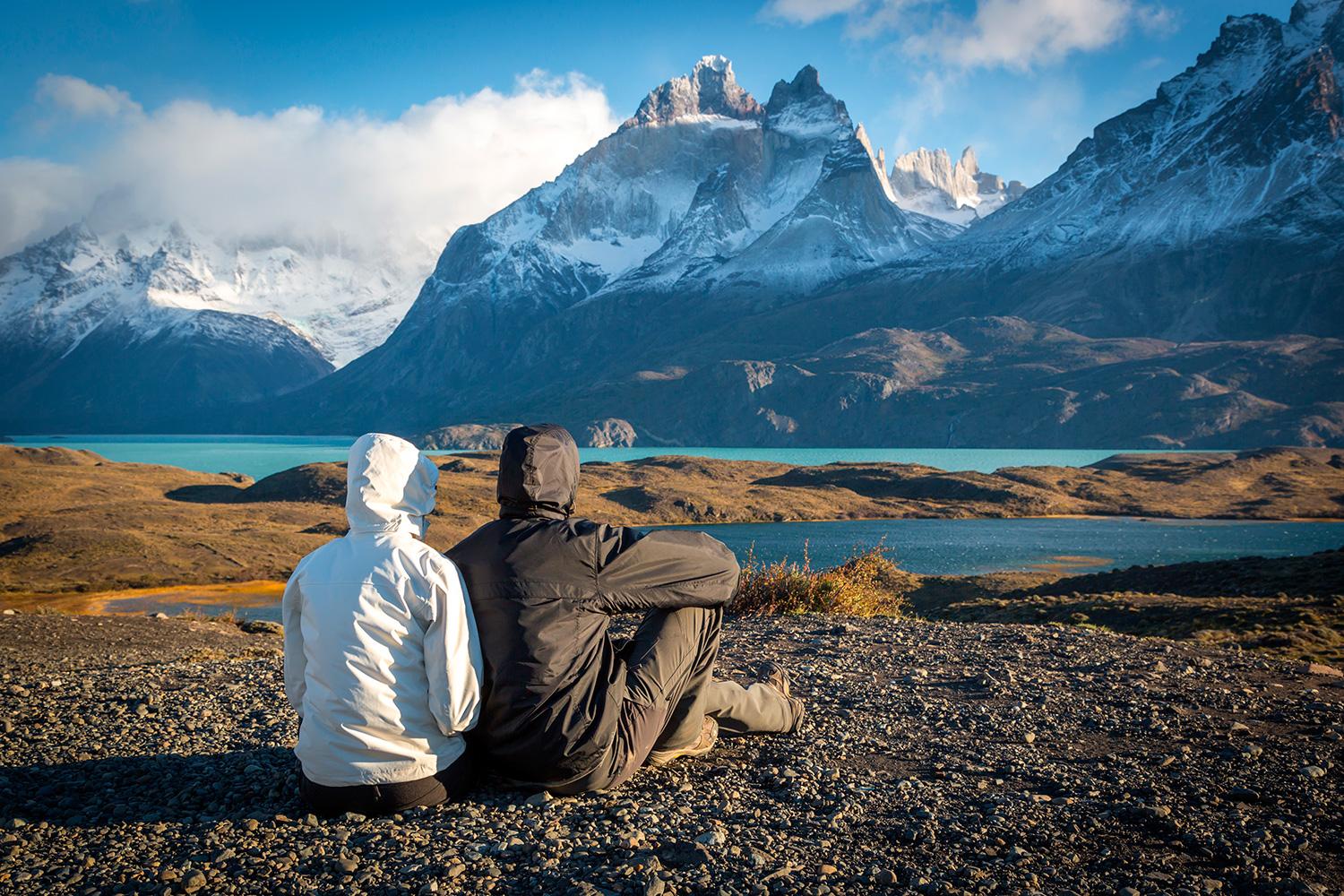
| Torres del Paine | One of the great landscape experiences of the trip | Requires more planning and an extension into Chile |
One of the most common mistakes: confusing a complete trip with a full one
Over the years we have learned to take things out of the itinerary with the same care we give to adding experiences. Not because we want to lower the quality of the trip, but precisely because we want to raise it.
A full itinerary has many excursions, many flights, many hotels and many schedules to keep. A good itinerary has relevant experiences, realistic timings, enough rest and the flexibility to adapt when something changes. The difference between the two is invisible on paper. It becomes clear once you are travelling, and by then it is too late to change it.
A common example
On the map, adding Ushuaia can look obvious: we are in Patagonia anyway. In practice, fitting Ushuaia into a twelve-day itinerary that already includes Buenos Aires, Bariloche and El Calafate means another flight, an extra check-in and check-out, and the disappearance of any margin for the unexpected.
For some families that addition fits perfectly. For others it is exactly the element that turns the trip into an exhausting one. The difference lies in who is travelling, not in the destination.
Personalisation starts before the destinations are chosen
Before recommending Bariloche, El Calafate or Ushuaia, we need to know who is travelling. How many of them. What ages. Whether there are small children or older travellers with specific mobility needs. How many days they really have. What pace they want. Whether food matters to them or they would rather the itinerary be more active. What kind of accommodation they expect.
Only once those answers are in does the route get built. That is the fundamental difference between buying a set tour and designing a tailor-made trip.
A set tour starts with the destinations. A tailor-made trip starts with the people.
It sounds like a small distinction, but it decides whether the itinerary works for the real group that will live it or only for the imaginary group it was originally designed for.
In practice, some decisions look minor before departure and end up shaping the whole experience. Where the hotel sits in relation to the main sights. Whether there is enough margin between the arrival flight and the first day of activities. Whether the pace of day three suits a body that has already spent two days travelling from Mexico. Those details are what really give the trip its shape.
What makes a family come home from Patagonia happy
After many organised trips, we have found that the strongest memory does not always belong to the most spectacular place or the most elaborate excursion. Often it is something simpler: a moment that was not specifically planned but happened because there was time for it to happen.
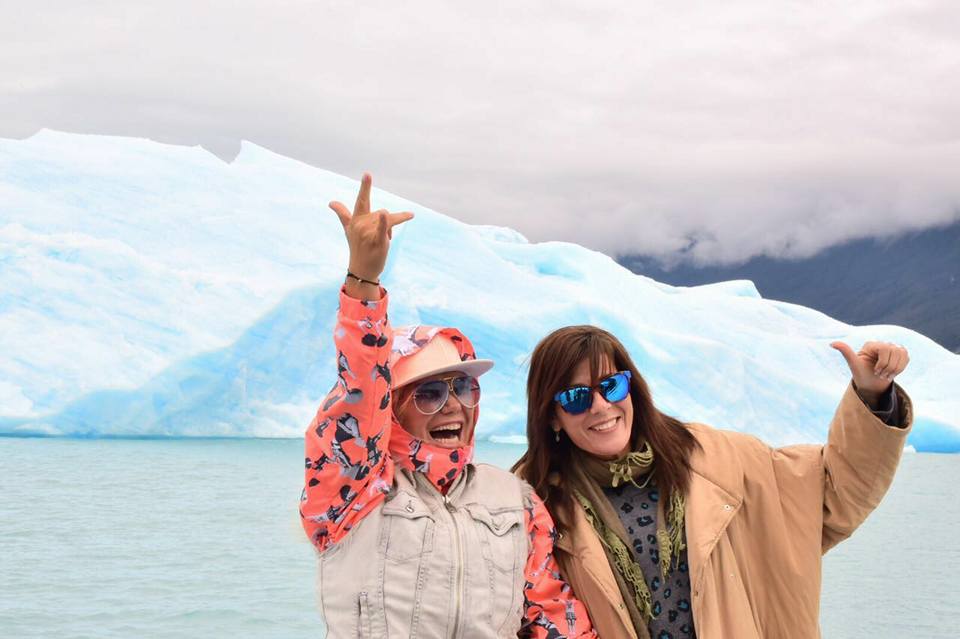
A meal that ran longer than planned. A block of ice breaking off the glacier while the whole group watched in silence. A free afternoon in Bariloche that ended in an ice cream shop by the lake. A boat trip where the children and the grandparents shared the same view from the deck. None of those things can be booked. But all of them need an itinerary with enough space for them to happen.
What stays with people
The trips that turn out best are not the ones with the most destinations, but the ones with the right pace for the people living them. Having time to stop, to share an unhurried meal and to look at the landscape without thinking about the next transfer leaves a very different memory from constant movement. And that, paradoxically, calls for a more restrained itinerary, not a fuller one.
How we apply these lessons at Qwerty Travel
All of the above is part of how we design every itinerary. We do not start by deciding how many destinations will fit. We start by understanding who is travelling. From there we define the length, the pace, the destinations, the hotels, the flights, the private transfers, the excursions, the food experiences, the free time and the support during the trip.
The aim is not for the itinerary to look impressive on paper. It is for it to work once the whole family is there. With Patagonian weather, with the jet lag of the first days, with the different rhythms of each generation and with the surprises that always appear when you travel far from home.
If you want to see how we build the structure of a complete route, you can read our guide: Family travel to Patagonia from Mexico: a guide to planning the trip.
About the author
Constance Abad — Founder and director of Qwerty Travel
She has spent more than fifteen years designing tailor-made itineraries across Argentina and Patagonia for families from Mexico, Europe and Latin America. She has organised routes for more than four hundred families with very different profiles. Every itinerary starts by understanding who is travelling, not which destinations fit the calendar.
LinkedIn: linkedin.com/in/constance-abad
Preguntas frecuentes
In the family trips we design, 12 to 15 days is usually the most balanced length. It allows Buenos Aires to be combined with two main Patagonian destinations without transfers dominating the calendar. Below ten days the pace becomes very demanding; above fifteen there is more room to add Ushuaia or Torres del Paine.
El Calafate (Perito Moreno) and Bariloche are the two that suit multigenerational groups best: they require no particular fitness and offer activities for different profiles. Ushuaia also works well if there are enough days. Torres del Paine demands more logistics and suits longer trips or groups with greater mobility.
Yes, especially when different profiles and generations are travelling together. The value of private services is not luxury but flexibility: adapting schedules, adjusting the pace, handling changes without depending on an outside group. In Patagonia, where the weather can turn and setbacks are common, that flexibility has very concrete practical value.
In many of the family trips we organise, a good, well located four-star offers the right balance of service, comfort and practicality. But the category is always decided according to each family's profile and expectations. Location and practicality matter as much as the number of stars: a well placed hotel simplifies every journey of the day, while a badly placed one adds friction that repeats day after day.
Yes. The main destinations on this itinerary sit at low altitude, so elevation is not usually a constraint comparable to other Andean destinations. Bariloche sits at around 760 m, El Calafate at around 200 m and Ushuaia at sea level. At Perito Moreno, the walkway system allows the route to be adapted to different mobility levels. The design of the pace and the private services are what determine whether the trip works well for everyone.
For trips in high season (January, July, Easter week), we recommend starting to plan at least four to six months ahead. In our experience, on high-demand dates the availability of the properties that work best for families shrinks considerably, especially in destinations such as El Calafate and Ushuaia. In mid-season, two or three months are usually enough. What matters most is not when you start, but giving the design the time it needs before any booking starts.
Patagonia has changeable weather that can affect flight operations, so overly tight connections are best avoided. That is why we design itineraries with real margins between connections and planned alternatives for the most common situations. We have support available during the trip to handle any change without it disrupting the itinerary as a whole.
We design your family trip to Patagonia
Tell us who is travelling, how many days you have and what kind of trip you have in mind. From there we design a personalised itinerary through Argentina and Patagonia, selecting the destinations, hotels, private services and experiences that fit your family best.
First consultation with no obligation: we tell you exactly what you will see, and what you will not, given your dates and your family.
www.qwerty-travel.com · info@qwerty-travel.com