The perfect route to discover South America for the first time
By Constance Abad — Founder and director of Qwerty Travel
Most travellers who dream of exploring South America quickly run into the same feeling: the continent seems impossible to take in. And in a sense, it is.
The distances are enormous, the cultural shifts are constant and every country moves at its own pace. One of the most common mistakes when planning a first trip is trying to fit in too many destinations in too little time. The result is almost always the same: endless flights, accumulated exhaustion and the frustrating sense of having passed through extraordinary places without ever really experiencing them.
After years of organising trips across the continent, there is one combination we continue to regard as one of the most balanced: Rio de Janeiro, Iguazú Falls, Buenos Aires, Santiago de Chile, Lima and Machu Picchu. Not simply because they are iconic destinations, but because together they form a journey with its own internal logic. The trip alternates between nature and city, intensity and stillness, urban culture and extreme landscape. And that changes everything.
The problem with most South America itineraries
Many trips fall short because they are built as an accumulation of must-see destinations rather than as a genuinely well-crafted experience. South America does not travel well at speed. Connections are long, climate shifts are real, and the body needs time to adjust — especially when tropical regions, major cities and Andean altitudes above 3,000 metres are all part of the same journey.
The difference between an exhausting trip and an extraordinary one rarely comes down to budget. It comes down to how well the pace has been thought through from the start.
The itinerary: 19 days, 6 destinations, one continental logic
This is the framework of the trip we design at Qwerty Travel under the name South America as a whole. It is not a standard template: it is the result of years of fine-tuning real timings, connections and on-the-ground rhythms.
| Days | Destination | Key experiences | Why this pace works |
|---|---|---|---|
| 1-4 | Rio de Janeiro | Sugarloaf Mountain, Christ the Redeemer, Ipanema, free day | Four days allow you to experience the city, not just visit it |
| 5-7 | Iguazú Falls | Brazilian side (½ day) + Argentine side (full day) | Two perspectives of the same landscape: essential |
| 8-10 | Buenos Aires | City tour, tango show, free day to explore neighbourhoods | The urban pause the journey needs before entering the Andean world |
| 11-13 | Santiago + Valparaíso | Santiago city tour, full-day excursion to Viña del Mar and Valparaíso | A transition towards the Andes with a more contemplative rhythm |
| 14-15 | Lima | City tour: Miraflores, Barranco, Historic Centre | Acclimatisation before Cusco; a destination with its own identity |
| 16-18 | Cusco + Sacred Valley + Machu Picchu | Cusco, Sacred Valley, full-day Machu Picchu excursion | The finale that transforms your perception of the journey |
| 19 | End of the trip | — | — |
Full day-by-day itinerary: https://qwerty-travel.com/language/en/south-america-as-a-whole/
Rio de Janeiro: where the trip really begins
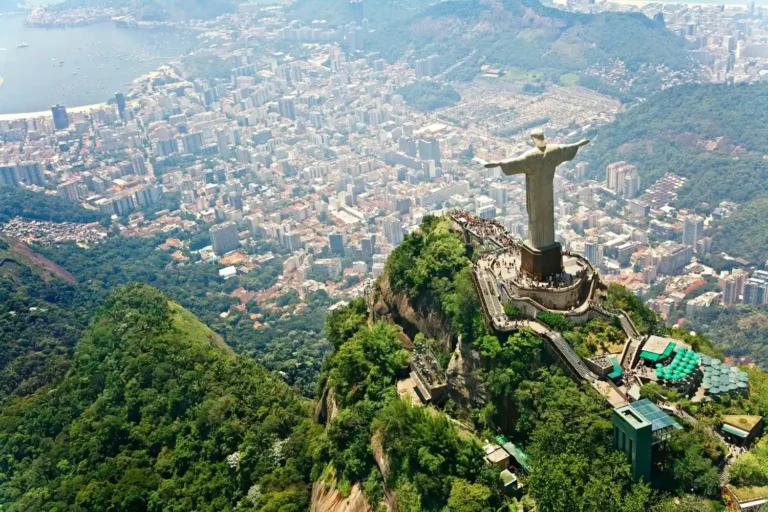
Few places can generate such an immediate impact as Rio. Waking up facing Copacabana, watching the city come to life from early morning and discovering the constant interplay between sea, mountain and urban energy produces something that is very hard to compare with anywhere else in the world.
From the first day, Rio introduces several of the dimensions that define South America: landscape, energy, social contrast, music, nature and a very particular relationship between the city and its geography. Sugarloaf Mountain and Corcovado are not simply viewpoints — they are two physically distinct ways of seeing the same thing. A city that cannot be understood without its mountain.
But Rio also demands a slower pace. Many travellers try to cover it too quickly and end up with a succession of tourist landmarks that never quite connect. The real character of the city appears when you leave room to walk along Ipanema at the end of the afternoon, to have breakfast without rushing, facing the sea. That is why the itinerary includes a free day. It is not wasted time.
Iguazú: when the landscape changes scale
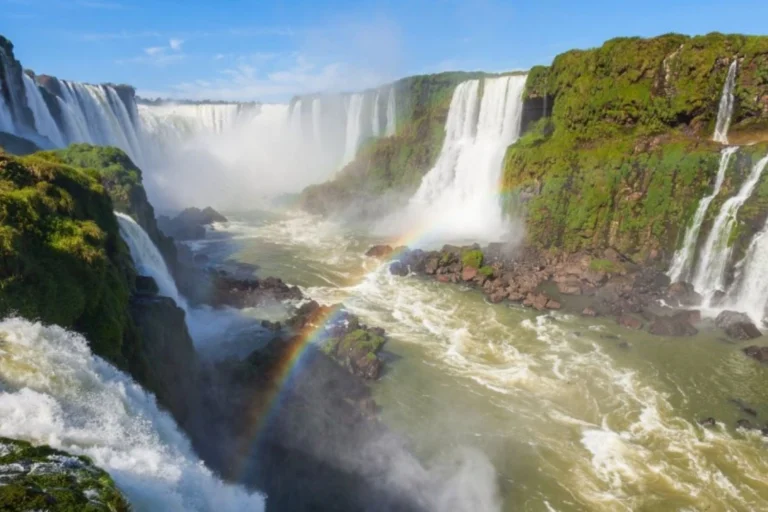
After Rio, Iguazú creates one of the most spectacular contrasts on the entire route. The journey moves from one of the continent’s most vibrant cities to an environment where nature completely dominates the experience.
The falls form a system of 275 individual cascades reaching heights of up to 82 metres across a front of 2.7 kilometres. The Iguazú National Park — declared a UNESCO World Heritage Site in 1984 and one of the seven natural wonders of the world since 2011 — covers 67,620 hectares of subtropical jungle where the sound of the water can be heard long before the landscape comes into view.
It is not the photograph that stays with you. It is arriving there and understanding that the sound is as much a part of the landscape as the water itself.
The itinerary dedicates two full days to Iguazú because the Brazilian and Argentine sides offer completely different perspectives. Seeing only one is seeing half the picture.
Buenos Aires: cultural depth and a different rhythm
After the visual intensity of Iguazú, Buenos Aires shifts the tone of the journey entirely. Here the trip becomes more urban, more gastronomic, more cultural. And that shift is essential to prevent the sensory overload that many long itineraries produce.
Buenos Aires is a city that rewards wandering: moving through different neighbourhoods — Palermo, San Telmo, La Boca — stepping into historic cafés, browsing bookshops, watching the rhythm of everyday porteño life. The tango dinner on day nine is not a standard tourist show; it is a way of understanding something about the identity of the city that does not translate easily into words.
South America cannot be understood through its landscapes alone. Its cities explain much of the continent’s identity, and Buenos Aires remains one of the most fascinating places to do that.
If you are interested in exploring Buenos Aires as part of a wider journey through Argentina, you can also view our itinerary for Argentina’s classics in 12 days.

Santiago: the transition the trip needs
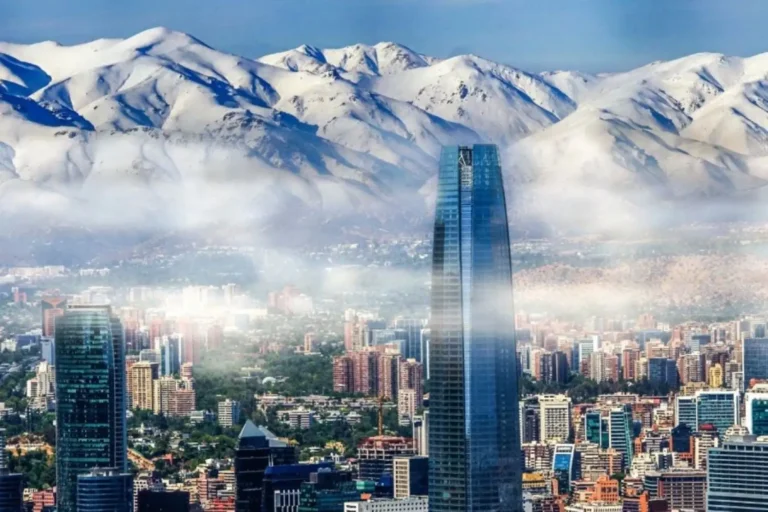
Santiago tends to be overlooked beside other South American destinations, but within this route it serves a very specific purpose: it introduces a measured transition towards the Andean world that appears later in Peru. On clear days, the Andes are visible from anywhere in the city. There is no way to ignore them.
The day trip to Viña del Mar and Valparaíso adds an unexpected dimension: the Chilean coastline, the port architecture of Valparaíso and an atmosphere unlike anything the traveller has encountered so far. It is consistently one of the days that surprises people most.
Lima: the gateway nobody expects
Lima is one of the most underrated destinations on the route. Many travellers treat it as little more than a stopover before Cusco. That is a mistake.
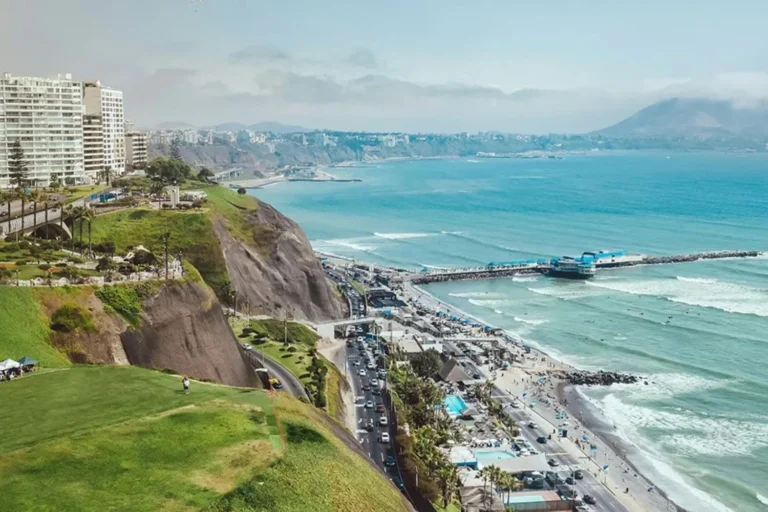
Miraflores with the Pacific as a backdrop, the Historic Centre declared a UNESCO World Heritage Site, the Barranco neighbourhood with its republican architecture and a culinary scene recognised as one of the finest in the world — together they make Lima a destination with genuine substance. It is not a city to pass through. It is a city that rewards a little attention.
Within the itinerary, the two days in Lima also serve a logistical function that cannot be ignored: they provide the rest and gradual acclimatisation needed before ascending to Cusco at 3,400 metres. Arriving in Cusco directly from Buenos Aires or Santiago, without that intermediate step, is one of the most common mistakes that affects physical wellbeing during the first days in the Andes. The body needs time. Lima provides it.
Machu Picchu: a finale that transforms the whole trip
Few stages close a South America journey as powerfully as the Peruvian Andean world.
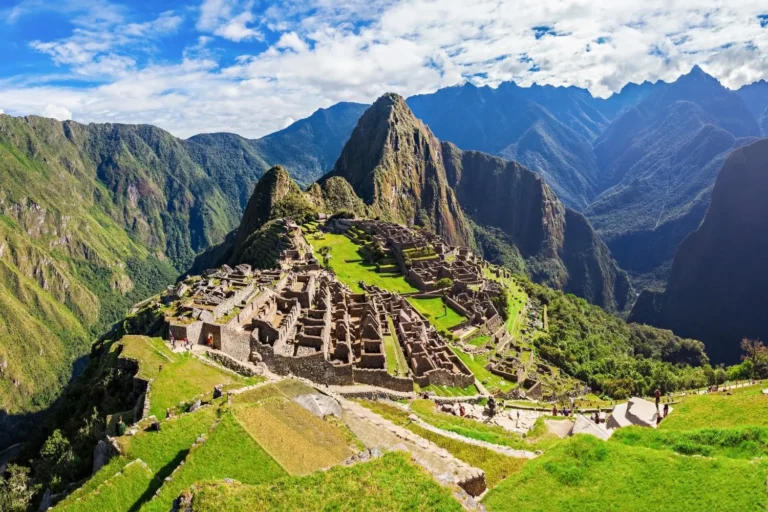
The Inca citadel sits at 2,430 metres above sea level in the middle of a mountain cloud forest, declared a UNESCO World Heritage Site in 1983 and one of the new seven wonders of the world since 2007. But those facts do not explain what happens when you arrive there after having already travelled through Rio, Iguazú, Buenos Aires, Santiago and Lima. The place does not look the same after that journey.
After beaches, jungles, great cities and intense urban landscapes, the Andean world introduces a completely different atmosphere: quieter, more spiritual and far more introspective.
The Sacred Valley on day seventeen is not a prelude to Machu Picchu. It is an independent experience that allows you to grasp the scale of the Inca Empire before reaching the citadel. Travellers who skip the Sacred Valley to go straight to Machu Picchu lose the context that makes everything else fall into place.
And then there is the altitude. Cusco sits at 3,400 metres. That shapes the rhythm of each day, the quality of sleep and the energy available. It is not a minor detail — it is part of the experience, and the Andean days need to be built with that in mind from the outset.
What makes this a genuinely complete route
The most interesting thing about this itinerary is not the individual quality of each destination. It is the overall balance of the journey.
- It alternates raw nature (Iguazú, Machu Picchu) with major cities (Rio, Buenos Aires, Lima).
- It combines emotional intensity with more contemplative stages.
- It introduces Andean altitude gradually rather than abruptly.
- The connections are relatively straightforward for a first continental journey.
- Each stage has a purpose within the route — it is not simply a list of destinations added one after another.
Great South America journeys do not work through accumulation of places. They work through the way experiences connect with each other. That is the principle behind this route.
How many days are actually needed
Three weeks is the minimum to complete this route without it turning into a race. With less time, important stages almost always have to be cut, or the trip becomes a constant succession of airports and hotel changes. What is lost is not just comfort — it is the complete experience that gives the journey its meaning.
The full day-by-day breakdown is on the product page: South America in Full — 19 days.
How we design this kind of trip
South America changes significantly depending on the time of year, the traveller’s profile and the way the stages connect. That is why we do not work with fixed packages that we simply repeat. The route described here is a solid and balanced foundation for a first continental journey — not a rigid template.
Some travellers prioritise nature; others focus on gastronomy or photography. Some want exceptional accommodation; others prefer more time in each destination even if that means reaching fewer places overall. All of this changes the itinerary. Part of our work is understanding what kind of trip each person is really looking for before we propose anything.
A common question is whether this route is suitable for a first visit to South America with no prior experience of the continent. The answer is yes — and in fact it has been designed with exactly that in mind. The choice of destinations, the order of the journey and the time allocated to each stage are all built to make a first major trip through the continent feel coherent, manageable and genuinely memorable.
Another frequent question: does the itinerary have to include every destination listed? No. It can be adapted. Some travellers prefer to focus on Argentina and Patagonia, or to bring Colombia into the mix. The complete route is the most balanced version we have found for a first continental journey, but the starting point is always a conversation with each traveller.
About the author
Constance Abad
Founder and director of Qwerty Travel
She has spent years designing tailor-made routes across South America, working alongside local operators and guides in Argentina, Brazil, Chile and Peru. Her approach always starts from the same principle: understanding the real rhythm of each territory before building any itinerary.
Frequently asked questions
The route passes through very different climates. April to October is generally a good window for the Peruvian Andean stage, as it coincides with the dry season in Cusco and Machu Picchu. Iguazú and Rio work well almost year-round, though the southern hemisphere summer (December to February) can be very humid and hot in northern Argentina and southern Brazil. The time of year also affects what to include and in what order.
The price varies depending on the time of year, the type of accommodation and the excursions included. At Qwerty Travel we do not publish fixed rates because every trip is designed individually. What we can say is that this route — with quality accommodation, excursions with local guides and transfers included — represents a significant investment that the level of organisation it requires more than justifies.
We design every trip around you
Every trip starts with a detailed conversation: what you want to see, when you’re travelling and at what pace. From there, we put together the ideas that fit best to create the trip you’ve been imagining.
First consultation, no commitment: we’ll tell you exactly what you will — and won’t — see based on your dates.