By Constance, Qwerty Travel · Updated: April 2026 · Reading time: 11 min
We’ve spent over a decade organizing trips to Península Valdés. Over that time, we’ve identified a recurring pattern: most travelers who leave disappointed didn’t choose the wrong destination. They chose the wrong time. And that difference, which may seem minor on a map, completely changes the experience on the ground.
Península Valdés, declared a UNESCO Natural World Heritage Site in 1999, is not a theme park where wildlife waits in the same place every day of the year. It’s an ecosystem that operates on its own calendar, and understanding it is the first step we take before designing any itinerary. This guide is the result of having done exactly that hundreds of times.
How to use this guide: if your travel dates are fixed, go directly to section 4 (month by month). If you’re still deciding when to go, start with the wildlife calendar and work from there.
Before searching for flights, look at this calendar. At Qwerty Travel, this is quite literally the first thing we put on the table when someone contacts us about Patagonia. Flights come later.
| Species | E | F | M | A | M | J | J | A | S | O | N | D | Best time |
|---|---|---|---|---|---|---|---|---|---|---|---|---|---|
| Southern Right Whale | – | – | – | – | – | ● | ● | ● | ★ | ★ | ● | ● | Sept–Oct |
| Magellanic Penguin | ● | ● | ● | – | – | – | – | – | ★ | ● | ● | ● | Oct–Feb |
| Orca | – | ● | ★ | ★ | – | – | – | – | – | ● | ● | – | Mar–Apr |
| Elephant Seal | – | – | ● | – | – | – | – | ★ | ★ | ● | – | – | Aug–Sep |
| Sea Lion | ● | ● | ● | ● | ● | ● | ● | ● | ● | ● | ● | ● | Year-round |
★ Ideal season · ● Present · – Absent or very rare
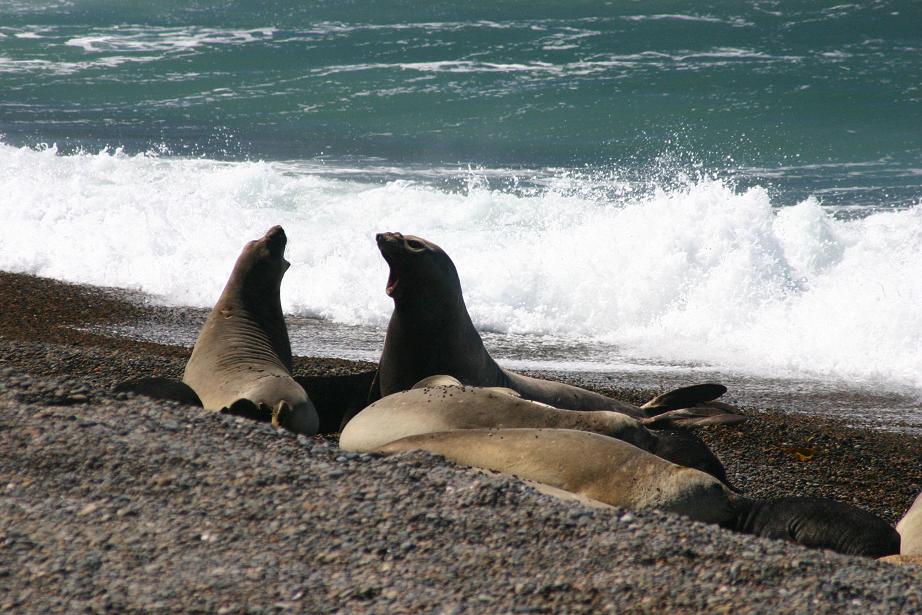
A note on elephant seals: They are largely overlooked in most travel guides — and that’s a mistake. In August and September, dominant males fight for territory on the beaches of Caleta Valdés with a level of intensity and scale that few wildlife encounters can match. Very few agencies treat this as a central focus. We do — when timing makes sense.
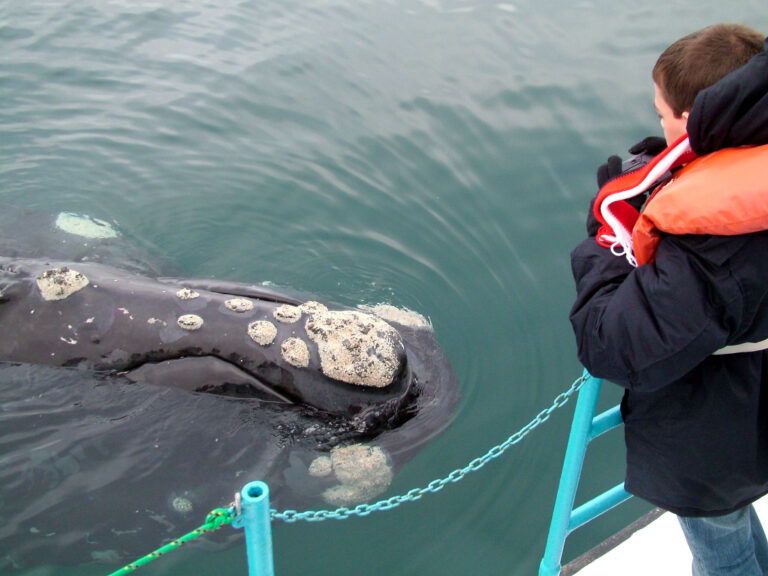
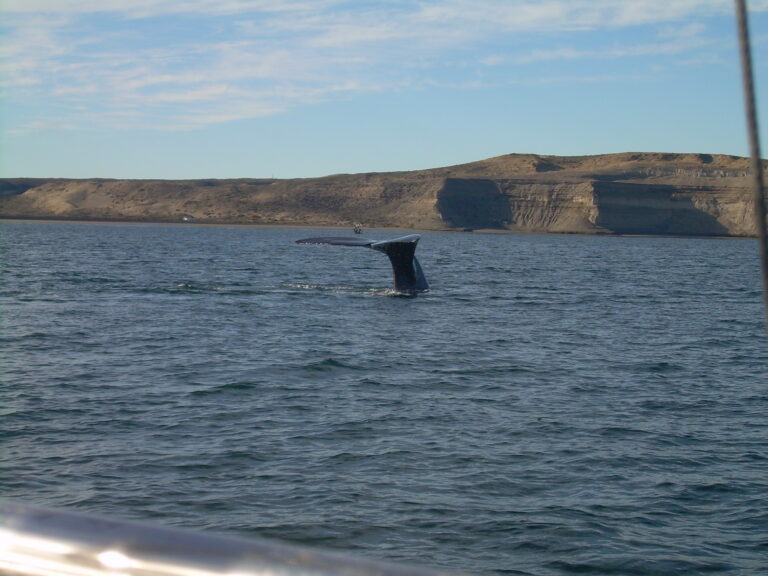
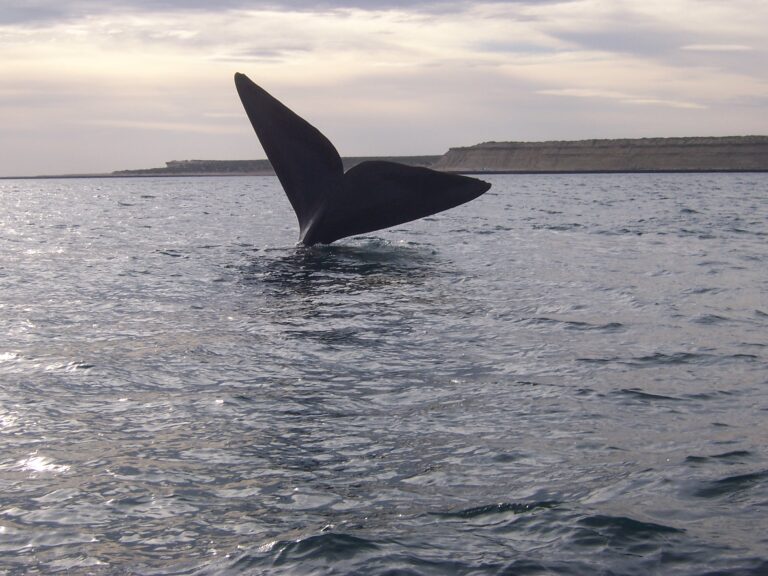
Eubalaena australis. Up to 14 meters long, over 50 tons, and one of the most accessible whales in the world for land-based observation. There are very few places globally where this is possible: El Doradillo, 17 km from Puerto Madryn, is one of them. At low tide, whales come within less than 30 meters of the shore to rub their bodies against the rocky seabed. No boat. No special equipment. Just patience.
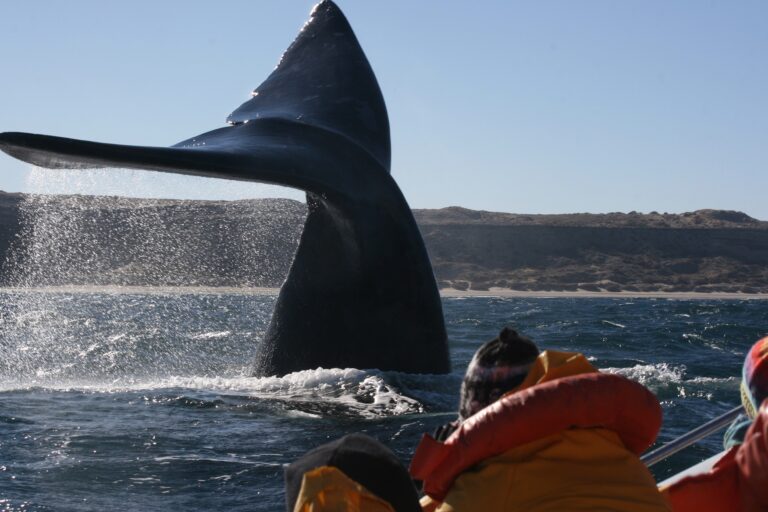
September is the month with the highest concentration of whales, according to monitoring records from the Centro Nacional Patagónico (CENPAT – CONICET). October adds behavior: calves are already active, males compete, and breaches are frequent. If you can only visit once and whales are your priority, these are the only months we recommend without reservation.
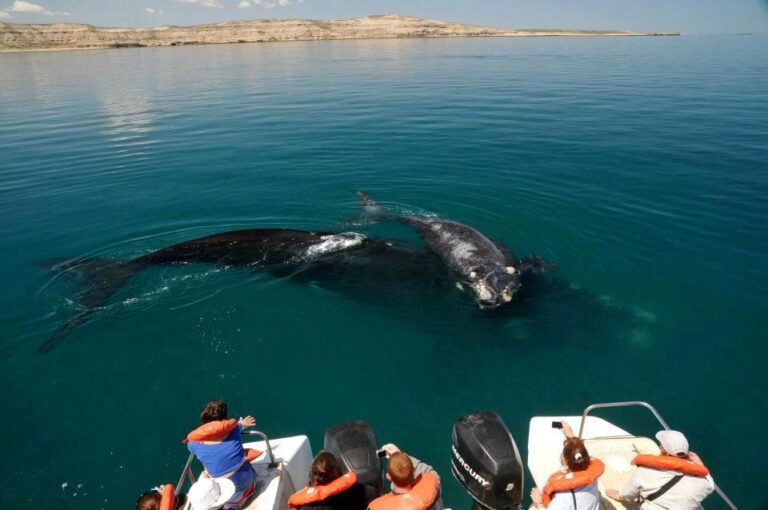
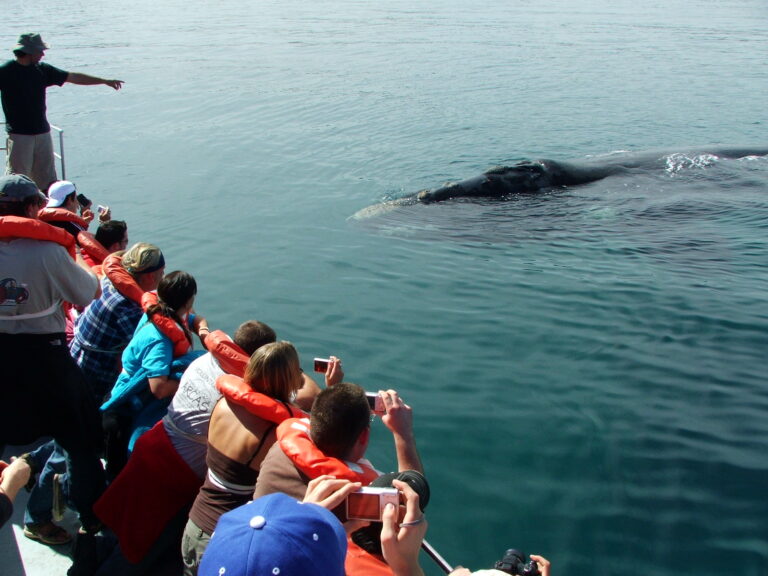
Planning criteria: Boat excursions from Puerto Pirámides have limited capacity and sell out weeks in advance during peak season. At Qwerty Travel, we do not include these excursions without confirmed reservations. A trip without a guaranteed spot on the boats is not a well-designed trip.
The intentional stranding technique used by orcas at Punta Norte has been documented by scientific teams from the IUCN and is unique in the world. Orcas learn this hunting strategy from generation to generation: they deliberately launch themselves onto the gravel shoreline to capture sea lion and elephant seal pups that have just entered the water.
What no tour operator tells you clearly enough: this experience cannot be bought or guaranteed. It depends on tides, wind, the presence of pups, and the decisions of wild animals. We’ve had clients who witnessed four strandings in a single day, and others who saw none in five days. Both groups returned satisfied because they understood in advance what kind of experience they were choosing. Those who arrive with rigid expectations leave frustrated. It’s our responsibility to make this clear before confirming any booking.
When to go: second half of March and first half of April. Tide coefficients between 60 and 80. We plan excursions to Punta Norte based on tide charts, not convenience.
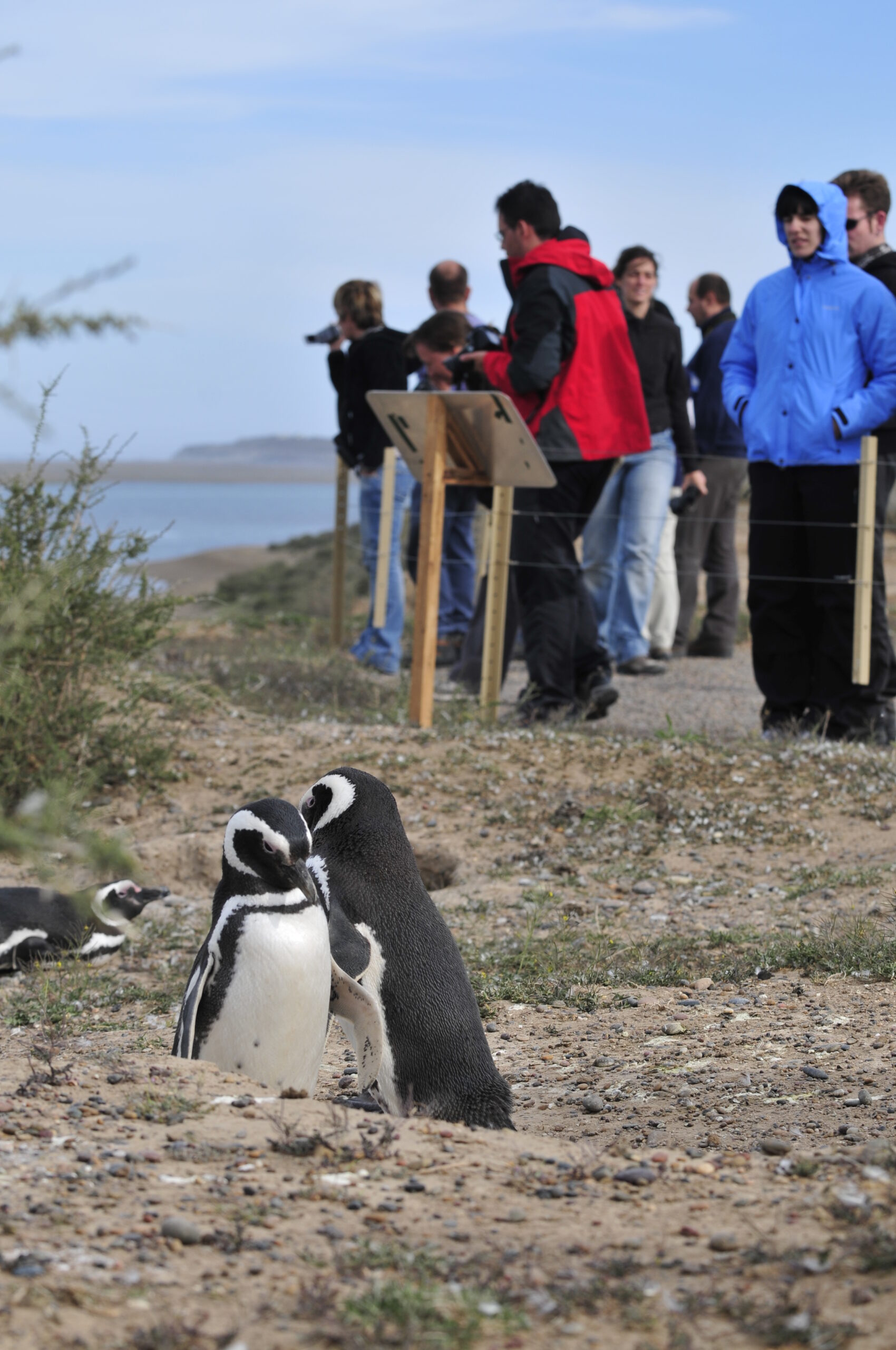
The colony at Punta Tombo hosts up to 200,000 breeding pairs. Chicks hatch in November, and in December the young penguins, in the process of molting — with their mix of soft down and emerging adult feathers — provide the most iconic images of the season.
January and February at Punta Tombo are the main reason many travelers leave this excursion disappointed: the colony is already in decline, the most active animals have moved out to sea, and the influx of domestic tourism during peak season creates an experience that is often far from enjoyable.
If you’re traveling during these months, there’s an alternative that few agencies suggest: the colony at Cabo Dos Bahías, with less than 10% of the visitors and a far quieter, more rewarding wildlife observation experience.
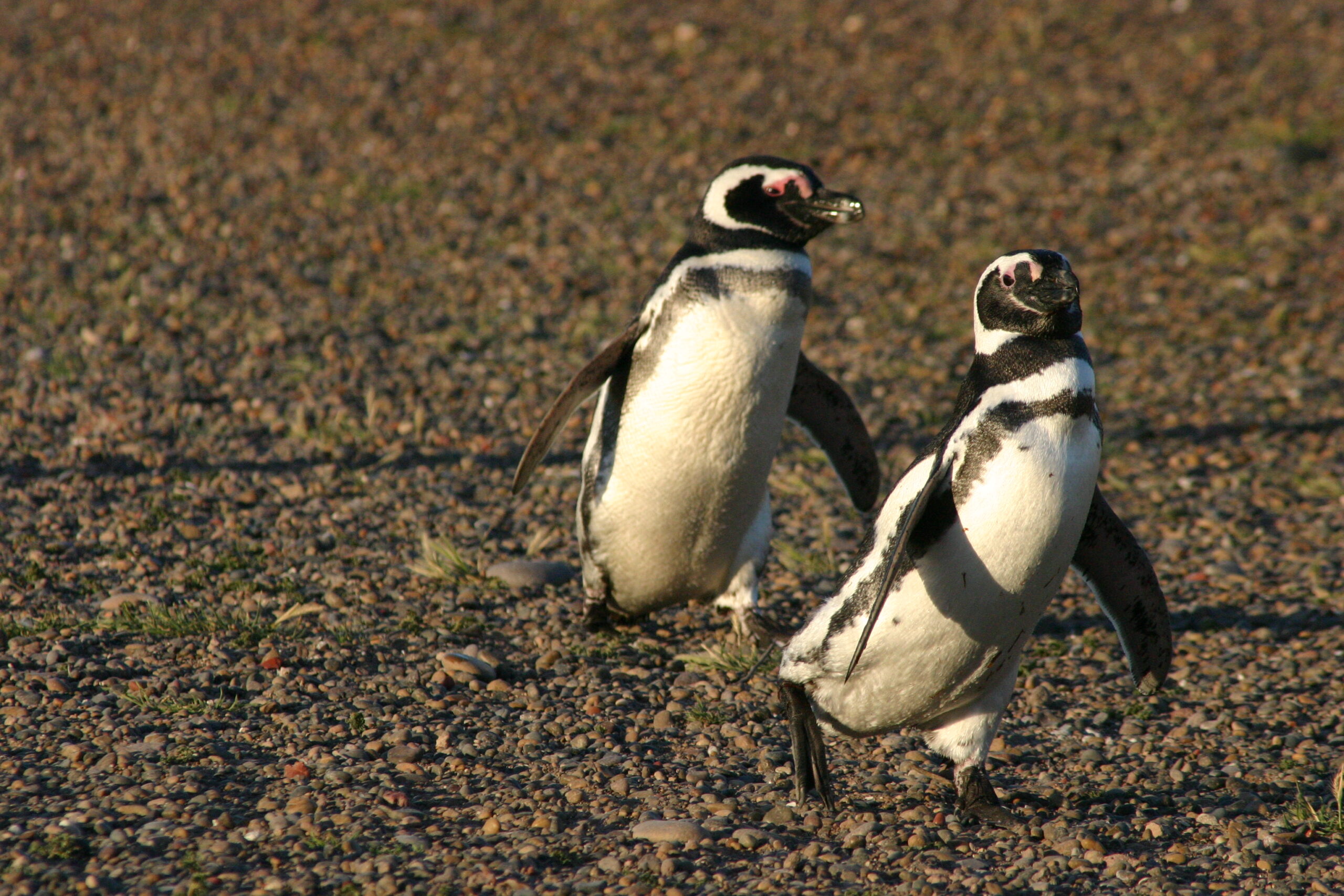
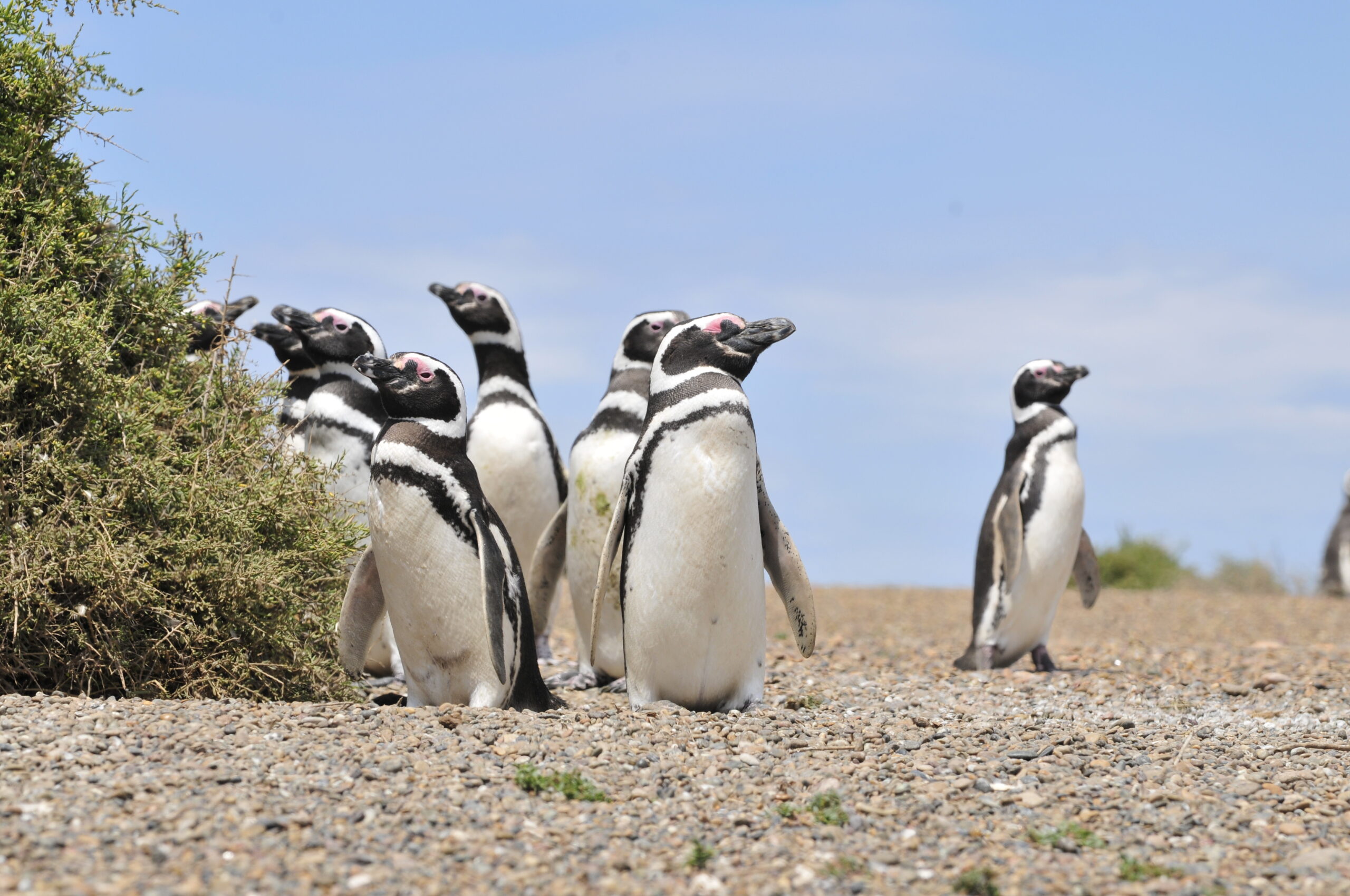
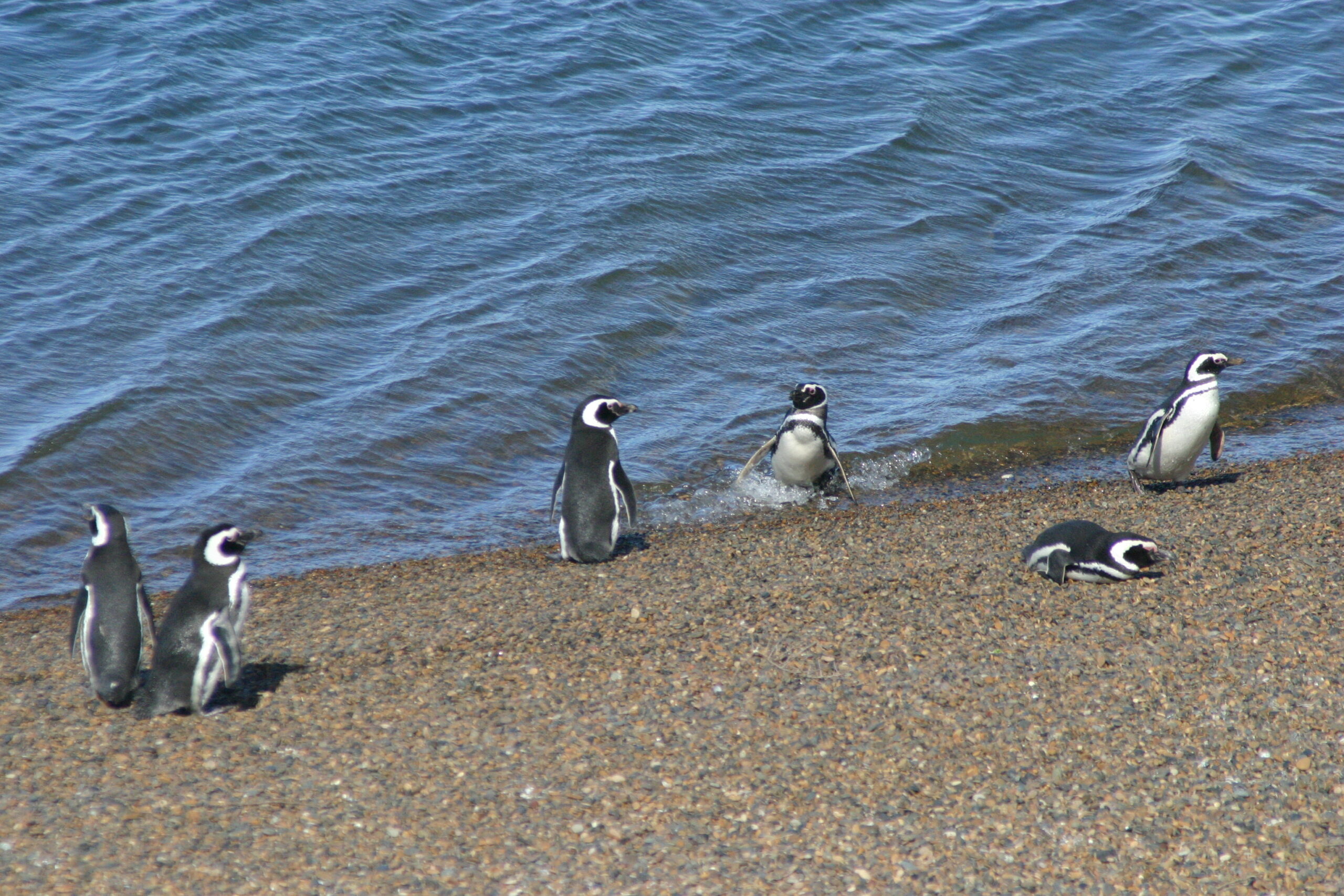
The colonies at Punta Pirámide and Punta Loma are permanent. Between November and January, males defend their harems intensely, and pups begin learning to swim in the tidal pools.
This is one of the few experiences in Península Valdés that works well in any month, which is why we use it as an anchor in low-season itineraries.
Puerto Madryn has a semi-arid, cool-temperate climate. Temperatures remain moderate throughout the year. However, there is one factor that most travel guides only mention in passing, but in reality affects more than 30% of marine excursions: the wind.
| Jan | Feb | Mar | Apr | May | Jun | Jul | Aug | Sep | Oct | Nov | Dec | |
|---|---|---|---|---|---|---|---|---|---|---|---|---|
| Max temp. (°C) | 22° | 22° | 19° | 14° | 10° | 7° | 6° | 8° | 11° | 15° | 18° | 21° |
| Min temp. (°C) | 12° | 12° | 9° | 6° | 3° | 1° | 0° | 1° | 3° | 6° | 8° | 11° |
| Wind | Mod | Mod | Mod | Mod | Strong | Strong | Strong | Strong | Mod | Mod | Mod | Mod |
| Rain (mm) | 15 | 12 | 18 | 22 | 28 | 20 | 18 | 15 | 14 | 18 | 15 | 16 |
Marine operators suspend departures when winds exceed 25 knots. In June, July, and August, these conditions are frequent. This is not anecdotal — it’s an operational reality that we factor into all low-season itineraries, with buffer days and well-planned land-based alternatives. A trip without a wind contingency plan is not a well-designed trip.
Essential packing, regardless of the month: a lightweight, waterproof windbreaker (not a heavy parka). In Patagonia, the same day can bring sun, light rain, and strong winds within a matter of hours. Those who don’t plan for it pay for it in comfort.
This is what we get asked most often: “When is the best time to go?” The answer is that it depends on what you want to see. Here’s how we break it down, using the same criteria we apply internally when designing an itinerary.
Our recommendation: if these are your only available dates, we design the trip by combining coastal wildlife, steppe landscapes, and Cabo Dos Bahías as an alternative to Punta Tombo. It works well. But if you have flexibility, there are better months.
Our recommendation: the preferred months for wildlife photographers and travelers who value quality over comfort. We design these itineraries with built-in flexibility for Punta Norte, without trying to fit everything into a single trip.
Our recommendation: what we rule out in these months are itineraries built around marine excursions without well-planned land-based alternatives. What we prioritize instead: land-based whale watching at El Doradillo, the steppe, and wildlife in Caleta Valdés.
Our recommendation: if you’re only visiting once and want the most complete experience possible, these are the only months we recommend without hesitation. Demand is high and boat availability sells out quickly. We don’t leave this to the last minute.
Our recommendation: the months we most often recommend to travelers looking for the whale–penguin combination without the concentration of September–October. December, in particular, is underrated and increasingly included in our core itineraries.
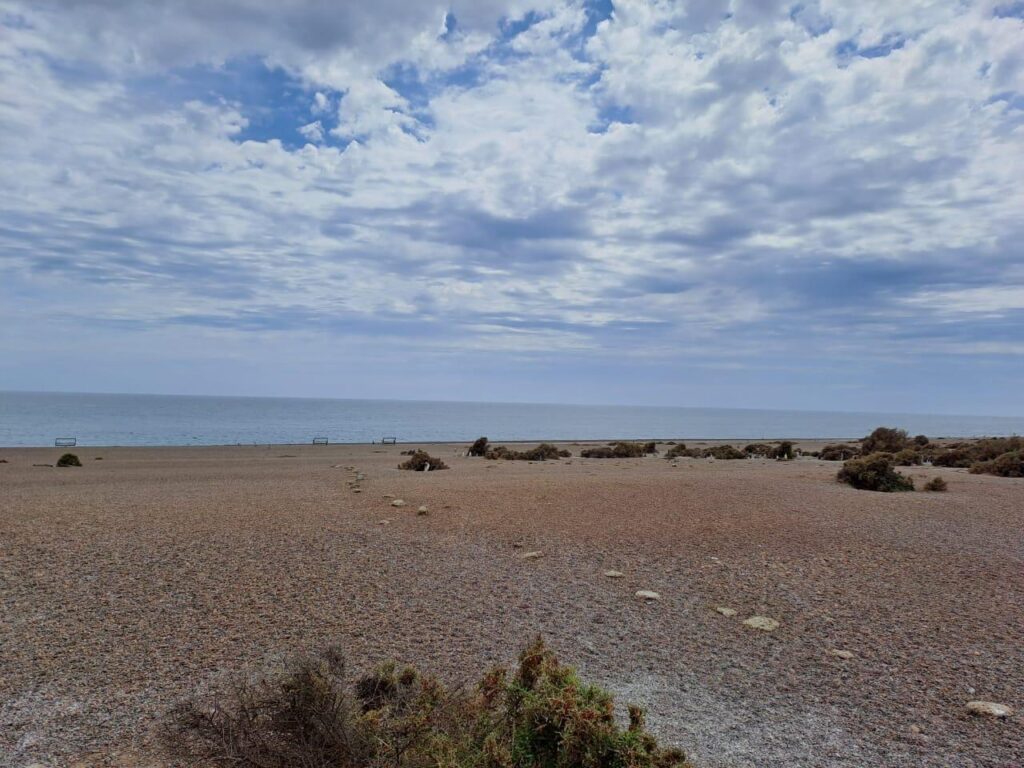
A common mistake we see in proposed itineraries is treating the Patagonian steppe as the stretch between excursions. We treat it as an experience in its own right, with planned stops and guides who know how to read the landscape.
Aerolíneas Argentinas operates daily direct flights from Buenos Aires (AEP/EZE) to Trelew (REL). Trelew is located 65 km from Puerto Madryn (approximately a 60-minute transfer). There are also direct flights to Puerto Madryn (PMY), although less frequent.
We recommend arriving the afternoon before your first excursion day to avoid tight scheduling.
Minimum viable stay: 4 nights. Optimal: 6 nights.
For orca-focused itineraries, we recommend at least 5 days specifically planned around the Punta Norte window.
We never design trips to Península Valdés of 2 or 3 nights: there simply isn’t enough real time to experience the wildlife and the steppe at the pace they deserve, and we don’t recommend it — even if requested.
| Item | Budget trip | Comfort trip |
|---|---|---|
| Round-trip flights (Buenos Aires) | USD 80–120 | USD 150–200 |
| Accommodation (6 nights) | USD 200–300 | USD 500–900 |
| Excursions (package) | USD 150–250 | USD 350–600 |
| Meals (6 days) | USD 80–120 | USD 180–300 |
| Total estimated | USD 510–790 | USD 1,180–2,000 |
Prices in Argentina vary depending on the current exchange rate. Our specialists provide up-to-date information at the time of your inquiry, with a full breakdown and no surprises.
We don’t work with standard itineraries that we simply adapt. We work the other way around: we start from the wildlife calendar, the actual travel dates, and the traveler’s preferences — what truly makes sense to see at that time — and we build from there.
What we systematically rule out
What we always prioritize
September and October are the months with the highest number of whales and the most active behavior. Whales are present from June through December, but the statistical peak — according to CONICET monitoring records — occurs in September. In October, calves are already visible and interact with their mothers.
If the southern right whale is your priority, any other month involves accepting a level of uncertainty that doesn’t make sense if you have the flexibility to choose.
Orcas are not seen in Puerto Madryn city itself, but at Punta Norte, located at the northern tip of Península Valdés, about a 3-hour drive away. The viewing window is March and April, conditioned by tides and the presence of sea lion pups.
This is not a guaranteed experience, and any agency that claims otherwise is misleading you. What can be guaranteed is a planning approach that maximizes your chances based on tide charts.
The minimum we recommend is 4 nights. For a complete experience — whales, penguins, the steppe, and terrestrial wildlife — the optimal standard is 6 nights.
Itineraries of 2 or 3 days are physically possible, but they require sacrificing the pace needed for wildlife to reveal itself. We don’t design them.
October is one of the most pleasant months of the year in the region. Daytime temperatures typically range between 13°C and 17°C, with lows between 6°C and 9°C. Winds are moderate, and daylight hours increase significantly.
It is peak whale season and the beginning of penguin season, making it the most in-demand month. The trade-off is that availability for excursions often sells out weeks in advance.
There is no month when Puerto Madryn has nothing to offer. However, there are combinations that lead to disappointment: traveling in January or February expecting to see whales (they’re not there), visiting in June expecting smooth marine excursions without wind disruptions (the risk of cancellation is high), or traveling in any month without confirmed excursion bookings.
Timing matters — but how the trip is planned matters just as much.
Yes — the difference is real in three key aspects: price (low season can be 30–40% cheaper for accommodation and excursions), crowd levels (in September and October, groups are larger and availability is more limited), and wildlife activity (high season coincides with the highest number of active species).
A well-designed low-season trip can be an extraordinary experience. A poorly planned high-season trip can end up being expensive and rushed.
Yes — with a properly designed itinerary. Land-based wildlife viewing at El Doradillo and the penguin colony at Punta Tombo are especially accessible for children.
Whale-watching boat excursions require consideration of age and tolerance to motion. Travel distances within the Peninsula are long (gravel roads, wind, and distances), so they need to be planned with appropriate stops and pacing.
This article has been developed using first-hand field experience and the following verified sources:
Every trip starts with a detailed conversation: what you want to see, when you’re traveling, and the pace you’re looking for. From there, we propose the ideas that best fit to create your ideal journey.
First consultation with no commitment: we tell you exactly what you will see — and what you won’t — based on your travel dates.