
By Constance Abad — Founder and director of Qwerty Travel
Bariloche is rarely the first destination that comes to mind when starting to plan a major trip through Argentina. Buenos Aires, the Perito Moreno Glacier or Ushuaia tend to take that place. And yet, once the journey is done, Bariloche appears again and again among the places travellers remember most.
The reason is not a single monument or one unmissable excursion. It is the combination it offers: lakes, mountains, gastronomy, good hotels and a calmer rhythm that allows you to experience Patagonia in a different way. For those travelling from Mexico, it is typically one of the most comfortable and surprising stages in a wider Argentina route.
This article explains what makes Bariloche special, what to see and do depending on the time available, which season works best and how to fit it into a complete Argentina and Patagonia itinerary.
San Carlos de Bariloche sits in the northern Argentine Patagonia, within Nahuel Huapi National Park, Argentina’s oldest national park — founded in 1934 and covering over 717,000 hectares.
Unlike the image most people have of Patagonia — open steppes, glaciers and constant wind — this part of the region is defined by glacial lakes, Andean forests and vegetation-covered mountains. It is a completely different side of Patagonia from the south.
Lake Nahuel Huapi, at approximately 550 km², is the largest lake in Argentine Patagonia. The city of Bariloche extends along the lakeshore at 760 metres above sea level — with no altitude sickness risk, unlike Andean destinations such as Cusco. The alpine-influenced architecture, artisan chocolate shops, craft breweries and relaxed atmosphere of the centre produce a feeling completely unlike anywhere else in Argentina — which is exactly what surprises travellers who arrive expecting something different.


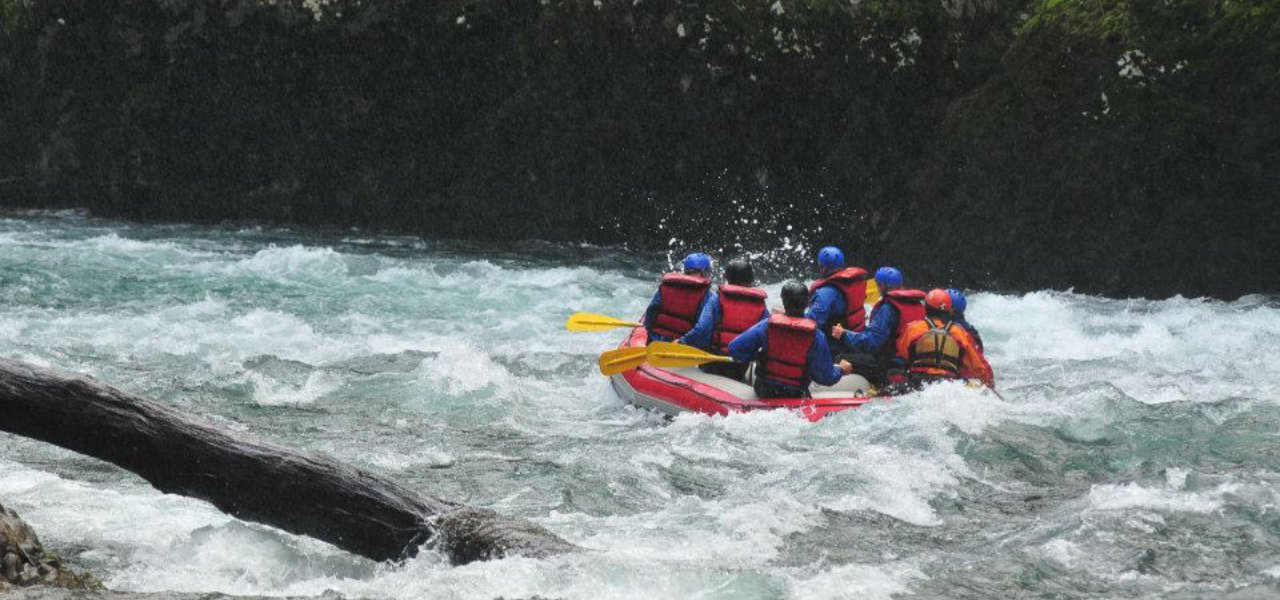
There is no direct flight from Mexico to Bariloche. The standard route is a flight from Mexico to Buenos Aires and a domestic connection to Bariloche from Aeroparque Jorge Newbery (AEP). The Buenos Aires–Bariloche flight takes approximately two hours, with several daily departures operated mainly by Aerolíneas Argentinas and LATAM. Bariloche Airport (BRC) is around 15 km from the city centre.
One important logistical point: international flights from Mexico land at Ezeiza (EZE), approximately 35 km from the city centre, while domestic flights to Bariloche depart from Aeroparque (AEP), 7 km from the centre in the Palermo neighbourhood. Getting from one airport to the other can take between 45 minutes and an hour and a half depending on traffic — and that transfer needs to be factored into the itinerary design from the start.
Virtually everything a traveller comes to see in Bariloche is within or immediately adjacent to Nahuel Huapi National Park. Unlike other Patagonian parks, technical hiking is not required to access the most spectacular scenery. Most of the highlights are reachable by panoramic road, cable car or lake cruise, making this one of the most suitable Patagonian destinations for families with children or elderly relatives.
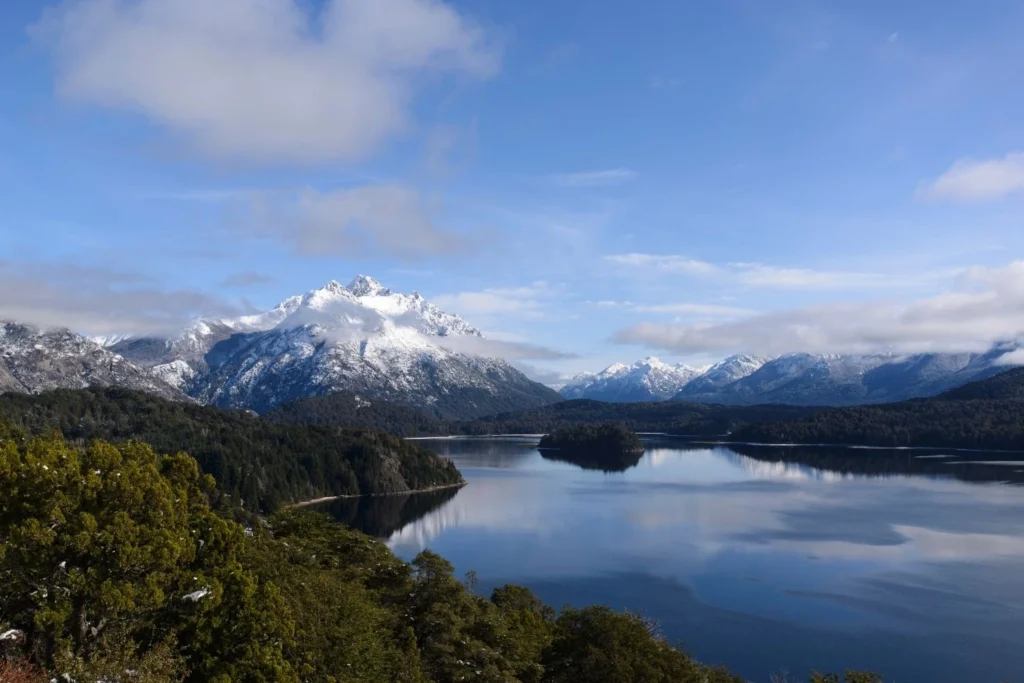
This is probably the most representative excursion in Bariloche. An approximately 60-kilometre route that follows part of the Lake Nahuel Huapi shoreline and passes through some of the most photographed landscapes in the region: crystal-clear beaches, small harbours, forests of native coihue trees and century-old cypresses, historic hotels and viewpoints from which the full scale of the lake and surrounding mountains becomes clear. It is not an excursion to rush: it invites you to stop at each point, have a coffee with a view and let the perspective shift.
At 1,049 metres above sea level, Cerro Campanario is one of the most accessible viewpoints in the region. The ascent takes just a few minutes by cable car, and from the summit you get one of the most photographed panoramic views in Argentine Patagonia: Lake Nahuel Huapi in the foreground, snow-capped mountains behind and the city of Bariloche below. It is fully accessible for any traveller profile, including elderly visitors or those with limited mobility.
One of the best ways to appreciate the true scale of the lake is to travel across it by boat. The cruises allow you to see from the water the forests that fall directly to the lakeshore, deserted beaches unreachable by road, and the mountains in full perspective. It is one of the activities that works best on family trips — it requires no physical effort at all and produces an experience completely different from the land viewpoints.
Cerro Catedral is one of the largest ski resorts in South America, with over 100 km of slopes at altitudes ranging from 1,030 to 2,388 metres. In winter (June to August) it draws a large proportion of Argentina’s ski tourism. For travellers not specifically interested in skiing, a day in the mountains — seeing the snow-covered forests and ascending by cable car — is worth it in its own right. There are snow activities that require no skiing ability: sledging, snowshoeing, walks through snow-covered trees.
Bariloche is known throughout Argentina as the artisan chocolate capital, and its chocolate shops have been part of the destination’s identity for decades. But reducing Bariloche’s gastronomy to chocolate alone would be a significant understatement. Patagonian lamb, lake trout, craft beers and mountain cuisine make up an offering that consistently surprises Mexican travellers, accustomed as they are to completely different flavours, techniques and ingredients.
In the itineraries we design at Qwerty Travel, we always build in time to enjoy Bariloche’s gastronomy without rushing: a meal facing the lake, an afternoon walking through the chocolate shops in the centre, dinner at a restaurant working with local produce. We don’t frame it as a list of places to visit but as a natural part of the trip’s rhythm. In many cases, those gastronomic moments are remembered just as vividly as the excursions.
One of Bariloche’s great strengths is that it offers completely different experiences depending on the season, making it a valid destination for virtually the whole year. The best time depends on the type of experience each traveller is looking for.
| Season | Months | Main experience | Best for |
|---|---|---|---|
| Austral summer | December – February | Lakes, boat trips, gentle hiking, scenic viewpoints and long daylight hours. | Families with children, active travellers and first-time visitors. |
| Autumn | March – May | Forests turn shades of yellow and orange, with mild temperatures and fewer tourists. | Photographers, couples and travellers looking for a quieter experience. |
| Winter | June – August | Snow, skiing at Cerro Catedral, snow-covered landscapes and a true mountain atmosphere. | Families wanting to experience snow, skiers and returning visitors. |
| Spring | September – November | Blooming landscapes, pleasant temperatures and lower visitor numbers. | Travellers who prefer to avoid the high season while enjoying excellent value. |
For most Mexican travellers combining Bariloche with Buenos Aires and El Calafate in a single trip, November to February is the most balanced window: the southern Patagonian parks are in full high season, Buenos Aires has comfortable weather and Bariloche’s lakes are at their most vivid.
Bariloche is a destination that needs time to be properly enjoyed. With two nights you can get to know it, but the typical feeling is that the trip ends just as you start to connect with the place. From the third night, the rhythm changes: there is time for the full Circuito Chico, a boat trip on Nahuel Huapi, different restaurants and simply walking around the centre without a fixed schedule. Three nights is our baseline recommendation for most itineraries.
| Nights in Bariloche | What it actually allows |
|---|---|
| 2 nights | A first introduction to the city and Lake Nahuel Huapi. Enough time for the Circuito Chico and one scenic viewpoint. Feasible, but quite rushed. |
| 3 nights | Complete Circuito Chico, a Lake Nahuel Huapi cruise, local gastronomy and time to stroll around the town centre without a fixed schedule. The most balanced option. |
| 4 nights | Everything above at a relaxed pace, with time for additional excursions and personalised experiences. Especially recommended for multigenerational families. |
The key is not only how many days, but how they are distributed. A well-designed Bariloche itinerary should not have more than one main excursion per day, leaving room for the traveller to arrive rested at the moments that matter most.
Not all Patagonian destinations work equally well when several generations travel together. Bariloche is one of the best-suited. Distances between attractions are manageable, the accommodation offer is wide and varied, and most activities can be approached at different levels of involvement. While some take the boat cruise, others can enjoy a lakeside walk or a meal with mountain views. Nobody feels the trip has been designed for only one type of traveller.
Well-located four-star hotels in Bariloche are the standard that works best for families: good service quality, rooms configured for groups, generous breakfasts and proximity to the main attractions. On trips with grandparents or young children, the hotel’s location matters as much as its category: a well-situated property saves time and energy on every day of the trip.
What travellers tell us when they come home
Before leaving, almost every Mexican traveller mentions Perito Moreno Glacier as the place they’re most looking forward to. That’s entirely understandable. But when they come back and we ask which destination surprised them most, Bariloche comes up again and again. They don’t only talk about the landscapes. They remember a meal facing the lake, an afternoon strolling through the centre without any rush, a boat trip between mountains or the silence at one of the viewpoints on the Circuito Chico. They are simple moments. And that is precisely why they stay.
Bariloche is rarely the only destination of the trip. It usually forms part of a broader journey where each stage contributes a different experience. The structure that works best for a first visit from Mexico is as follows:
| Etapa | Qué aporta al conjunto del viaje |
|---|---|
| Buenos Aires | Entrada cultural y gastronómica al país. Permite adaptarse al ritmo argentino antes de iniciar la ruta por la Patagonia. |
| Bariloche | Transición hacia la naturaleza patagónica. Lagos, montaña y un ritmo tranquilo antes de continuar hacia el sur. |
| El Calafate | La Patagonia más icónica. El Glaciar Perito Moreno representa el gran clímax visual y emocional del viaje. |
| Ushuaia | Cierre emocional en el extremo austral del continente. Recomendable cuando el itinerario dispone de 16 días o más. |
This sequence has a clear internal logic: Buenos Aires introduces Argentine culture, Bariloche offers the first immersion in Patagonian nature with all the comfort a city provides, and El Calafate represents the most iconic southern Patagonia with the Perito Moreno Glacier as its centrepiece. Each stage prepares the traveller emotionally for the next, and that balance is what makes the trip feel like a coherent whole rather than a sum of separate destinations.
If you’d like to see how we build the complete route from Mexico, you can consult our main guide: How to plan a trip to Patagonia and Argentina from Mexico.
Every person experiences Bariloche differently. Some travellers want to cover the lakes, others prioritise the gastronomy, some come for the winter snow and others simply want a few days of rest surrounded by nature before continuing south. That’s why we never work with a fixed programme. Before designing the stage we want to understand who is travelling, what they hope to find, how much time they have and what kind of accommodation they’re looking for. From there we adapt the duration, select the most suitable excursions and organise the logistics so everything fits within the wider trip.
In our experience, a good Bariloche itinerary is not about fitting in as many activities as possible. It is about finding the balance that allows each moment to be enjoyed unhurriedly — so that the traveller arrives at El Calafate or Ushuaia wanting more, not needing rest.
Constance Abad — Founder and director of Qwerty Travel
She has spent over fifteen years designing tailor-made trips across Argentina and Patagonia, working directly with hotels, guides and local operators in Bariloche, El Calafate, Ushuaia and Buenos Aires. She has designed routes for over four hundred families from Mexico, Europe and Latin America, with particular focus on Patagonian itineraries for travellers looking for nature, comfort and gastronomy in a single journey.
LinkedIn: linkedin.com/in/constance-abad
Yes. For a first Argentina route, Bariloche offers a very well-balanced combination of nature, comfort and gastronomy. It is also the most accessible Patagonian destination for families with multiple generations: at 760 metres above sea level, with no altitude sickness risk and activities that adapt to every profile.
Between three and four nights is the option that works best for enjoying the destination without rushing within an Argentina route. With two nights it is possible to get a taste, but the usual feeling is that the trip ends just as you start to connect with the place.
No. Most of the main attractions are accessible without any special fitness requirements: the Circuito Chico by vehicle, Cerro Campanario by cable car, the Nahuel Huapi lake cruise by boat. That is one of the main reasons Bariloche is so well suited to families travelling with children and elderly relatives.
For routes combining Bariloche with El Calafate and Buenos Aires, November to February is the most balanced window: austral summer in Bariloche (long days, lakes at their most vivid) and high season in southern Patagonia. For snow and skiing, the window is June to August.
It is one of the Patagonian destinations that adapts best to multigenerational travel. None of the main activities require any significant physical effort: viewpoints accessible by cable car, lake cruises, panoramic routes by vehicle. The accommodation offer includes well-equipped options for large family groups.
The structure that works best is Buenos Aires → Bariloche → El Calafate, with domestic flights between each stage. Bariloche acts as a natural transition between the city and the more austral Patagonia. If the itinerary has 16 days or more, Ushuaia can be added as a final stage before the return journey.
We include Bariloche in your Argentina itinerary from Mexico
If you’re thinking of travelling to Argentina from Mexico and want to know how to integrate Bariloche into a route that makes sense for your family, tell us how many days you have and what kind of experience you’re looking for. We design the complete itinerary with flights, hotels and private services.
First consultation, no commitment: we’ll tell you exactly what you will — and won’t — see based on your dates and your travel profile.
www.qwerty-travel.com · info@qwerty-travel.com