By Constance Abad — Founder and Director of Qwerty Travel
Many South America itineraries found online are, quite simply, impossible to enjoy within the time they propose. Not because the destinations are poor choices, but because nobody has thought about what happens between one destination and the next.
There is a huge difference between travelling across South America and truly experiencing South America. And that difference rarely depends on budget, hotels or the number of destinations included. It depends on something much more difficult to design: understanding how much movement a trip can realistically absorb without losing depth.
After years of designing multi-country itineraries across the continent, we keep seeing the same pattern. Travellers arrive determined to make the most of every available day and end up creating itineraries where the pace consumes the trip before the trip has even begun. This article explains the practical decisions that make the difference.
The problem starts with the map
Many people plan a South America trip by looking at a map and calculating distances. The result is often an itinerary that seems reasonable on paper but becomes exhausting in reality.
A common example: an overnight flight from Buenos Aires to Lima, arrival at six in the morning, transfer to the hotel, check-in at two in the afternoon, a visit to Miraflores, dinner, then a flight to Cusco the next morning at seven.
Technically possible.
In practice, the traveller arrives in Cusco — at 3,400 metres (11,150 ft) above sea level — after two nights of poor sleep, completely disoriented. That is when altitude sickness begins.
South America is not a destination where planning mistakes cost you one day. They can affect entire weeks.
Fatigue in South America rarely comes from walking or activities. It usually comes from the accumulation of flights, early wake-up calls and constant changes of environment.
Signs that your itinerary is overloaded
Before confirming any route, there are five warning signs that almost always indicate the itinerary needs to be reviewed.
| Señal de alerta | Lo que ocurre en la práctica | Lo que recomendamos |
|---|---|---|
| Más de 2 vuelos internos por semana | 2-3 días enteros consumidos en aeropuertos, traslados y adaptación | Agrupar destinos por zona; vuelos solo cuando el tiempo de carretera no tiene valor escénico |
| Menos de 3 noches en cada destino principal | Se llega, se duerme, se sale: el lugar no llega a existir realmente | Mínimo 3 noches en cada etapa; 4-5 en destinos con mucho contenido |
| Llegada directa a Cusco (3.400 m) sin aclimatación | Mal de altura los primeros días; actividades canceladas o arrastradas con malestar | Escala previa en Lima o al menos 2 días de reposo antes de excursiones físicas |
| Ningún día libre en toda la ruta | Cualquier retraso desencadena un efecto dominó que no tiene solución | Al menos 1 día sin agenda por semana de viaje |
| Cambio de país cada 2-3 días | El viaje se convierte en logística pura; los destinos dejan de sentirse | Itinerario con coherencia geográfica; menos cruces, más tiempo en cada zona |
Distances are not what they seem
In South America, there are flights that last four hours between cities that appear close on a map.
There are secondary airports that require two hours of ground transportation from the city centre.
There are routes that only exist via Lima or São Paulo, turning what appears to be a simple transfer into a full day of travel.
A flight from El Calafate to Cusco, for example, does not exist as a direct connection. Travellers must connect through Buenos Aires or Lima. Including transfers and waiting times, that often means 8 to 12 hours of travel.
If that journey is scheduled for a Tuesday and a Sacred Valley excursion is planned for Wednesday morning, the itinerary is already compromised before departure.
Then there is the climatic transition between destinations. Going from Rio de Janeiro — warm and humid — to Patagonia within a few days is not simply a change of scenery. It is a physical adjustment that the body feels immediately.
Many travellers underestimate how much that affects their energy levels.
Altitude: the factor most travellers underestimate
Cusco sits at 3,400 metres (11,150 ft) above sea level. Machu Picchu sits at 2,430 metres (7,970 ft).
These are not just tourist statistics. They are physical variables that directly affect what your body can do during the first days in the Andes.
We have seen very fit travellers arrive directly in Cusco from Buenos Aires, Rio or Santiago and struggle to climb stairs during their first two days.
Constant headaches. Difficulty sleeping. Nausea.
It is not unusual.
It is what happens when altitude is not properly considered during itinerary design.
What completely changes the experience is the sequence of the trip.
Including Lima before Cusco serves a very specific purpose. Lima is at sea level. It allows travellers to rest, adapt gradually and arrive in Cusco ready to enjoy the experience.
Travellers who reach Cusco after spending time in Lima generally sleep better, have more energy and enjoy the Sacred Valley and Machu Picchu in a completely different way.
Acclimatisation is not a luxury. It is often the difference between the first days in the Andes being the best part of the trip or the worst.
Patagonia should not be experienced at the same pace as Buenos Aires
This is one of the most common misunderstandings in long South America itineraries: assuming that every destination works at the same intensity.
Buenos Aires generates energy. It encourages people to go out, explore neighbourhoods, enjoy late dinners and keep moving.
It is a city lived outwardly.
After several days at that pace, many travellers arrive in Patagonia or the Sacred Valley without realising how much they need to slow down.
They continue at the same speed, finish every excursion exhausted and remember Perito Moreno or Fitz Roy as places they saw from a distance while their body was asking for rest.
Patagonia demands a different mindset.
The wind, the scale of the landscape and the distance between points of interest naturally encourage a slower pace.
If the itinerary is not designed for that — if every day begins with activities at eight in the morning — the destination never truly exists for the traveller.
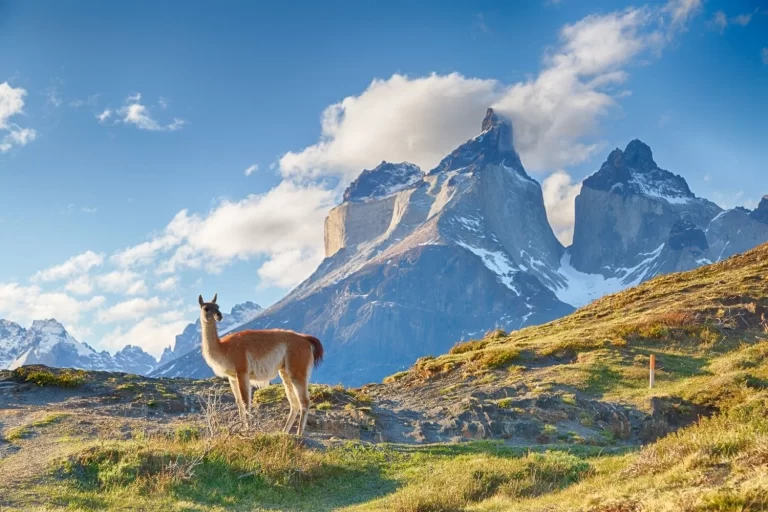
The real cost of domestic flights
Every domestic flight involves waking up early enough for the airport transfer, checking in, waiting, boarding, flying, collecting luggage, transferring again and adapting to a new environment.
In destinations such as El Calafate or Puerto Natales, where airports are located far from town centres, this can easily consume four or five hours before any activity even begins.
In a three-week itinerary with six or seven destinations, this accumulated wear and tear can represent three or four full days.
Days that nobody remembers because they were never truly experienced.
Some routes deserve to be travelled by road because the scenery is part of the journey itself. The drive between El Calafate and El Chaltén is a good example, as is the route between Santiago and Valparaíso.
Others are best done by air.
And some simply should not be included in the itinerary at all.
The destination you remove may be the best decision of the trip
This is often the most difficult conversation we have with travellers.
Many arrive with a list of destinations they have dreamed about for months and find it very difficult to remove any of them.
That is perfectly understandable.
But in South America, adding one more destination to an already tight itinerary almost always means taking time away from another. And that trade-off rarely works well.
A destination that receives only two nights when it really needs four is often worse than not including it at all. It creates the feeling of having passed through without ever truly arriving.
Some of the best trips we have designed contain fewer destinations than the traveller originally imagined.
Not because the experience was reduced, but because concentrating time in fewer places allowed each destination to become something memorable.

Why this type of trip is difficult to organise without specialist help
The problem is not a lack of information. There are articles, blogs and forums about every destination in South America.
The problem is that knowing what to see in Cusco is not the same as knowing how to arrive there in a condition that allows you to enjoy it, how many days it really requires, what should come before it and why the order of the itinerary matters as much as the destinations themselves.
That knowledge is not available through a generic search.
It is built trip after trip, adjusting what works and what does not, understanding real connections, realistic travel times and the mistakes that repeat themselves until someone has seen them often enough to avoid them from the beginning.
Great South America journeys are not built by choosing destinations.
They are built by understanding how much movement a trip can realistically absorb without losing depth.
That is where the design process we follow at Qwerty Travel begins.
About the author
Constance Abad
Founder and Director of Qwerty Travel
Constance has spent years designing tailor-made journeys across South America alongside local guides and operators in Argentina, Brazil, Chile and Peru. Her work is built on a simple principle: understanding the real rhythm of each territory before designing any itinerary.
Frequently asked questions
Between four and five major destinations usually allows for a balanced pace without compromising the experience. More than six destinations in three weeks often means passing through some places without truly experiencing them. The decision depends on the region, the season and the type of experience each traveller is seeking.
It depends on the destinations involved. The Peruvian Andes generally work best between April and October, during the dry season in Cusco and Machu Picchu. Patagonia is at its best between October and March. Iguazú and major cities can be visited throughout most of the year, although the austral summer can be extremely hot in northern Argentina and southern Brazil. Coordinating the seasons across different regions is one of the most important aspects of itinerary design.
There are several clear warning signs: more than two domestic flights per week, fewer than three nights in major destinations, arriving directly in Cusco without acclimatisation, or having no free day anywhere in the trip. Any of these signals suggest the itinerary should be reviewed before booking. At Qwerty Travel, this analysis forms part of the initial consultation, with no obligation and no cost.
We design journeys around you
Every trip begins with a detailed conversation about what you want to see, when you want to travel and the pace that suits you best.
From there, we recommend the destinations, experiences and route that best match your expectations to create your ideal journey.
First consultation with no obligation: we will tell you exactly what you can realistically see — and what you cannot — based on your travel dates.